How to Start an Auto Repair Membership Program
A step-by-step playbook for shops that want to turn one-time customers into recurring members.
 By Jordon ComstockSeptember 13, 2026Updated September 18, 20265 min read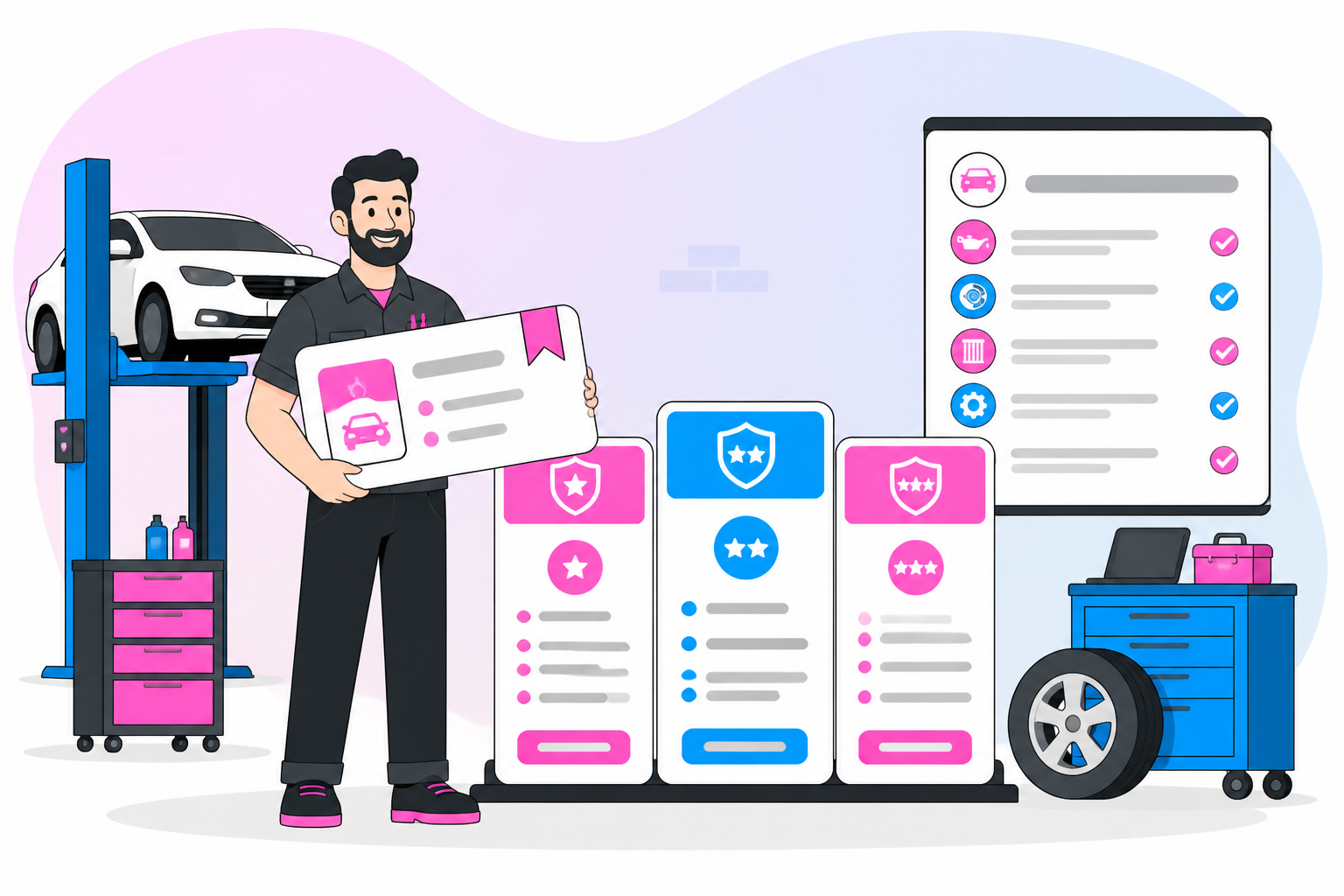
Every independent shop owner has had the same thought at some point: what if customers paid us every month instead of showing up once a year when something breaks? That's the promise of an auto repair membership program, and it's a lot more achievable than most owners assume. This playbook walks through the decisions you need to make and the order to make them in.
Why membership works for auto repair
Repair shops live and die by ticket flow. A membership program smooths that out by giving customers a reason to come back on a schedule instead of only when there's a problem. Think of a simple oil change club at $29.99/month that bundles routine maintenance, or a car care club with tiers that add tire rotations, fluid top-offs, and multi-point inspections as you move up. The customer gets predictable value, and the shop gets predictable revenue.
This isn't a new idea — quick lube chains and tire retailers have run membership and loyalty programs for years. What's changed is that independent shops can now run the same kind of program without hiring a call center, because the enrollment and billing can be handled online.
Step 1: Decide what membership actually includes
Before you touch pricing, decide what a member gets that a walk-in doesn't. Common approaches include:
- A maintenance-only club (oil changes, wiper blades, fluid checks)
- A tiered car care club (Basic, Plus, Premium) where higher tiers add more included services
- A discount-based membership where members pay a flat monthly fee for a percentage off all labor and parts
Pick one model to start. Shops that try to launch three membership types at once usually confuse their front counter staff and their customers. For pricing structure specifics, see our guide on auto repair membership pricing.
Step 2: Set up online enrollment
If signing up for your membership requires a phone call and a paper form, most customers won't finish. The programs that actually grow let a customer choose a tier and enroll online in a couple of minutes, entering their payment method once. That single step — moving enrollment online — is usually the biggest lever an owner can pull to increase sign-up rates.
Step 3: Automate the recurring billing
Once someone joins, they should be billed automatically every month without your front desk having to remember to run a card. This is where a lot of shops that try to run memberships manually fall apart — someone forgets to charge a member in March, the member never notices, and the shop quietly loses revenue. Recurring billing software built for membership businesses handles this in the background, charging members on their renewal date every cycle.
Just as important is what happens when a card fails. A membership program is only as good as its ability to collect payment, so look for a system that automatically retries declined cards and notifies the customer so they can update their payment method themselves — without your staff having to make an awkward phone call. See our full breakdown in auto repair membership billing.
Step 4: Give members a way to manage their own account
Customers change cards, cards expire, and people move. A self-service portal where a member can update their card on file reduces the number of failed payments before they even happen, and it takes that task off your service advisor's plate entirely.
Step 5: Track the numbers
Once members start enrolling, you need visibility into how the program is actually performing — how many active members you have, monthly recurring revenue, and how many payments failed and were recovered. Revenue reporting built into your membership platform means you're not stitching together spreadsheets to figure out if the program is working.
Step 6: Market it consistently
A membership program doesn't sell itself from a table tent in the waiting room. It needs to be part of every service writer's conversation at checkout, part of your website, and part of your follow-up communication. We cover specific tactics in auto repair membership marketing, and the retention side — keeping members once they've joined — in auto repair customer retention.
A realistic launch timeline
Most shops can go from deciding to launch a membership program to actually enrolling their first member in two to three weeks:
- Week 1: Choose your tiers and pricing, decide what's included
- Week 2: Set up online enrollment and recurring billing
- Week 3: Train the front counter to offer it at every visit, announce it to existing customers
The shops that succeed with membership treat it as a real product line, not a side project. According to the Aftermarket News coverage of industry trends, recurring revenue models are becoming a bigger part of how independent shops compete with dealership service departments and national chains.
Where BoomCloud fits in
BoomCloud gives auto repair shops the pieces described in this playbook: membership tier setup, online enrollment, automatic recurring billing, decline retry and notification, self-service card updates, and revenue reporting — all built specifically for service businesses running membership programs. If you're evaluating tools for your shop, take a look at /software/automotive for how it applies to auto repair specifically.
Starting a membership program is less about having a big marketing budget and more about having the billing and enrollment mechanics right from day one. Get those right, and the growth tends to follow.
Common mistakes to avoid
A few patterns show up repeatedly in shops that struggle to get a membership program off the ground. The first is launching too many tiers or membership types at once, which confuses both customers and staff. The second is treating enrollment as optional at the counter rather than a standard part of every checkout conversation. The third, and most costly, is underinvesting in the billing side — assuming a generic payment processor will handle recurring charges, declines, and notifications well enough, only to discover months later that a meaningful share of members quietly stopped paying without anyone noticing. Revisiting this playbook alongside how to start an auto repair membership program guidance periodically as your program grows can help you catch these issues early rather than after they've already cost you members.
Launch without disrupting the repair-order workflow
A membership program does not require replacing estimating, repair-order, scheduling, or technician tools. Keep those systems in place and add the recurring layer in a controlled sequence: approve two or three plan tiers, train one counter explanation, enroll new customers first, and review dues and redemption each week.
Explore the auto repair shop software hub, see membership billing in the product, and compare pricing for the recurring layer.
Written by
Jordon Comstock writes for BoomCloud™ on patient membership plans, recurring revenue, and reducing PPO dependence.