Videos / Watch
The Right Way to Go Out of Network
August 19, 2026 · BoomCloud™
About this video
Before you drop PPOs. Start a Membership Plan with BoomCloud
Full transcript
Complete text of this video
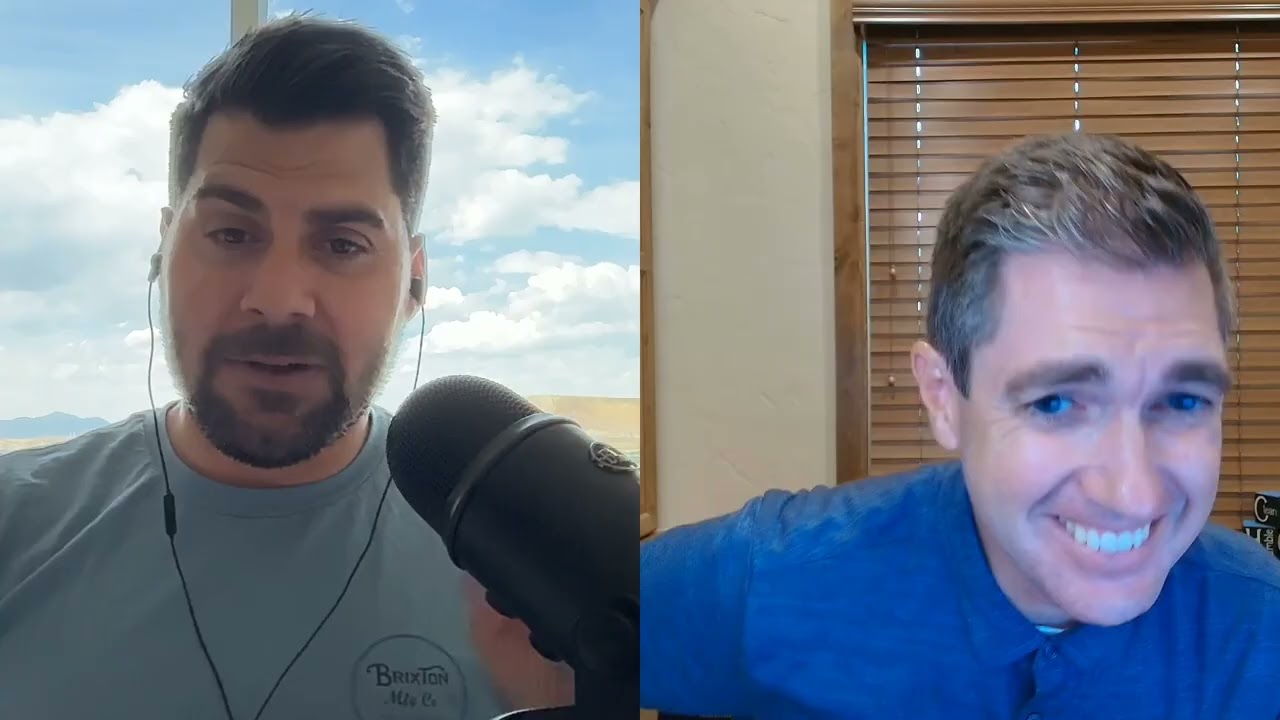
[music] >> Welcome to the navigating dental insurance podcast where we don't [music] take from insurance companies. Here are your hosts, Mr. Jordan Comstock and Mr. Ben Tuinei. >> [music] >> This podcast is sponsored by BoomCloud Dental Membership Software, www.boomcloudapps.com [music] and Veritas [music] Dental Resources, www.veritasdentalresources.com. Enjoy the [music] show. >> Welcome to another exciting episode of the Insurance and Saddle Podcast. My name is Ben Tuinei and as y'all know I'm one of the co-hosts on this podcast that has been built and dedicated to helping all
of you figure out ways to fight insurance, how to go out of network, but how to run a successful dental practice, you know, incorporating things like membership plans, all the things that are key ingredients to building a successful dental office. So today I have my my my trusty co-host with me, Jordan Comstock. Jordan, how are you? >> What's up, Ben? How you doing, dog? >> Good, good, good, my friend. Good. Just, you know, experiencing all these storms in Georgia. It's kind of reminding me of the
Hawaiian Islands a little bit, you know. >> Making you a little crazy over there. >> I know. And it's all good, you know. Today we have um a very wonderful and special guest, a good friend of mine, somebody that I've been privileged to starting start to get to know this year and somebody I consider a true friend, uh Dr. Michael Noll, Noll. Dr. Michael Noll. I got to do his name correct. >> [laughter] >> Dr. Mike, how are you today? >> I'm fantastic, Ben. Thank you
so much for having me and Jordan. It's nice to meet you today. >> Likewise. >> It's our pleasure. You know, it's always fun having a conversation with you. Um you're a very beloved consultant in dentistry as a you know, a a dentist that's now coaching. Um I talked to a a of your clients and the one thing that that stands out to me is your clients talk to me as if you're a father or brother, right? Or some some type of family member that's just helping
them with their journey. And I respect that because, you know, with what I know about you, you went to UOP, you know, it's the coveted UOP that you you talk about UOP graduates, it's a great dental school, you know, it's one of the best in the country, you know, and and I know that you had a herniated disc that kind of altered your clinical career, you know, kind of um uh uh allowed you to pivot in terms of what you've learned throughout your your career running
practices as well as being a clinician is you pivoted into this this area of being a coach, this area of sharing what you've learned throughout your career to help doctors become better. So, that's Dr. Michael's resume that I want his his CV, if you will, that I wanted to share very briefly. There's a lot more to it, but he's in my opinion, he's one of the most highly respected people >> [laughter] >> when you're measuring respect and trust from their clientele. Um in fact, there's probably
two people in the world that I would would consider a clientele that would offer somebody that, and Michael, you're one of them. >> Well, thank you. >> So, thank you for being with us today. We look forward to chatting with you. >> Yeah, [laughter] I look forward to this as well, and and yes, I'm very blessed and and privileged to care for um our colleagues and um and have that wonderful connection and relationship with them. So, thanks for saying that, sharing that. >> Well, it's my
pleasure. It's my pleasure. And Jordan, um we're going to we're we're going to be interviewing him about this whole concept of going out of network, right? >> Yes, let's How do we go out of network? It's a hot topic. It seems like it's always a hot topic, but I know with with our client base here at Boom Cloud, it's like one of the reasons why they they come to us cuz they're trying to figure out the puzzle of going out of network and and reducing reliance
on PPOs. So, yeah, let's Let's I want to dive into that. Like what When you When you are coaching and consulting a practice like and they're like, "We want to go out of network." Like give us some rundown on your mindset around that and how you coach people. >> Yeah, I mean that that is that that topic has plagued our industry for decades. >> [laughter] >> It has. >> And it's kind of like the the the analogy of the the frog in a frying pan that's
just simmering. >> Um >> If you turn up the heat, that frog will hop out and thrive and live, but if you just simmer it, it'll just go to sleep and die. >> Yeah. >> And a lot of our practitioners, my colleagues, have that mindset of you know, it's not going to be that bad. We're just going to keep on doing it until it becomes painful. >> Too hot. >> Exactly. Exactly. And so, um back in the early 2000s, a lot of consultants would be on
a stage and say, "If your practice is amazing. If you're the best doctor and you're doing a great job, you should drop all these plans." Well, a lot of people did it leaving that room and they were fine and some really crashed and burned because they weren't prepared. So, so I I try to effectuate a processes and and the first thing is I always ask a lot of questions. I'm like a perpetual little boy. Why? Why? Why? So, the question is is why would you want
to go out of network? And the question people would look at me like, "I thought you were smarter than that. >> [laughter] >> I wouldn't I?" And so, there are all these things and getting to know about their practice because not every practice can go out of network just like that. >> Yeah. >> There are practices, unfortunately, that can't go out of network for a very long time until they establish a certain uh culture and what have you. Um one of the most common concerns is
is this. And a lot of people don't even haven't even thought about this. So, I think I want to impart on your audience some just some cautionary uh measures and notes. One is is that you may think you're doing a great job for your patients and you probably ostensibly are. Your patients are happy with you. They keep on coming back. But the problem is is that when you drop out of network, when you go out of network, certain things will happen. There's a lot of good
things, but also you will have and you will lose some patients. >> Sure. >> It's just inevitable. For anybody to tell you otherwise, that's pretty reckless in my opinion. So So it's not if some of your patients are going to move, it's when. The key is and the overarching cautionary note I share with my clients or people I just speak with is are you at the level and the standard of care? Well, every dentist is going to say, "Of course I am, Michael. What >> Of
course I am. Yeah. >> That's insulting. So I said, "Well, let's take a Have you ever done a hygiene review or chart audit on your hygiene program?" And they go, "Well, what do you mean by that?" I said, "Well, are your patients compliant? Are they getting their x-rays and radiographs done at a at a frequency that is conducive to their care?" Um "Of course they are." Okay. "Are they coming on a regular basis for their care?" Yes. "Are they compliant with their care?" Of course. Of
course. Of course. All right, that's great. Why don't you do a deep dive? If they hire me, I'll go ahead and look at it. And then I'll bring up a patient's chart and say, "This person has had has not had radiographs for the last 4 years. They don't have a full mouth series." They go, "Yeah, um my patient doesn't really think they don't want to do x-rays." I mean I know that might be a surprise, but there are patients that don't want to take their x-rays.
So but with those type of practices, that patient will land in somebody else's practice. They may discover you can't see what you don't can't see. So they will say you're a new patient of ours, we'll need to go and take the radiographs. They'll say, "Oh, okay." It's a new patient. And then they'll go, "Wow, there I see the following." And they'll say, "Wow, that's surprising." Because I've been seeing Dr. So-and-so for the past 20 years like clockwork. And then we got a problem. >> Yeah. >>
Then we got a problem. So, that's number one. So, we want to make sure that their practice is meets, quote unquote, the standard of care >> Yeah. >> employing any measures of going out of network. Um the other is is that we do a soft pull while we talk to patients again in front of them, have the narrative talking to them, saying, you know, as you understand with the insurance climate and and I customize scripts based on the hygienist and everybody No one really likes scripts,
so I share what I would like to um to get a result on, and then I work with the team members to have them say that in their own voice in their own heart, in the way they >> a like a framework. >> Exactly right. Exactly right. Absolutely. And so, they'll be pulling every patient about that. So, it's not going to be the first time they heard it. Insurances don't don't get a really good public uh optic out there. It's not like >> No. >> Insurances
amazing Insurance companies are so good for our our economy and our and our patients and our care. They are the They They They They love us so much. Um so, and so, it's it's now us against the insurance company. Back in the '50s when insurance came about, it was the rich doctor against the insurance company and the patient. Now it's pivoting. And I just wrote an article for my local dental society about insurance. And can you believe it? I mean, Ben knows this. 1950 in the
inception of insurance, maximum allowance $1,500. What is it >> [laughter] >> It's It's It's amazing. So, so we we go through a screen. My process is it takes about a year to do that. >> Yeah. >> I always encourage the transitioning doctors to give a leg up to your successor by going out of network and becoming a fee for service practitioner so that the young doc doesn't have to deal with that. Because >> Yeah. Sure. >> the doctor that's been with someone for 35 years can
make these moves because the patients will more than likely stay with them. But the young doc that has to make that move, that's how practices start imploding. And that's such a sad sad thing to see, especially when I get called after that happens. >> Sure. >> And it's just a real bummer. So, yes. >> Yeah. What are What are your thoughts on this? So, I would say 98% of people that come to us here at BoomCloud um are wanting to drop insurance and and go fee
for service and and and do all that. Typically, what we tell them, we say, "Okay, let let's launch your membership plan and let's start attracting patients. Don't think about dropping insurance yet until you get 250 active patients, which typically generates like $12 to $15,000 a month in recurring revenue for the the practice. And then, you know, when they get to 400 and 500, like we had a practice that just hit I think close to a thousand active membership patients. >> Wow. >> And they are generating
like 50 around $50,000 a month in just their membership and then they just dropped Delta this year. So, that's that's kind of like been our approach is like, "Hey, like from the financial standpoint, build this a membership type system so that when you start dropping PPOs, you got your financial and and your loyalty program in place so that you know, if you do drop Delta or whoever, you can then convert some of those patients that that have your membership plan because you mentioned earlier that a
lot of patient turn happens, right? Which is also financial turn, right? So, that's kind of been our approach helping them, but I'm I'm just curious on your thoughts around that type of strategy. >> Yeah, Jordan, that that's that's an amazing approach. I mean, I I fully support that approach because we also will There's so many metrics that we look at before we even >> [snorts] >> initiate an implementation plan. And one is What Where is your new patient flow coming from? Oh, we get 20 patients
a month, Michael. We're good. >> But are they PPO patients? >> [laughter] >> You know that 18 of those patients are from a PPO plan? >> [laughter] >> So, they're like, oh, and so that means you got two new patients a month. Right? >> Yeah. Yes. >> to your point, Jordan, which is an excellent point, um you're deploying a a >> I call the I call the PPO risk uh curve, right? Define the risk, yeah. >> Exactly. [laughter] So, that you don't get a curveball coming
over your plate, right? >> Yeah, exactly. Like let's let's let's reduce the risk and curve it downward is kind of my mindset around it. >> And you're also working with your your team to start having a certain mindset and a culture that yeah, we this we have a plan for you. We we we have a an an an option for you. >> Yeah. >> No, no, I I I love I love I love the plans and and I love that you do that. So, that's that's
amazing. >> Well, I just remember I remember there was a doctor from Texas like years ago that I met. And I was I was speaking with a very well-known speaker and consultant here in Utah. And he was talking about just drop PPOs, right? Kind of like what you said. Like the exact kind of uh uh story that you briefly mentioned, like hey, a lot of consultants just say drop them and there's no risk. >> Right. >> Right? There is always risk, right? Um and I I
pulled this doctor out on on the break. I'm like, "Hey, you're feel you're looking a little uneasy, man. Like tell me what's going on. And he's like, "Jordan, if I if I even drop one PPO contract, like I feel like I'm just going to be like my practice is going to just be destroyed financially." And I'm like, it got me thinking. I'm like, "Okay, yes, there's a huge financial risk to this." And that's kind of how my mind thought, you know, back then. It's like, "Well,
let's reduce the risk by creating predictable financial recurring revenue through the membership." And that's kind of it's evolved over the years, but that's that that exact story that you said, that's I I think of uh his name is Dr. Anderson from to I don't remember what city in Texas he's in, but I just remember that story of how stressed he was. He wanted to do it, but he's also like it was it was he couldn't, he felt like, right? Eventually, he did, but after financial risk
was reduced. >> Yeah, I mean, that's that's what most doctors think, you know, in terms of going out of network. It's just scary. >> Yeah. Yeah. Absolutely. And Jordan, you solved another pain point, which we have a problem keeping our patients in the hygiene program. And by having the membership >> preventive care >> Go ahead. >> Yeah, I saw this So, so uh Michael, I used I used to manage my dad's dental lab. That's how I got involved into dental industry. So, I saw what happens
when the hygiene program does not work, right? Too many dentures, too many crowns, all that stuff, right? I'm like, "Oh, man, this is This could be prevented if patients would just go, you know, to the dentist Right, which is why also I'm passionate about, you know, helping with the hygiene program through the membership plan because I saw how miserable a lot of patients were when they had to come in and get a re-line, right? And again, right? "Oh, I need a re-line again cuz my mouth
is changing." It's like, "Man, this all could be avoided if if more and more patients just take prevent hygiene and preventive care more serious, right? >> Right. >> So, that's kind of like my mindset back then. and then of course back then you know, and well this is 20 probably 2011. Every dentist under the sun was like, "These insurance companies are killing me." And we're here in Utah, which I think it's worse, right Ben? Is aren't they the reimbursements the worst in this state? >> Well,
compared to Manhattan in terms of what they actually charge and what the allowed rates are, Manhattan is the worst. >> Manhattan's the worst, okay. Utah's Utah's in the top five, maybe? [laughter] I know it's bad here. I know it's bad here. But no, that's kind of like Yeah, that's the preventative care is really important and it creates a loyalty program. It's kind of how I think about it, which is what you need when you go out of network. >> Right. But that's kind of Yeah. >>
and that loyalty program, um, it's just built in internally. So, that keeps the schedule full because people have already possibly prepaid it or know that if they don't follow the rules, then they can't have certain things, um, with all that. So, no, it that that is definitely a really great venue. And to Ben's, uh, uh, services, I I tease Ben a little bit because I said, "Man, I love you. Um, I'm going to refer a lot of people, but my goal is to never refer to
you ever ever again." >> [laughter] >> And I agree. So, our strategy is he he goes and takes great care of my clients, um, raises the fee schedule, and then what we do is analyze it like with stocks. Here are the good ones, here are the losers, here are the winners, and then we slowly titrate that out if they have the more guilt they have, the longer it's going to take. So, yeah. >> What like what is average practice? How many people contracts do they have?
Do Michael >> Well, I I I track certain, um, clientele, certain doctors. So, I would say about seven or eight. What would you say, Ben? >> Yeah, you're right. It's It's between, uh, seven to nine. >> Okay. >> Uh, is the It's It's a range depending on which if you're in a city or if you're in a rural community. City doctors, it's usually seven to 9. >> Right. >> And the And the average uh, write-off off of the UCRs is what? What do you guys see?
>> What what I'm 20 30% so >> 40 40% or more. >> Yeah. >> And in every every every state it's Well, if you're measured against the 60th percentile that's not every doctor is at. It's It's 40% or more. Like Delta in California, the PPO fees is it's uh it's it's uh it's it's above 60% if you're in Southern Cal. >> [laughter] >> Yeah. >> It's ridiculous. When When you measure it against the the appropriate percentile cuz not like a lot of doctors under price and
it's like well, that's why your PPO fees are low is cuz you charge low to begin with. >> [laughter] >> Cuz they haven't raised their pricing in years, which I remember that being a big problem, you know, when I was managing the dental lab is the doctors would never increase their fees. Even my dad at the dental lab, he operated like like a dentist. He's like, well, we haven't raised our fees in like 10 years. I'm like, what? >> Right. Right. >> What? >> Isn't that
astounding? I mean, that's just that's just mind-boggling. I mean we we unfortunately do it to ourselves. >> Yeah. >> You know, who's to blame is is us. And And that's a sad point because again, we're all dedicated to take great care of patients and to provide great clinical care. But we don't think about the other stuff that actually allows us to do great clinical care and great great patient care. So, yeah, it's it's it's crazy. I used to a long time ago ask for when I
would take on a client, can I have your fee schedule? And they'd give me one fee schedule. But they give the copy it says Delta Dental on the top. And I said, okay, can I see your master fee? And they would That is my master fee. >> That is That's it. >> Oh, no. Oh, [laughter] no. >> straight away that their master fees their their fees were way too low. >> Yeah. >> And years now, obviously, that's that's very apparent. >> Well, then in a in
a zip In a zip code, doesn't that affect the how you can negotiate, too, if a lot of practices were just using the that fee schedule? >> It does. It [laughter] pulls the percentiles down when doctors do that. And And a lot of doctors don't know that, but you know, they're they're they're just trying to keep a simple operation, not understanding the the pitfalls and the risks of doing something like that. May not hurt them immediately [clears throat] today, but it will hurt them tomorrow, and
it's going to certainly hurt their children that are going to decide to be dentists. So, you have to play the [laughter] You have to You have to do it stand like industry standard. You have to follow industry standard minimum. Set the right percentile and bill that to insurance. Don't bill your PPO fees. >> [laughter] >> I feel like there I feel like we can talk an episode just on this topic. >> Oh, yeah. >> And not to [laughter] sound morbid or anything, but a lot of
doctors that have retired from dentistry or passed away or both, they don't they don't um take off their fee schedules. So, they have the fee schedule still >> Yep. >> So, another reason to go out of network. These are many reasons to go out of network. >> [laughter] >> Maybe on a different episode. >> No, no, we're we're going to do another one, Michael. We're we're out of >> we need to do like part two, part three, and part four with Michael. >> Love it. [laughter]
Love it. In fact, uh something to throw out, Jordan, webinar. Uh Michael, as you can tell, I mean, his knowledge base is just so amazing. >> I would love to do something. >> Yeah. I'll be Everything's Every time I I hear him give advice to somebody, I'm writing notes because I'm like I'm like, "Holy smokes. That's applicable to me." And I've never heard that [laughter] angle before. So, I get I get free advice with our mastermind because Michael's uh so gracious with his his wisdom. And
the great thing about it as also a business owner myself, is when I hear him speaking about coaching dentists and the different angles of coaching and and also coaching other business owners, all of those things that he has in his brain are so much applicable just on a standard business level, You know what I mean? But when But when you add it to dentistry, his experience there is quite literally unmatched from the perspective of understanding how how a dental practice needs to how can operate in
the most efficient manner. Um So, Michael, um what We're going to have you back, but >> Well, thank you. >> that have questions, how can they get a hold of you? >> Sure. Sure. They can contact you. No, I'm teasing. Um >> [laughter] >> they can contact me at michael@dental-strategies.com. So, m i c h a e l @dental and then there's a dash strategies.com. >> Perfect. >> And love it. And you guys were amazing. This was a lot of fun. So, thanks for that. Be careful
with the weather, Ben. >> Absolutely. [laughter] Absolutely. We'll post We'll post your email in the show notes. Um And to our listeners, uh reach out to to Dr. Michael. As you could tell, um one of the brightest brains in dentistry. Um we There's so many other topics that we want to pick his brain on just so that people know. >> Yeah. >> that this is This This is quite literally somebody that a lot of young dentists would consider a great mentor throughout your career. So, reach
out to him, pick his brain, learn of what he does. I can promise you you will not you Well, you won't regret it. I haven't. >> [laughter] >> Yeah. And you're not even a dentist, Ben. >> I'm just a a dumb business owner. >> [laughter] >> You You both are amazing. And thank you so much for what you do for our industry. So, thank you for that. >> Thank you, Dr. Michael. And Jordan, my brother, thank you too. >> Yeah, we'll put we'll put the link
in the show notes and uh and we'll bring Michael on again for some more topics. I think this will be a fun series. >> Yeah. Absolutely. >> All right. So, we meet next time, folks. We wish all of you the best of success. Take care now. >> Be good, both of you. Thank you.