Videos / Watch
Outsmarting Insurance Denials with Ericka Aguilar
August 6, 2026 · BoomCloud™
About this video
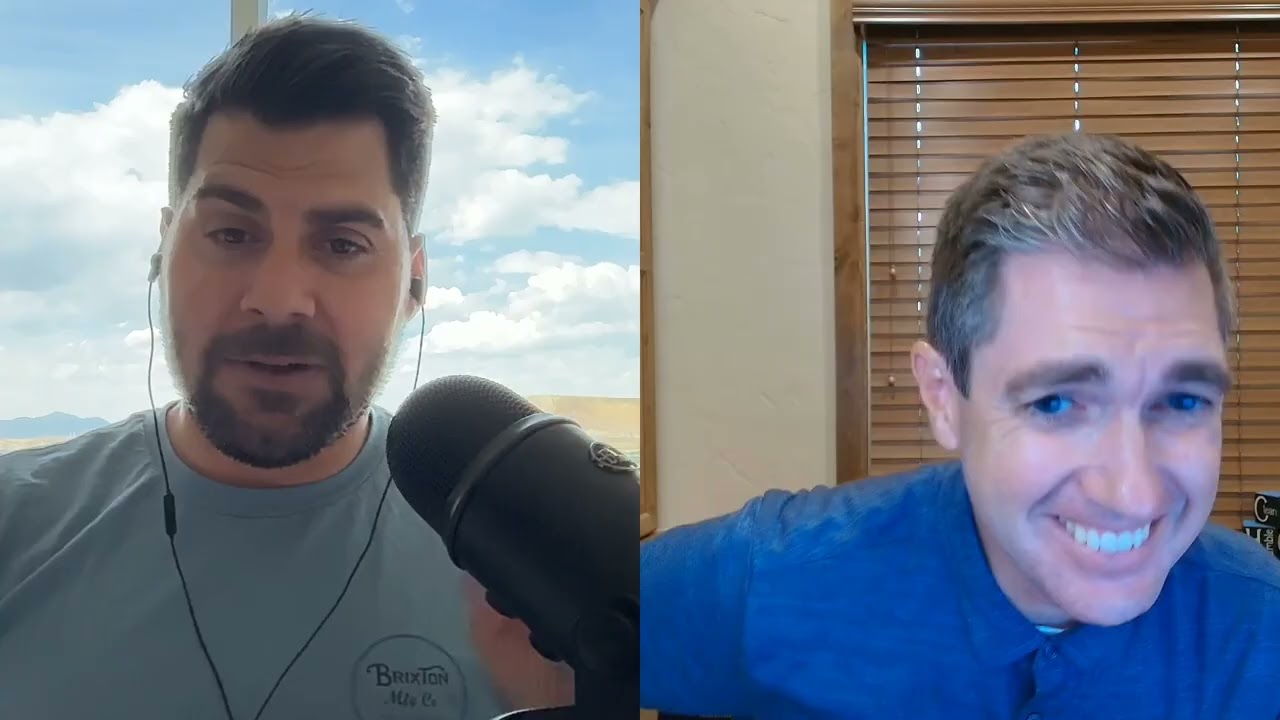
Insurance reimbursements are shrinking while practice expenses continue to rise—but there are proven strategies to fight back. In this episode of the Navigating Dental Insurance Podcast, Jordan Comstock sits down with Ericka Aguilar, CEO of Fortune Billing Solutions, to uncover why dental practices leave thousands of dollars on the table every month and how to reclaim it. They discuss AI-powered insurance denials, diagnosis codes, prompt pay laws, appeal strategies that dramatically increase collections, and why less than 1% of denied claims are appealed—even though most appeals are ultimately overturned. Jordon also shares how successful practices are using patient membership plans to generate predictable recurring revenue, reduce dependence on PPOs, and create a more valuable, financially resilient practice. If you want to improve cash flow, increase collections, and future-proof your practice, this is an episode you won't want to miss.
BoomCloud: https://boomcloudapps.com
Fortune Billing Solutions: https://dentalbillingdoneright.com
Ericka Aguilar
Instagram: @DentalBillingCoach
TikTok: @DentalBillingCoach
Full transcript
Complete text of this video
What's up, everybody? Welcome to another exciting episode of the Navigating Dental Insurance podcast. I am your host today, Jordan Comstock. With me, a dear friend, Erica Aguilar. How are you doing, Erica? Welcome to the show. >> It's always so fun to do a show >> [laughter] >> to do an episode with you. I am very well, thank you. >> Yes, Erica is the CEO and founder of Fortune Billing Solutions. Um and she you've been doing that a while. I think I met you probably on the
on the podcast originally when Ben brought you on, but I reached out and wanted to chat with you because well, one, I haven't chatted with you in a while and I don't like that. >> I know. >> Um and then two, a lot is changing um in the dental industry and I kind of want to interview you and kind of get your viewpoint on what's going on. >> Thank you. >> Yeah. >> Yeah, I think it was back in 2024 when we first started >> Did
we do a webinar together, too? >> We did. >> one of the webinars? Yeah. >> Yeah. Um >> So >> It's always fun. Definitely always fun. >> It is always. So, for for people that don't know you on our audience, if they haven't listened to your last episode, give a quick rundown of how you got in the in the dental space and and how you started your your company. >> Oh, absolutely. I started as a dental assistant back in 1995. A lot of >> Nice. >>
there's haven't even been born at that time. >> [laughter] >> Um so, I am dating myself, but 1995 and then in 1998, I moved into uh my new position as a dental biller. So, I've been a dental biller since 1998 and I started when it was pen and paper and we filled out claims by hand. >> Wow, yeah. >> Downtime was filling in the claim form with like the tax ID number and all the >> [laughter] >> information just so that we had a prepped claim
form. Um and then obviously I've been through all of the industry changes and now we're going through another shift um that a lot of people are not familiar with and I know you're all about collecting everything owed to the practice, Jordan. That's like the mantra. >> We're going to shift and there's going to be another shift and people are going to have a see a lot more denied claims because diagnosis codes are making its way to the market. And I coach lawyers all over the country
and I have a pretty decent following on TikTok and um when I talk about diagnosis codes, nobody knows what I'm talking about. Maybe five people. But >> And that shift is coming. That's crazy. >> here. >> Well, then I would imagine like um I've interviewed some people in like tech and insurance companies are using AI more to deny and like systematize their their denial process is what I've heard. I don't know. >> Yes. And >> I I've I've seen there's some I've read some articles on
like lawsuits of insurance companies getting sued because of it, but I don't know what's kind of what's the shake down. >> So, right now four states, I can't recite them off the top of my head. I know Arizona, Florida. I can't remember the other two, but four states have passed laws that insurance companies have to inform the dental practice that the that the denial was AI. Generally. >> Really? If they're using AI. So, but what does a practice do like when when they learn that? Like
what does the practice can they do anything? >> Yeah, you can request that uh a dentist actually review the claim to prove dental necessity or or back it up. Yeah, you just have to know how to navigate the denial management process. >> Yeah. >> And that's where I find a lot of offices are leaving money on the table. >> Sure. >> You know, I spend a lot of my time researching um what is referred to as uh market trends by the insurance commissioner. So, like the
findings from the audits, what the insurance companies are actually getting fined for. >> Yeah. >> You would be like I eat this stuff all day every day. Like it's >> [laughter] >> I love it. Um I like to know what the insurance companies are getting fined for so that I can teach my audience how to fight fire with fire because I always say insurance companies are fighting fire because they know the law and we in the dental practice fight back with water guns. That's not [laughter]
a fair fight. >> Well, I was like that's a great point you bring up because I was So, this morning I had Dr. Dr. Roy Shelburne on on the on my on the podcast. And he said that when like he went to an insurance event with like for for all the insurance companies and he said the stats that they were talking about over there was like when a denial happens in dentistry 75% of the time dentists don't really fight back and properly or at all and
they they just lose so much money because of that and I was kind of shocked with that metric that that Roy was was sharing with us. >> going to add to that. >> Yes, do it. I'm sure you see all of it. >> some extensive research over the past 2 years and this is just within my own database. When I bring a new office on board um less than 1% of denials ever get appealed. So, I want to keep >> Wow. >> that stat to be
right in front and center. But here's the flip side to that. Eight out of 10 appealed denials are overturned on the appeal. So, we would win more and capture more of that insurance money that's owed to the practice if we would just appeal more. >> Interesting. >> So, why don't we appeal? I did a case study on that. Why do we not appeal? Well, there's no time. >> No time, probably no system. >> intention, it's lack of systems, it's lack of process, it's lack of, you
know, again, these templates that are being passed around all over these Facebook groups. Those are water guns. >> Yeah, sure. >> fire with water guns. Understanding your state's prompt pay law is fighting fire with fire. >> Yeah, yeah, yeah. >> Understanding how to acquire the interest owed to the practice if the prac- if the insurance company takes more than 30 days to pay that claim, they owe the practice interest. >> Some interest. >> More bill- most billers don't even know how to how to get the
insurance companies to pay. >> Yeah. >> you know, not only are we losing out on the money that is owed to the practice, rightfully owed for ser- for procedures that should be covered, we're also losing out on the interest. So, it's >> Wow. >> it's insane to me. I teach a denial management workshop. And in that workshop, it's truly honing in on, you know, things like how to go get the interest that is owed to the practice, how to know which regula- uh regulation uh body,
governing body to go to, cuz the insurance commissioner is not the be-all end-all. You know, if you're dealing with a self-funded plan, you have to go to the Department of Labor. >> Well, the insurance commissioner is is is is a they get lobbied to. >> Yeah. [laughter] They do. They do. But, >> just call us a certain state that uh Delta Dental's in and and talk to that insurance commissioner. >> Yeah, [laughter] I mean, Rhode Island recently got cited by the insurance commissioner. And if here's
the thing that I think a lot of people don't understand is that we're not trying to get the insurance companies fined. A fine is just a line item in the result of an audit, right? That's great. But and honestly, the money that they shell out is nothing for them. What we really want is to create change. So, in the in the Rhode Island, I think this happened in January of this year. It literally imposed 19 mandated changes, one of which was as a result of Rhode
Island Delta Dental of Rhode Island denying claims based on policies that the state insurance commissioner was not aware of. And they can't do that. And so, like I I just feel like this sense of urgency to go and coach and educate our dental billing industry so that as individuals, we level up, yes. But I really my mission is to have the entire billing community level up as a whole because that is when we are going to create change and insurance companies are going to sit up
and say, "Okay, now these billers, they know their laws. They know how to use them." And if I can just add, you know, why this is important. Insurance companies know that a clean claim is a legal term. It's it it is tied to the prompt pay law. But they also know that we as billers don't know that. We think clean claim is a buzzword. Like it's just tossed around all over the place, but that's not the case, right? Like so billers need to understand the clean
claim term is a part of the prompt pay law. And when you submit a clean claim and you know what that looks like, then you know that when the insurance company issues additional information request, that is their legal loophole in stopping that 30-day time frame in them having to pay. So now they get to keep their money while you are trying to figure out what in the world does this additional information request mean? Because they are not going to say, "Hey, we need a clearer x-ray."
They're just going to say, "Additional information." And here's the other caveat to that. They are not going to say, "Diagnosis code needed." They're just going to say, "Additional information needed." >> They keep it vague. >> They keep it vague. And that is actually being vague is a violation of the law and the and the regulators, these examiners, when I read the results of these audits and what the examiners are noting, they are literally saying in these audits that vagueness is a violation of the law. And
billers billers need to understand the legal architecture behind every claim and that's where they're lacking. So once they understand the legal architecture behind every claim, they are going to be so much more powerful and collections is naturally going to go up because now you're going to know how to fight fire with fire. And I always I I I literally just said this in uh the podcast episode that I recorded for my podcast this morning. I said, "When you know how to look at a denial and
see right through it like it's bathing in Windex. Like, you know, I got that from Mariah Carey, but >> Yeah. >> [laughter] >> But, you know, you get to see right through that denial and and you know that it what it is, you fight different. You move different in the fight. >> Yeah. >> Now, you call up the insurance company and you say, "I want to see where in the policy additional information is needed." Every insurance company has a requirement by each state, and it's called
having, um, a complete claim standard. So, they are required to provide participating providers their complete claim standard. And it is in that that the examiners are saying, "The complete claim standards are way too vague." And Rhode Island just got cited for that. Rhode Island's It was They have to be so s- s- uh, procedure code specific. >> Mhm. >> Uh, they're like, what exactly is needed for each procedure code? >> Interesting. >> And every biller should have a copy of the clean complete claim standard. >>
And that's That's true in every state that they have the complete claim standard. Okay. >> Yeah. It's so hard >> a place where they can find that? Is there like >> It Well, the insurance company, the PPO, should be providing it. They're required actually to provide it to participating providers, but you can also go look it up. >> Do you find them not providing that on a >> I find that they >> it harder to find? >> It's there like embedded somewhere. >> Yeah. >> I
don't know. It's very hard to find. So, usually you have to pick up the phone and say, "Can I please get a copy of the complete claim standard?" >> Let's Let's Let's rephrase that. You pick up the phone, wait for 45 minutes, and then you get it. Right? That's more accurate. >> [laughter] >> Also, I mean, gosh, I could get so deep into the weeds on this, but like >> Yeah. >> also, um hold times they get fined for long hold times. They get fined or
they're >> classified as a I guess it's probably per state, but what's typical classification of a long hold time? >> I don't think I've seen any, but um when the examiners go in I'm going to use Rhode Island Delta Dental of Rhode Island >> Cuz that's the freshest one, yeah. >> That's the Yeah, that's the one I wrote up on most recently. Um they go in and they look at appeal logs, they look at hold time logs. And insurance companies are required to provide a certain
level of customer service and hold times >> It's funny they have the laws, like that should just be normal normal nature of any business is good customer service. >> amazing to me like it's one of the the things that could the examiners are noting in their audit findings is hold times are ridiculous and they're ordering the insurance companies to get better at it. Now, insurance companies are firing back and saying, well, you know, we have staffing shortages and we're doing the best we can. >> Sure.
>> We all know that's not true. So, um but yeah, it's just insane. All of these things are designed to get you to give up. Like ultimately you know, burying the offices in paperwork, denials, additional information requests, it's just you have to know how to navigate all of that and your denial management process has to be again, you know, just fighting fire with fire. >> Yeah. No, that's really interesting. You have a lot of amazing tips. >> [laughter] >> And we just started. this >> I
know. I'm kind of a geek, too, but but on the on the opposite side of uh reducing dependence on PPOs through membership plans, you know. Um but yes, we're both we're both dental geeks. I guess we can say that. >> Definitely. [laughter] >> We can say that and it won't hurt our feelings. Um >> All day long. >> The the um >> [clears throat] >> I got a stat that I I was reading this week. I was reading uh some financial reports that the ADA had
had released a few months ago. And I found it interesting um where the ADA says that over the past 5 years revenue growth in the dental industry as a whole um grew by 1.4% in 5 years. So, slow growth, slow revenue growth. Um and expenses for dental practice has grown 4.9% in that same time period. So, uh you know, a stagflation type scenario if you were to ask an econom- uh economist, I think he would say something like that. Um where like I think of this
is okay, you just spouted off a lot of issues that a lot of practices probably aren't doing to help them get their money, which you see revenue growth um not growing as fast as expenses, right? So, it's it's out of whack where >> Where? >> that? It's like a one to four ratio, you can say. Um four a four being expenses, one being revenue growth. So, when I look at that, I'm like, "Okay, it seems like the doctors that I talk with that come to to
us here at BoomCloud are, you know, when they come through our our system, they're all saying low reimbursement, low reimbursement, low reimbursement. Like it seems to be a very common trend and it's getting worse and worse. Is I don't know if that's true, but it seems like that with the the amount of people that we're seeing come through our our technology and like, "Wow, this is really interesting." Low reimbursement what and I think that's a huge factor of impacting our current industry and the state we're
in right now where okay, revenue's not as not it's not growing as fast as as expenses. So, like how do you interpret that that information from the ADA and like how how would you like help practices to solve that problem? >> Teach uh well, I'm a billing billing expert. >> Yeah. >> Um you know, so from a billing standpoint, I would teach my team the things that are affecting the reimbursement cycle. >> Yeah. >> One of which and I can confidently speak to this because um
within my company, we have a a tool that Jen and I created together which is called the claims correction list and essentially our rule of thumb is that we will not create or submit a claim without clinical notes to protect the doctor, right? So, >> Yeah, just ask Roy Dr. Roy Shelburne about that. Yeah. He emphasized that on his interview today. I'm like, "Oh, man." >> 100% Yes, and so with that being said, um our claims corrections list that we use identifies the reasons like if
I can't submit a claim cuz there's no clinical notes and it's a hygienist uh and so it'll say, you know, patient name, date of service, um name of provider, and the amount of that claim that's pending. It's hasn't even made it to aging yet. It's stuck the in a pre-aging stage. >> Okay. >> But if I see a certain hygienist who is consistently one week behind in notes or 3 days behind in clinical notes, I can also see the total. So, you know, we're looking at
30 to 40,000 dollars on average per provider that we're holding on submitting claims. And hopefully, hopefully the listeners understand the concept behind not submitting a claim before clinical notes. And if you don't, I'm I'm I'm going to educate you in a second. >> Listen to Roy's podcast on that one. >> listen to Dr. >> [laughter] >> Shelburne. I had him on my podcast probably two years ago. I shared the stage with him in 2024, and it his story is absolutely amazing. >> Yeah. >> Um but
in in another >> Yeah, and oh, and [laughter] scary. >> Deeply disturbing, yes. >> And it and it's like you you don't submit a claim without clinical notes not only to protect your doctor's license, but you don't want to unintentionally commit fraud. >> Yeah. >> And in Dr. Shelburne's case, that's what happened. >> That's what happened. >> Unintentionally committed fraud, and he went to prison for literally 17,000 dollars because when >> Yeah. >> when you get accused of this stuff, they don't care about the number.
They care about the intent. And as he always says, ignorance is no excuse to the law. >> Yeah. >> So, you know, >> Yeah, the exact number because I he mentioned it multiple times this morning was 17,399 dollars and 53 cents. >> Yep. And did he tell you how much money it cost to keep him >> It was like the estimate I think is like 1.6 million. >> Yes. >> So, >> Make that make sense. Like Make that >> Well, it's cuz it's the government and
I don't think anything makes sense when you're working in government. But if it was a private organization like yours or mine, that investment is not correct. >> [laughter] >> That is not a a good investment. >> [laughter] >> So, like you know, like going back to the the whole ways we can improve, I think training our assistants to support the billing team. Um we a lot of times we get really sub par x-rays. So, I have a dental assistant attachment guide, you know, and I can
make that available to anybody that wants it because again, um you know, these are ways that we can fight fire with fire. >> Yeah. >> Stronger clinical notes. If I can't identify a diagnosis code to use through your clinical note, I don't I can't create a strong defensible claim because we put diagnosis codes on our claims now. And you know, so clinical notes, um make sure your assistants understand what attachments are needed for each procedure. Train them. Um remind them if it's a major procedure in
the morning huddle, let them know, "Hey, the x-rays that we have are too old. Make sure you get a new one." Or, you know, if you're doing a build-up, this is one of my biggest billing tips. When you're doing a build-up, it's I don't need a build-up after the build-up is put on. I need an intraoral photo pre-build-up. So, like post >> So, you can prove it. >> Yeah, because I need to show the insurance company that there was less than 50% tooth structure remaining to
prove dental necessity. >> Yeah. >> Proving dental necessity is proving form and function. So, I need to prove that, you know, we needed the build-up for retention purposes so that I have a fighting chance when they want to combine the payment into one. You know, so and that's a a an appeal that every biller should know how to do because insurance companies are taking stats. They're taking notice on what we are appealing and we're virtually just letting them get away with it. I mean, obviously, we're
we're not even appealing. >> Yeah, the numbers are are kind of sad when it comes to that and it seems like and unfortunately and which is probably contributing to the low growth the the low revenue rate of the industry, which is not which is not a good place to be in as an industry. >> Yeah. >> But I think it can be definitely done through optimizing your billing process. Um you know, on on my side reducing dependence on as many PPOs as you can. >> Well,
oh, I agree with that. >> And and it exchanging it for a patient membership plan. Um you know, I we see a lot of practices becoming like hybrid fee for service and insurance companies. That's that's kind of when I >> thing. >> when I started our company my my ultimate goal is to help practice become more fee for service, right? But I know that that's not always possible with everybody because there's a lot of different scenarios. But what I'm seeing is the mass majority is becoming
more uh hybrid offices fee for service and and they're sticking with, you know, more of I guess more efficient PPO plans that, you know, are better for them like cast, if that's even true. >> [laughter] >> You know what I mean? So, no, this this has been an awesome episode. Uh Erica, let's let's do this. For our listeners, you know, um hearing your story and hearing your tips, like if if they're needing help with um with billing and all the stuff that you uh educated us
about, like how do they how do they hear of you or find you? And what's the process? Do they call you up, schedule a a meeting? Like walk us through all that. >> Um they typically will reach out to me on uh social media. Uh I get a lot >> You're big on Instagram. >> I'm >> I know, I follow you on Instagram. >> Tik Tok and Tik Tok has become >> your videos on Tik Tok, too. Yeah, yeah. >> Instagram. So, uh I am dental
billing coach um on both. And you can also go to my website. It's dentalbillingdoneright.com. And um you can reach out to me there and we can connect and have a conversation. Um I know you can I will also be talking or announcing some upcoming workshops on denial management, and these are full-day workshops. I mean, these are game-changing strategies for a dental practice um wanting to learn how to fight fire with fire, and this really does change the way insurance companies treat your practice. >> Yeah, very
good. >> I'll announce that as we get closer to that. I'm planning on doing one in Hawaii. So >> Yes. >> [laughter] >> Manifest it. >> I'm manifesting it. It's coming down the pipeline. >> [laughter] >> Oh, Hawaii is one of my favorite places, so you know I'll be there, too. Um the Okay, so Dental Billing Done Right.com. I'll make sure that's in the show notes. So, be sure to go and check out Erica's website and schedule time with her or go to one of her
events. >> Yes. >> Um as you've witnessed on this podcast, she is full of information and helpful tips and guidance. So, I would I would hope people go and book time with her and and spend some time with Erica. So, with that said, we hope everyone has a rocking day.