Videos / Watch
Vetting new partners and associates the right way with Bob Speil
August 19, 2026 · BoomCloud™
About this video
Bob Speil: robert@spielconsulting.com
Full transcript
Complete text of this video
[music] Welcome to the Navigating Dental Insurance Podcast where we don't take from insurance [music] companies. Here are your hosts, Mr. Jordan Comtock and Mr. Ben Tui. Welcome to another exciting episode of the Navigating Dell Insurance Podcast. This is Ben Tui, your solo host for today. Jordan, of course, again, his uh absent, more so excused from today's episode. Uh many of you know that Jordan is my neighbor. Uh there's a path right behind my house, a bike trail, running trail. Um and Jordan stopped by my house
a couple of days ago and he introduced me to his daughters as the uncle. So, I'm I'm his uncle I'm Uncle Ben to his kids, which is really neat because I have in the in the range of 75ish nephews and nieces. Um, so Jordan, don't take this personally, but um I don't know my nephews and nieces names, all of them. I just call them Hey K, hey Tao, hey T. They all have the same name depending on what day it is. So, for your daughters, Jordan,
I might I might make up some names, something easy for me to remember. Um, so many of you know that Jordan and I are now neighbors, which is fun. That was not planned, but uh you know, when fate happens, I guess you know, as they say, the universal lines, things happen. Well, today we have um gosh, we have this episode is a long time coming. We've canled, we've rescheduled, we've had internet outages, we've had uh tornadoes, which is totally true. I I I drove through a
tornado in Georgia, um, southern Georgia about three weeks ago. Survived that, and I had a golf ball, well, not a golf ball, a softball size, >> uh, hell smash our rental car's windshield. >> My wife and son were were [clears throat] crying and, you know, we're like, "Oh, this is the end of life as it is." But we've had those kinds of crazy issues [laughter] that have has caused this this this episode to be postponed. So, this is going to be an epic episode. Everybody buckle
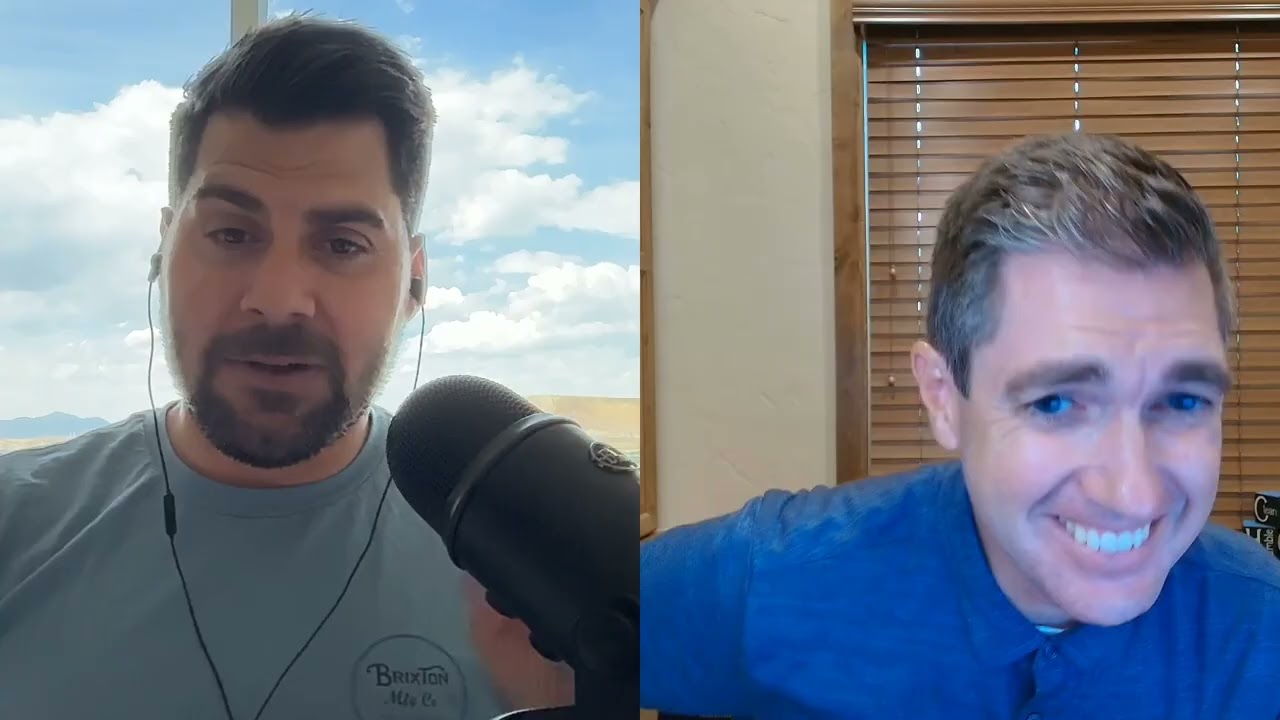
up and and and get ready. This is going to be exciting. Um, many of you probably already know Bob Spiel. He uh he's the author of Flip Your Focus. It's one of those really great leadership books about upside down leadership, right? How to realign your focus in a way for you to um be a more effective leader. And I've read his book a couple of times. Bob, welcome back to the program. Hey, thanks Ben. Awesome to be here. >> Yeah, it's great. Now, I'm going to
get to you here in just a second, Brian, but Bob, um, flip your focus. Can you tell our listeners how they can get a hold of that book and why why it's important for them to at least consider it as a business owner? Why they need to need to learn [clears throat] some of your style of leadership? >> Oh, thanks. Yeah, they can find it on Amazon. You can just go to Amazon and type in Flip Your Focus, igniting people, profits, and performance through upside down
leadership. Um, and you know, it's 20 bucks. It's it's a great read. Uh, why they should care about it, frankly, is that you can't run faster than your leader. >> And so, if a practice is going to raise the bar, the secret to the whole thing is the dentist raises the bar first. >> And once they get that mindset, it's really exciting to see what happens. >> Yeah. I love that. I've learned in my career as a business owner is that you can't grow beyond your
scope of >> understanding your training. Right. No, >> you can't. That's right. >> Oftentimes we become our own bottlenecks and it's a function of training and understanding and and and most of the times it's a function of leadership, right? How how you lead your your group of people to take you to that next level. >> Yeah. Exactly. And and and the cool thing is Ben, it's not as hard as it seems. >> Yeah. [laughter] >> Okay. Really? You know there's that you can strip the mystery
away from this thing >> and I talk about one mindset and three skill sets and if you can just adopt the mindset and then practice the skill sets suddenly magic starts to happen in your practice. And the most awesome thing is that the dentist actually starts to feel less stress. >> Yes. >> And more enjoyment because the team now is in alignment with where the dentist wants to go. >> It's such the coolest thing. I've implemented that June of last year. Um I was so frustrated
just because I I couldn't spend enough time on the leadership for the group training people that people knew my philosophy. So I I interviewed in-house to promote somebody to be my operating officer. >> And sure enough, Miles on my team has been with me since the beginning of Veraritoss, which Veraritoss started in 2014. Um she of course she was the best one to interview for this particular position to delegate uh the the whole leadership realm in in an effort to have others sharing the responsibilities and
empowering her and trusting her. Um of course she's had multiple payraises since then because I've never seen the amount of growth in our business over the last what >> 10 months 11 months. It's never happened in our history >> and it [snorts] is all about that. It's it's about that flipping your focus as a leader. A lot of the concepts that you mentioned in your book that I ripped off and stole and implemented, I'm you know, I thank you for that. All I paid you was
that $20 for that book and it was totally worth it. >> You know, and in in a in a couple of lunches, right? >> Yeah, totally. So, I I feel grateful, Bob, because a lot of your leadership stuff that you mentioned in the book has actually had a personal impact on me. So, if you're listening and you need a good read, uh, Flip Your Focus on Amazon. It's probably one of the top leadership books I've read in the last and >> awesome. It's also an Audible,
so if people don't want to don't want to read, >> they can listen to it and and pick up a lot there, too. >> That's awesome. >> It's also pretty It's also pretty quick read, too. So, for those super busy dentists out there, it's pretty quick. Very easy read. is one of those things where you mark you you book tab and you'll go back to on the weekend to read again because when you implement some of the things that Bob mentioned it's I call it sort
of a uh a chapter in the Bible of leadership right or at least an ep um a book in in in the Bible of leadership because it's one of those essential this is this is how I want to be a leader is a lot of what Bob mentioned in his book >> thanks that means a lot >> bright and oh it's my pleasure Now Brian, so Brian over the last five years, quite impressive history, he's built two companies and has taken them sort of from that
startup level, you know, from zero to seven figures. And uh just curious, Brian, so how in terms of your history, that's actually very impressive to do that in five years. Um it took me over 10 years to do that with one business, actually two different businesses. tell us a little bit about your your dental history, how you got involved in dentistry, and maybe even a little bit about the two companies that uh that you've developed. >> Yeah, so both the previous companies I had worked with
were sales and marketing companies. So, they were pretty rapid growth companies. I did a lot of operations, some sales here and there. Um, I was number one employee in both companies, but I wasn't the owner. Uh so I even though I facilitated it and created a lot of the growth, I didn't have that ownership stake that I really really wanted. So um Bob and I have known each other for the last five years. He's been a great mentor to me. And we just started talking about
um I mean I've always picked his brain. Bob's more than willing to always share uh his opinion and his mentorship. And so we just started picking each other's brains and we realized that we had a lot in common. and Bob's been in the industry for the last 15 um you know 15 years plus and we realized that uh we wanted to work together and find a find an avenue to do that. So last year over the last year or so we've been working on a few
projects together and that's when I just started to fall in love with dentistry. It is Bob talks about all the time but I believe it is the greatest small business in America. It it really is the amount of lives you can impact in such a small team and how efficient you can make it. It's just so unique and so fun. So, I've really enjoyed diving into dentistry because it really is just a fantastic industry to be a part of. >> It's a great career. You know,
um I was sort [snorts] of shocked a few years ago when we brought on a guest that came and talked about the stresses of dentistry. And I think the title of that episode was something along the lines of why have I lo why have I lost my passion for dentistry, right? >> And I to me it was probably one of the more less it was actually a very sad it was a dark and depressing episode in my mind as we were recording it >> and uh
I thought in my mind this is probably not going to be a very popular episode but we'll you know we'll post it anyway. we did and in for that year it was the number one most listened to episode and that woke me up to the reality that from the dentist perspective dentistry is a hard career. Um, >> it is >> it's a full Yeah, >> full contact sport. Yeah, that's what we It is. It's all in. >> Yeah. Eight to 10 days, 10 hours a day,
four to five days a week. >> Um, and I and that was the first time I started to realize that from the doctor's side, it it's a lot more stressful than what I realized. And naturally, as you engage in a profession that's high demand, you you you tend to lose the passion for dentistry. So, I'm I'm I'm glad what you mentioned, Brighton, that dentistry is a great career. I I think it's a great career. I have those ups and downs, maybe on a quarterly basis, you
know, you'll have those emotions kind of swinging back and forth, but overall, I think dentistry is probably one of the better professions out there. So, if you're feeling any stress and hate for the for the industry, talk to someone. You know, uh dentistry can be very very enjoyable over time. um especially as it you know what we're going to talk about today in terms of this whole concept of partnerships right associate ships and all that uh the title of this episode as you as you can
see here is something along the lines of ending the dental divorce cycle and I think this is really cool and unique because I'm assuming we're we're talking about this from the perspective of doctor relationships partnerships and associates is that right guys >> correct yeah absolutely >> so we're not going to be marital therapists Today we're going to be talking more so about um tips and techniques on how to how to end that vicious cycle of turn and burn as it pertains to bringing other doctors into
your practice to work with. Right. So let's talk about this. How this whole title what made you guys think of this title in terms of it being called ending the dental divorce cycle? >> It's real simple, Ben, because well twofold. Number one, when two dentists part ways, >> it feels like a divorce. >> Yep. >> It feels like a divorce to the team. It it it costs it can cost upward of $100,000 in terms of opportunity cost and real cost to have that happen. But in
the end, everybody just feels this this this negative energy of h we failed. >> Yeah. you know, but the other part to this is that uh and just to give you some background, um like Brighton mentioned, I've been in the industry 15 years. I actually consulted in medicine >> after being a hospital and surgical center CEO and just happened through I think one of those things when the universe lined everything up like you you and Jordan being neighbors. Um, I was able to get into dentistry
through working with another dental consultant and he opened my eyes to this whole really, really cool industry. Okay. And talking to a friend who had been a long-term dental consultant, um, she mentioned me one time in a phone call, "Well, you know, Bob, our failure rate with placing associates is 75% within a year." >> Wow. And and honest to goodness, I mean, this is I hate to say this is my fifth industry, okay? I'd never seen that type of blood bath when it comes to hiring
people at the executive level. All right? You don't even see that in medicine. >> And it was like, what the heck? Why would that be the case? Mhm. >> Until thinking through and talking to other people that have been at it, the realization came, well, Dennis live in such a unique environment. As you mentioned, it's high stress, but they also live in each other's sandbox. >> Okay. >> And because of that, there's nothing else on earth quite like a real marriage except a dental marriage. >>
Yeah, that's interesting. You know, when I think about, you know, my my real marriage, >> you take time to get to know the person, right? You're both It's sort of like a an ongoing working interview, you know? [laughter] >> Yeah. Are you going to be up to the task? Are you going to be able to deal with my quirks, you know, my weaknesses and all that? >> And and when you look at it from a business perspective where of course it's a it's a different dynamic,
but very close to an actual marriage, right? where you probably spend more time with your business partners than you do with your own spouses. >> Just just about. Yeah. >> And and and that and that need for values to be aligned, >> for how they view money to be aligned, for the ability to trust each other's dentistry. >> Yeah. >> You know, to to be there matters and that's why they fall apart is because the groundwork wasn't laid to begin with. As you mentioned, it was
an ongoing working interview. You know, I've been married 40 years and the working interview is still going on. [laughter] >> If you if you've got a secret, man, let me know. Okay. [laughter] But but there's so much that has to happen up front. And [snorts] sadly, as an industry, we've always viewed it through the lens of this is just a business relationship. >> Yes. Yeah. you know, I you actually kind of segueed into into one of the first areas that I wanted to talk about was
how did how do we get into the me this mess, right? You know, and and to kind of uh season that question a little bit from a personal perspective, I've had uh three different failed partnerships in the same business. and you know I'm the last man standing fortunately >> but you know you partner with best friends and um and those friendships they die once you go through this whole divorce system >> and you mentioned that um the groundwork wasn't laid correctly from the beginning. What are
some of some of the things that you need to think about as you consider, you know, a potential partnership or potential associate, you know, where you're hiring somebody at the executive level level, where do you need to start as a practice owner? >> I I think lots of times we just think they need to have a license and a pulse. And if they check those two boxes and then we like get along and we're kind of friends, maybe we like to golf or whatever it is
that oh, we're we're similar enough that we can make this work. The reality is and es especially dentistry I think most business partnerships you could probably apply the same principles to but dentists in specific work so handinand together that uh if you're not aligned in a lot of other things other than the fact that you might just both like to play golf and you you have fun with each other whatever um those little undiscovered or maybe undisussed values and expectations start to boil up and they
go from mole hills into nonsense, right? So, some of the few things that we have really narrowed in on that are success, I mean, that lead to a successful partnership. Um, number one is being aligned in how you view money. >> Um, lot people view money in all sorts of different ways. There's not good or bad. It's just how do you view it? Do you view it as a tool? Do you not mind using debt to further along your >> your business? Do you not like
debt? Do you uh like to be flashy, have nice cars, whatever it is, those values around however you view money, it's really important to be similar. >> So, so similar in the sense of um you know, one doctor is high risk tolerance, right? They they don't mind taking risks when it comes to investments and then another doctor is low risk tolerance, right? They're just going to put money in savings. Um not very high risk mutual funds, things like that. So, you're saying that they have to
be aligned that the one that is if if they're both lowrisk in terms of money management, they they they'd align better for a long-term partnership or at least a working relationship. [clears throat] >> Yeah, it it definitely I I don't know if you have to get in so minute of your investment strategies, but definitely of your perspective and how you view it in your relationship with money, >> the basics of money and yeah, and how you spend it spend it within the practice itself. It really
has to do with reward systems. >> And there are those that view money as the reason that I got into dentistry. You know, I had a neighbor who, man, he had the nicest house. He was able to take vacations with his family, looked great. So now I want the gravy. >> Okay. And that sort of person was someone whose mom washed their baggies out and they had no money at all and they drove a Honda Civic for 20 years. >> Those two people are not going
to get along. ultimately because when it comes down to it, they're just going to start to split apart because they can't see the vision in terms of where they want the practice to go and why they're doing what they're doing. >> Okay? >> You know, Simon Synynic brought up this phrase which which we think is is really really profound, but begin with why. >> And and money really becomes a fundamental why. >> Gotcha. >> Okay. >> Yeah. Yeah. I could see that. I mean, I you
know, [clears throat] I I was watching this uh episode one uh gosh, it was just a short clip the other day about somebody asked an audience member why they why they drive a BMW, right? And the person that answered it says, "Well, because it looks nice." And so the speaker's like, "You so you're telling me that you you're spending $1,700 a month >> to drive a car to look good to people that drive Yeah. you >> to impress people you don't know. [laughter] >> Yeah. So,
so under that example, I mean, you [clears throat] know, I I could see that as when you have a different philosophy where the more conservative um doctor that spends money on the essentials, not the flashy stuff. >> Um I've seen that even in neighborhood relationships. You know, you have this whole idea of keeping up with the Joneses >> and and then the one >> family on the on the corner, they don't care. like, you know, we'll focus on taking care of our families, but we have
different philosophies on how we uh how we handle our money. So, you see those dynamics in day-to-day life, right? Where the ones that are keeping up with the Jones Jones, they're friends because they're competing against each other. And >> the ones that are living conservatively tend to always all be friends, too, because they they they're align aligned with their personal values, right? [clears throat] >> They probably relate better when they just have basic conversations with each other, right? Just like dating or married. And I mean,
yeah, going back to the marriage idea, yeah, you and your wife or you and your spouse or whoever you and your partner need to be, it definitely helps if you're aligned on how you view money. What's one of the number one reasons for divorce out there is because of financial stress and how you view money, right? So, we apply apply the same type of principle when you're looking to form a new what we call dental marriage with a new associate or partnership. >> I like that.
So, that's number one. This kind of reminds me of uh you know, my single days. Gosh, a long time ago. E-Harmony's seven points of compatibility, [laughter] right? >> Yeah. >> Um, and this is sort of a version more more of a professional version of the matchmaker concept, right? What's number two on >> exactly? >> What we find number two, Ben, is and it's funny that you bring up Be Harmony. Um, because what Brighton and I are putting together is a company called Dentist Hiring Pros. And
our whole purpose is to try to align practices who need associates with the ideal associate. Okay. Not just a pulse, not just a license, but somebody who really fits the culture and fits the doctor and fits the team. You know, you talked about the three divorces that you've been through and I got in business with a friend and you know, it didn't turn out. It reminds me last year I was talking to a someone who is an active client right now. Um and he had this
one friend of his from dental school who came in and would do, you know, one or two days here or there. And I started asking saying, you know, I really think I could partner with this guy. And I'm saying, well, tell me more about him. and the the the owner doctor is a little more serious, a lot more hands-on, super fast with technology. Uh his practice is doing amazing. But this other guy would come in and he'd be a jokester. He he his he wasn't on
time. Um he'd spend maybe too much time talking to the staff and he was just kind of a class clown. Okay. And the more he told me about him, I started thinking, you know, I just don't know. I know Felix and Oscar got along, but that was a contrived situation. Okay. Um, [clears throat] so, so I said, "Well, listen, you know, doctor, let's do this. Let's let's run a disc survey on you >> and a disc survey on him." And Ben, I don't know if you've
heard of of that. It's pretty common in dentistry, but it's just a quick personality profile, okay? to really kind of get under the hood and see what makes this one person tick, what makes this other person tick in terms of communication style, making decisions, risk tolerance, conflict, etc. Well, lo and behold, you know, the owner doctor, man, he he's a very conscientious perfectionist doctor. And this other person that he was thinking of bringing on the board was this enormous influencer, okay, who could sell anything to
anybody. But when you understand this methodology, you understand that you know that type of personality also doesn't listen very well, doesn't pay attention necessarily, can't uh really stay on time. And the reality came down to listen, you know, you guys can be friends, but if you decide to get married, >> man, it's going to end up in a really bad train wreck pretty soon because he's just not going to fit. Well, guess who had the job then to tell his buddy you're [laughter] not a fit?
It was me, brother. >> Oh man, it's not always easy, right, Bob? Like, >> it's not. No, >> it's almost like you're firing somebody. And um >> in in some ways, but it was the right thing to do, >> right? >> And and and I think his buddy took it well. I know the hiring dentist took it really well. And then we found somebody using our criteria, >> doing our homework, understanding, you know, personality styles, uh, how they view money, type of dentistry they like to
do. And we found the perfect guy. And he's been with this doctor now for month seven, and he just cleared a h 100,000 in production this month. >> Wow. So I guess >> so when you find the right person, the cool thing is it's magic. >> Yeah. Yeah. I love that. It it kind of makes the whole um uh what is that saying? Opposites attract. So this is like So you're saying that's not always true. [laughter] >> That's not always true. Not in a business partnership.
[snorts] No. You can you can have complimentary characteristics, >> but there are times that they just automatically conflict. >> So, what about >> especially when you've got a senior doctor that's already created a culture? >> Yeah. >> Yeah. I and I think it's even more so that I don't know if they're necessarily opposites or I you know it's hard that you don't want to put people in pigeon holes or boxes or anything like that but some relationships definitely take more effort >> um and more energy
and so if if you can maybe set yourself up to success set yourself up from success from the very beginning make sure you kind of are aligned in as many things as possible it prevents less likely to fail in the future. So that's why it's, you know, it's really important that you do understand how you communicate and how someone you might partner with communicates because those are really easy ways to start to cause problems down the line. So this is sort of like um you know
when you're looking for candidates to come and work with you, >> you're doing a lot more than just a working interview, right? you're I'm assuming you're running this DISC assessments, personality assessment, a questionnaire, multiple interviews, right? And at the end of the day, I'm putting in the shoes of that doctor where you said, "Look, you guys are just not a fit." You know, in in in his world, [clears throat] probably a little bit crushed, right? But I'm sure you painted it from the perspective of look,
you're going to find something where when there's a better fit, things the magic happens. But when you when you really try to push two people together that are incompatible, there's always going to be things like conflict, right? Or a lot of conflict >> that could interfere with your personal potential growth, right? So I think for myself as an individual, like if I'm attending a working interview and I'm being told no, that's not necessarily being saying that you suck, right? It's like, well, you're probably better fit
with somebody else. Let's go help find somebody else, right? >> Absolutely. You always want to be thinking win-win. And that's how we approach it at Dennis and Crows. We want to find a win for the associate. We want them to be happy or the new partner. We want them to be happy, them to be excited, them to be content. And if they don't match up with these similar values, they're not going to be happy either. You know, if you take someone that loves living living in
Manhattan, New York is a super city folk, and then you go and put them into the middle of nowhere, Virginia, or South Dakota or something like that, they're just not going to be happy. Uh, you know, we So, you do want to set both people up for success. And so, you got to think think win-win. >> That's awesome. I want to go. >> So, so Ben, just and just just to throw one more piece of of information out there. I mean, we formalize it to the
extent where at Dennis Hiring Pros, we actually create what we call an avatar. [clears throat] >> Okay. And so we know what that ideal candidate's going to look like. >> So before you even bring somebody in, you have >> Yes, that's exactly right. Yep. We know those characteristics >> and then that's what we survey to. That's what we interview to. That's what we check references on. All of that. That's the benchmark. >> Yeah. We We are never Sorry, Bob to interrupt you there. Go ahead. >>
We're ne we're we are never comparing candidates A to candidate B. >> We're always comparing candidate A, candidate B, candidate C to our ideal candidate. >> Gotcha. >> We're not trying to pick what's the best of the litter. We're trying who's the best for our practice. >> Yeah. This this reminds me on how um the big corporations hire executives. Um gosh, it was more than 15 years ago when I went through something like this and they said you're based upon your skill set, you you kind
of fit that mold of what they're looking for. So, so you're in a a short list of candidates for this position. And it was very very similar to what I'm hearing here. Um why? So in terms of creating that avatar and then you go out and you find the associates, what about this whole concept of there's been a shortage of potential associate candidates or even hygienist candidates, right? So I'm I'm assuming what you're talking about here probably applies to more than just hiring a doctor, right?
You can apply these same concepts for any position in the dental practice. But how do you deal with the issue of workforce shortages or are there workforce shortages these days? It's a good question. >> Yeah, there are work workforce shortages all over the place because co had 10% of the hygienists step out and only half of them have come back and others have decided they were going to sit on the sidelines while more COVID money was kind of spread throughout the whole country and and it
has impacted the entire industry. Now, at Dennis Hiring Pros, we're zeroing in specifically on that associate relationship because we think that's where that's the foundation of an entire practice. >> Yeah. >> But we have found that kind of circling back then to the whole idea, flip your focus, >> okay, that practices that are well- led and have a very healthy culture and also pay not at the top of the market, but pay fairly within the market. They rarely have a problem trying to bring people on
board. >> Yeah. >> They become magnets. Okay. And and their team members are looking for that type of environment to be in >> because they know what it's like to when they don't have it. you know, that that brings to mind um when I shifted how we did things last June, >> um we sort of became known among candidates because we started hiring and we had for a single position, we had over 200 applicants >> and it's crazy in most dental practices where they put out
an advertisement, they'd be lucky to get a response in a week or two. Right. >> Right. Um, and I I I I'm living in this world where I kind of feel like the pandemic issues with workforce shortages didn't apply to me. For some reason, what we we do is different. But as I looked at it, the bonus system that we put in place, the compensation package, um the testimonials from our current employees and what they were saying about what what we do to their own friends
that they were saying, "Hey, you got to apply here." We had a long line of people that we had to turn away. >> Yeah. >> You know, and I think it was because of that whole leadership dynamic change, right? where now people in the business your your own employees felt invested right where they wanted to be surrounded by people that they thought would be the ideal candidates for our business. So I can see that where >> there are some practices uh that would put out advertisements
and then they would fly in people from Alaska, doctors from Alaska to come out clear to New York, you know, these doctors in Alaska that are interested in these positions, right? So I so I guess I in terms of that, you know, tying in your your book, Flip Your Focus, at least the leadership dynamic compared to what you guys do with dentist hiring pros on building that avatar, eliminating this whole idea behind dental the dental divorce cycle. It's far beyond that in my opinion. I mean,
this is this is a system to run >> an efficient business all around, right? >> It is. And and and a and a thriving partnership. >> Yeah. in the end because that's really our goal >> is to create thriving practices and thriving partnerships >> that love what they do. >> Yeah. >> And and and it's very very possible to to to make that a reality >> in dentistry. I've never heard of anybody else doing this. So I think you guys are going to be successful in
this because it's needed, right? Every practice owner that has hired an an associate can relate. They've been they've had divorces a few times, right? Or multiple times. >> In fact, we do credentiing for doctors and uh less than six months into the credentiing process, doctor's gone. >> They're gone. Yeah. What happened to them? >> Yeah. >> Every single day. Well, I love this guys. I So, how so for doctors that are listening to this that are saying, "This is for me. I need this. Where where
can they go to either contact you or learn more? Yeah, the the best place is just to go to our website, dentisthiringpros.com. Uh on that website, there's a form you can fill out or schedule an appointment. You can talk directly with myself or Bob. Um we'd love to have a conversation to see if you're ready to to bring on an associate. Um one of the really important parts of our process is actually vetting the practice to see if they're ready. Lots of times doctors think, "I'm
too busy. I'm I have too much going on. I need an associate. I need this." Mhm. >> And what's happens when we kind of peel back the, you know, get under the hood and start looking at what's actually happening in their practice, lots of times they're not prepared and and we have to turn people away and they need to go back, start reading Flip Your Focus and and transitioning their practice into doing more with what they currently have. Um, but that's the best place, dentistingpros.com. Uh,
and you can contact us there directly. Um, one thing, and I, if we can, Ben, I I don't want to end this real quick. There's one third piece that causes dental divorces that I think is really important that we touch on really fast and that is uh not having and it sounds super simple, but not having clear expectations for the future when you form a new partnership. Uh, I cannot tell you how many conversations we have with Dennis um that lost an associate recently or they've
gone through five or 10 or whatever it is and we find out that there was never a conversation about what's the future for this associate. Is there a partnership track here? Is there a carrot out there that I can work for? that we have found that one of the most important parts of creating a thriving and lasting associate is to make sure that there is a sort of ownership partnership track on the cards at some point in the future. We're not saying that you hire an
associate and in a year they get to buy 50% of your practice. >> Maybe in some circumstances that's okay, but for most time we would not encourage that. We would say look to three to five year window and make sure it's a conversation that is established from the beginning that we are going to have that in three years, four years, five years, seven years, whatever it is, whatever you're comfortable with, we will have a conversation about how do we become partners in ownership in the business
because that carrot, >> even though it may seem simple, is what can really help people work towards the same goals and help them stick around when things might get a little tough. Um and then kind of a subp part of that is it's very helpful if you form a new partnership to what we um to have what we call marriage counseling. So part of our process is after we've brought on um we've gone through the matchmaker phase where then through the priest phase of forming the
new partnership in marriage. We then stay engaged as marriage counselors as thirdparty consultants if you will to help overcome some of those little problems that are going to come up as we form new relationships. you're gonna have to fight through. I mean, I don't know how many people you know, but the first year of marriage is always the hardest, right? And so, it's because so many new things you have to work through and having that marriage counselor uh is super helpful to be able to work
through some of those problems. So, I I didn't I thought we would do a disservice if we didn't cover some of those things really fast. So, I'm sorry to extend us a little longer. >> Thank Thank you. And and Ben, just just so you know, [clears throat] >> that process has allowed us, you know, remember I said at the beginning, 75% failure rate. >> Um, the coolest thing is that process has allowed us over the past 10 years to have a 90% success rate. >> Wow.
Wow. >> Okay. Yeah. Big difference. 90% success rate. Yeah. and and and and it's because of the magic of being really clear upfront, >> being really clear through the process, being really clear as Brighton brought up for the expectations and the outcome and then having someone who can help kind of get work through some of the issues that just always pop up in the beginning >> and yet be disinterested and help both parties not get at each other but learn from each other. Mhm. >> And
and that's that's the reward to us is when we see that type of success happen like the associate that I told you with this one guy um you know he did 100,000 this month and it's like the coolest thing is that he did it in alignment with the owner doctor in alignment with the team. They all love this guy and it's just once again magic. >> Yeah. >> Okay. makes a world of difference. >> Makes all the difference in the world actually. Yeah. >> Oh yeah,
I can attest to that on a personal level. >> Yeah. >> Having the right relationships and business is so important. Gosh, you guys uh you guys should start uh dentistonly.com, you know, kind of like farmersonly.com, [laughter] but in this case, matchmake dentist to each other >> for real marriages. >> That's hilarious. No, but this is this is this is so important because it I mean like you mentioned it it is it's essentially a marriage, right? >> It is. It is. And it's the foundation and as
goes the partnership, so goes the practice. >> Exactly. >> Yeah. And and I think uh it's been accepted in the industry for so long that you know it's just it just kind of is how it is you know. Um, but the reality is if you actually think about the cost, the hard cost and the opportunity cost of every single one of those two courses, >> you're losing hundreds of thousands of dollars for every time um between hard cash and opportunity cost. And so it's a cost
and it's expense and it's a stress and an overwhelm and all those things that you don't have to experience. >> Yep. >> There I we're we're telling you there there is hope. there is a model that works and uh we'd love the opportunity to be able to help more people solve that pain in their lives. >> I love this. It's so it's so fun to see dentistry improving. My 15 years in dentistry, I've seen so many different improvements to the industry >> in a way that
helps practice owners remove a lot of the stress of running a business and and treating patients. And to me, in in a day and age where the associate ship model is on the rise, right, there's a lot of practices that do need associate ships, >> 75 well 75% failure rate. Having a system to cut that down to a potential 10% failure rate or a 90% success rate >> is phenomenal. So, congratulations, guys, on building this. >> Let's get this out. Let's let people know because I
think what you have is uh uh it it'll save these marriages. It'll save these these types of relationships for the better. Um gentlemen, so we've we've just about hit uh the end of our time block here for this episode. So, we're going to post this in the show notes for those of you that might be driving or otherwise occupied with other things. um dentist hiringpros.com as well as we'll put a link in the show notes on where to find uh Bob's book on flip your focus
and I believe it's actually written do you have Robert or is it Bob on the book I can't remember >> it's Bob it's okay yeah >> so if you see if you see Bob's book or he also you know uh goes by Robert spiel but Bob spiel is was what you'll find on the flip your focus book gentlemen any closing thoughts for this episode today >> just one Last thing for me, Ben, is the other thing that we love to help people do is if you
are in a struggling uh relationship, if you will, we also love helping current partnerships see success. So, uh we we also love to dive in, meet with you, find ways to realign and get back on track so that you can continue to build for the future. Uh and you can reach us at the same place, Dennis, hiring pros for that. But it's it's something that we're passionate about is creating thriving associates, partnerships, and teams in and out of the dental dental industry. So, yeah, >> that's
awesome. That's awesome. >> Yeah. Great. And and Ben, I I'll just say that, you know, it's it's awesome to be to be online with you right now. Um the longer that I'm in the industry, the more I kind of have viewed that that dentistry really has two Achilles heels >> and one is insurance. And that's something that you are very passionate about helping practices, you know, learn how to navigate. But the other is the inability to replicate dentists. [snorts] >> Okay. And both of those have
hampered in particular private practice dentistry from really continue to leverage itself. >> All right. And I'm excited just to be able to share. Brett and I are excited to share that there is hope that there there are answers that we don't have to just accept this number. Like one dentist we were talking to and shared that number with and he just kind of reflectively sat back and said, "Is there anything we can do about that?" You know, it's like what? Heck yes, there is. I mean,
that's why we're here. You know, we we we really can do something about it. You just have to change your thinking >> about it. Okay. >> Yeah. >> And and the other thing too is if you're an associate and you're working at a practice, you're not happy or you're in a TSO or whatever it is and you want to get back into private practice, we also have a form on our website that you can go fill out and book an appointment and see what opportunities we
have uh that we're that we're currently hiring for. So, [music] um both sides. There's if you if you're an associate or a practice, um we'd love to to form that marriage with you. So >> that's perfect. Gentlemen, thank you so much. This is this is probably one of the more important [music] episodes that we've done in a while as it pertains to sort of a new and revolutionary way to um address an issue that has been a major [music] problem in dentistry forever. Right? So thank
you gentlemen. Again, those of you that are listening to this, check out the show notes for more information for Bob and and Brighton's contact information. But Bob and Brighton, thank you so much for being on the program today. Of course, we're going to look forward to another follow-up to see how things are going with you guys in the near future. But, uh, appreciate you both. Thank you so much. It's been a pleasure. Thank you. >> Very good. And to our listeners, be happy, be healthy, and
we wish you the best of success. [music] >> [music] [music]