Videos / Watch
Why Most Dental Practices Stay Stuck (And How the Best Ones Break Through)
August 19, 2026 · BoomCloud™
About this video
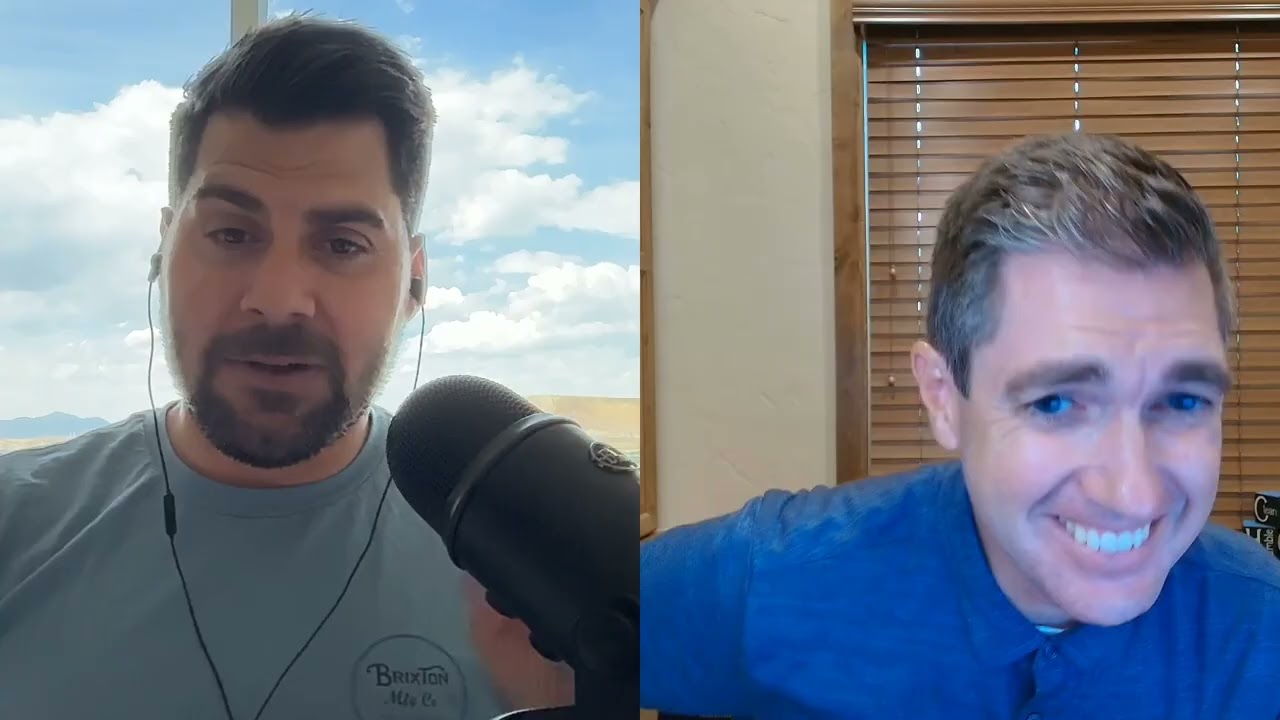
In this episode, Ben sits down with dental coach Sherri Hollenbeck to uncover what truly separates thriving practices from those that feel stuck. They dive into the biggest frustrations facing owners and office managers, the hidden mistakes quietly draining growth, and the communication breakdowns holding teams back. Sherri shares practical insights and real-world strategies to help practices regain clarity, improve leadership, and move forward with confidence. If your practice feels overwhelmed or plateaued, this conversation will give you a powerful starting point to turn things around.
Full transcript
Complete text of this video
[music] Welcome to the Navigating Dental Insurance Podcast where we don't take from insurance [music] companies. Here are your hosts, Mr. Jordan Commtock and Mr. Ben Tui. Welcome to another amazing episode of the Navigating Insurance Dental [snorts] Insurance Podcast I should say. Uh my name is Ben Tua and as most of you know I'm one of the co-hosts. Jordan Comtock is not available today. He's out doing God's work and fighting insurance and fighting for dentists in a different way that we're going to be discussing today. So
he'll be back on next next week's episode. But today we have a [snorts] an amazing super treat. You know, so most of you know I'm in Atlanta, Georgia now. I'm a southern boy and by extension from who I've married, I've been a southern boy for the last 18 years. Um, and I'm from Samoa. So that's kind of south of the equator. So naturally, I fit quite well in with the southern culture here in the United States of America. And today we have another southern lady, another
southern gal who's amazing in the world of practice management and understanding so many different areas of how to get a practice from start A, you know, struggling or maybe even sort of a complacent mode, not a thriving mode. But Sherry takes practices to a level that are completely thriving and she is been so kind because she kind of carries a very ex exclusive clientele to join us on today's podcast to talk about some very important areas of dentistry especially on the world of practice management and
growth. So Sherry um Holland Beck thank you for being with us today. We are so excited to chat with you. >> I'm happy to be here. Thank you for having me. This is going to be a treat to talk to you today. >> Yeah. Been we've been looking forward to this a while now. And so first question I want to ask you of naturally is just your background. You know, how and why did you get into consulting? Like what what what is your passion as to
why maybe rephrase that. What what was so pivotal in your career that brought you to where you are today in terms of being an amazing consultant and practice adviser for dentists around the country? >> I love that question. Thank you for that. I actually spent about 15 years in sales and the owners of the company that I worked for trained us to be consultants, not salespeople. And so they taught us about the businesses we were selling to. And at that time it was not dental. Um
but all businesses have the same thing. They have people, they have a place, a physical space, they have a they have processes. They have products and service and they have profits. So I got a rare unique opportunity to be trained by our leaders, our owners of our company to understand those things about the business and not just sell the deal of the day. So, I got to really dive into the management of the business and helping them grow as leaders, helping them lead their team, helping
them excite their team, all of those things. But the way that I got paid was they bought all their products from me, right? So, when I left that industry, um I took a little break to have my child and I just kept helping people with their business. I would help them open a new business. they would call me and I was like, "Well, really, I'm a coach. I'm a consultant. I'm an adviser. My son played baseball. I'm I'm like helping them get better at what they're
doing. I'm that's what I kind of am doing." So, I flipped it around and went into the world of dental consulting. I worked for a couple of very large dental consulting companies and have worked with several hundreds hundreds of practices. um probably been in more than a hundred of them, but working with several hundred of them. And what I know for sure is that I can stand for their greatness until they figure out how great they really are. >> And that's kind of the space I
hold in it is encouraging them along the way. >> I read a quote recently that said, "Everyone plays better when they have a trusted coach." And I think that's so exactly true. Um it doesn't matter your field, it doesn't matter your passion, but if you have somebody cheering you on, standing for your greatness, helping you see things from an objective point of view instead of being in the middle of it. Uh my mentor said, you can't dig yourself out of a hole. You have to have
someone that's up there re reaching a hand in. So that's kind >> where the journey has come. So for the last 15 years, 14 years in dental >> and uh it's become a real passion of mine. Um, I work with orthodontists and general dentist and it's it's been real fun to help the teams and the human. >> Yeah. Yeah. You know, everybody needs a coach. When you look at all the greats >> professionally, like athletes wise, >> like every every of your grades have individual they
Well, actually, they don't have just one coach. >> No, [laughter] >> most pro aletes have multiple coaches, right? >> Yes. >> And the athletes that say, "I don't need coaching." They don't get far because >> they can't see the bird's eye view. Like when you're in that box, you know, the batter's box to hit. >> You can't see all the different angles, right? So, you need coaches to help you figure things out. I'm a football guy, >> okay? >> And football is so much easier than
baseball, but still, [laughter] you you need a professional set of eyes to see things. Like when I'm looking at how the coaches are coaching my son for baseball, I don't understand it because as a football mind, I don't really know what it means to do certain things. I don't know the terminology, but when I hear the coaches teaching him, when the kids apply that technique, they get better, you know. But that's the beauty about coaching is that no matter what your industry is, if you find
the the coach that is trained in your industry, the vast m majority of the time you get better as a business owner because they can see things that you can't, [laughter] you know. So, so that kind of leads me to to my second question here, Sherry, is that what separates practices that are truly thriving compared to those that are just getting by? So this question is really really good because today in one of my coaching calls with one of my clients he asked me this question.
He not in these exact words but he basically said what's the difference in somebody who's got momentum and those that are floundering those that are thriving those that are floundering. And my answer to him I took back for a second and and actually there's three answers to it but number one is clarity. >> Yeah. Where are you going? Why are you going there? And does your team understand that from you? Right? >> Are you holding that? You know, are you a secret agent of that stuff
or or are you sharing it always with your team so they understand? And speaking of the team, my second answer is a well-trained team. Does your team is your team always being trained? Are they always being updated? Are they are they being focused on to be better? because I read an article and I couldn't tell you where or who wrote it, but it was talking about dentists are in the back in in the chair dealing with patients focused on what they're working on right that minute
and at that time >> everybody that is employed by them is out there representing them somehow >> and are they aware are they are they are they training that team to do it how they want it. And I thought that was quite eyeopening to think about. They're all representing you and you have no idea for the most part what it what it is they're doing and saying >> unless you're constantly working with them, educating them, training them. And that leads to my third thing which is
confidence. >> Yes, >> has to have confidence. The team has to have confidence. The leadership has to be confident because that's how you get a patient to stay pay and refer because they are confident and they've built trust in you through that confidence. If that is that is absent because they're not sure where they're going and they're not really well trained on where they're going and what to do, the lack of confidence is there and it affects them. I mean, you can almost see it instantly
when I talk to a practice that is competent and a practice that is not. You can see it in the numbers. you're you're knowing the confidence lacking somewhere. >> So, >> yeah. Yeah. I mean, it's kind of it's kind of like what we learn when we're when we're in our um younger years is that when you exhibit confidence, but confidence comes from from mastering your understanding of what it is that you do, you know, and but when you're confident, what does that do to other people
that want to hire you? >> It it tells them that you know your stuff, whether you know it or not. [laughter] >> Yes. Exactly. is that human human nature is that when we exhibit positive attributes, right? And and in in the world of being a professional, naturally the confidence for some people doesn't come naturally, right? Is that they could be the best [snorts] skilled person at what they do, but they don't have the natural um abilities to exhibit that to the way that their community wants
to see it. But you're absolutely correct. And I I think that from just a general business and life perspective is that what you said there is that when you when you when you learn correctly and you're confident in your abilities and you naturally portray that people are going to be attracted to you, you know. So that kind of leads me, you know, another question I had is like what are people complaining about today in dentistry? Like when you look at the individual practice owner, >> what
are their biggest complaints today in terms of the world of practice management? >> I would say two things. Number one is time and the second thing is profits. >> But I'm going to stand for time is profits. Time is money. And if you really good and efficient in a lot of areas of your time management, and I don't mean just doing procedures quickly. I mean your time management of how you're running your business >> because because they've got so many things they're juggling, right? It it
I searched it actually. The number one thing that people complain about in a in their business is time and money. But I I believe the time is money. So if they're, you know, gosh, they have eight hours a day they're seeing those patients. You know, they got to take care of their patients. Then they're dealing with bills, marketing, hiring, training, uh, figuring out their own goals and their vision, dealing with the drama or non-drama in their their practice, whatever it is going on, it all takes
time, right? And a lot of a lot of owners are of the mindset that if I want it done right, I have to do it myself. So really well they're not really good at delegating. They don't really want to give it any away to anybody and they don't want to slow down enough to figure out the best way to do it. >> So sometimes you have to sometimes you have to slow down to go fast. >> Right. >> Just running right through it, running right through
it. And all I don't have time, I don't have time. I don't have time. And I'm saying you don't not have time. Because the truth is, if you don't take some time and focus on some of these areas to delegate, to give away, to train, to inspire, to celebrate, all of these things, you're just going to run on the wheel, the hamster wheel. You're just on it and you're going to always feel like you don't have time and you're going to always shoulder the load. >>
That's right. I mean I sometimes they don't get this whole concept of people not wanting to delegate or even clients not understanding the component of delegation is like why am I not talking to the owner it's like well you realize that when you go to a dental office you're not dealing with the owner every single time you know what I mean is that there's a division of labor that allows the owner to have different skilled people deliver the service to you know and so I think
I think what you just said there I think could be applied on both sides because with us is well let me just say it is that from my perspective is that a lot of dentists are not they're not thriving but they're not achieving the numbers that they want to today right >> yes >> and the the big question becomes what are what are you doing in a way that honors how you deal with your vendors you know because you get so many dentists that are so
impatient with their vendors expecting the best from them y >> you know and being impatient it's like don't do that [laughter] you know when you do that and and that filters down to being impatient to the the rest of your team members and your team members are your number one asset so you upset them at the beginning of the day how they're going to perform for you for the rest of the day you know what I mean >> so how does that kind of equate and
I'm not throwing doctors under the bus I'm just [snorts] saying that when it comes to the struggles We're stressed. >> Yes. >> But but what we don't want to do is bleed that stress over to running the practice. Right. >> Yes. >> So from an from an office manager's perspective. So we asked about what are the biggest complaints you're seeing from the office manager? Sorry, from the the the owners. A position that's very important in dental practice. A position that could make the doctor's life so
much easier. >> Yes. Talk about time saving. Yes. What are the office managers complaining about? >> So, I think the biggest struggle for an office manager and and this is kind of an area I specialize in. I've learned over the years that if I can help the the owner doctor by working with the office manager to learn some of these things to help things take things off of their plate. It frees up time. It frees up stress and it everybody's happier, right? So the thing they
struggle with the most is clarity on their priorities and their focus. >> A lot of office managers are put into the role they're put into because they're really good at task. >> Not necessarily leadership, but task. Right. >> Right. Right. So task is great but we need to develop our office managers and our leaders so that they understand the art of delegation so that they understand that we are empowering the rest of the team to let them be involved in all the processes and not me
hoarding it all over here because I'm important in the person in the building and I'm the only one that can do it. That does not grow anyone. So, one of the first things that I do is I teach an owner doctor and the office manager. We do an exercise that I call the delegation tool. And they have to make a list of every single thing that they're doing on a day-to-day basis, a week- toeek basis, or a monthly basis. And then they have to divide it
into three categories. The first category is only I can do this. >> So, for a dentist, it might be the owner. It might be only I can sign the check, right? >> Okay, fair. The next one would be someone else could do it with training. So, it might be not just anybody could do it, but with the right training, someone else could do this task. And then the final one is anyone could do it. So, I did this with an off office manager a few years
ago and she gave me her list and one of the things on her list was vacuuming the lobby when she gets there. And >> I was like, "What? What? Why are you vacuuming the lobby? Like anyone could do that. Let's give that task to someone else so they've got some responsibility and accountability in the practice and they're not just showing up and you're in there vacuuming when you really need to be leading the team, guiding the team, directing towards the goals, right? It's the same thing
with owners, right? That's what we're going to do first is we're going to delegate. We're going to teach them to delegate so that they they get things off their plates so they can focus on productivity, goals, vision. >> Sherry, that was awesome. Amazing explanation there. What what comes to mind next in terms of um what you mentioned are sort of the mistakes that you know people do tend to see when I at least repeated mistakes. So, I guess what I'm trying to formulate here in terms
of a question is what's one mistake you see practices make repeatedly that's quietly costing them growth and profitability? >> Um, I think that's a good question. Um, you know, in addition to the lack of confidence that we talked about earlier at the beginning, uh, with the first couple of questions, I would tell you the biggest one I see and they do it over and over is lack of clarity. And what are the expectations? what are the expectations of the team members? What are the expectations of
me as an owner? Just not clarity on where we're going and reminder and revisiting that. You know, a lot of a lot of practices will will create um their core values or a mission statement and they put it on a wall and they never talk about it. They never live into it. They never help the team become part of that. Right? So I think that that cost them growth and profitability in that there's not a cohesion cohesive unit that is moving along with them. You've got
people in silos doing their own thing the way they think they should do it or they're not fulfilling the expectations. So you as the owner or the leader or the manager are frustrated with people all the time because they're not meeting your expectations, but they're not even really clear what the expectations are truly because one day it's this, the next day it might be this, if it's even discussed at all. Again, I'm going to go back to the conversation I had with a client earlier today.
They never discuss what their goals are, but he's upset that they're not hitting their goals. >> Well, they don't even know. like they don't even know how to get to them. You don't talk about them. You just walk around a little upset about them that they're not being hit. There's got to be conversation. There's got to be clarity around where we're going and why we're going there. And then help the get the team to help you figure out how we're going to get there. How do
they see themselves plugging into how to get there? Right? They all want all we want as human beings is to be a part of something bigger than us. We really do. >> And do you see me? So if you give me the parameter and the guidelines and ask me how do I fit in that, I will find a way to fit in that. But if you never ask me, I'm going to constantly be guessing. Do I fit here? Do I work here? I don't know. Am
I doing what I need to do? I don't know. You got to clarity in that. You got to have conversations. >> Yeah. It reminds me of raising my son. >> Yes. Whenever whenever I um enforced a rule that he wasn't aware of, guess who came breathing him up down my neck? My wife. She's like, "You never told him what to expect. So, how can you >> how can you be hard on him when he doesn't even know what the objective is?" You know, and it's so
funny as you're raising kids, you start to see things that equate towards taking care of clients, right? [laughter] >> I say that more than I'd like to say. It's like, oh, like when you're raising your children and you tell them this. Yep. >> It it it helps. I mean, it helps us understand um when you look at from a child's perspective, if they don't know the rules, they're not going to follow whatever rules you have in your mind because they don't know it. [laughter] >> That's
exactly right. You are. >> That's perfect. What What about like with regards to just general communication and practices? What are barriers that you see that most practice practices struggle with these days? >> So, I'm going to call this um intentional versus driveby. [laughter] >> When I talk to owners or managers and leaders, they always say I'll say, "So, tell me about your structure of communication." They're like, "Oh, yeah. Oh, we talk all the time. I mean, every day, all day long." And I'm like, "So, driveby
conversation." Oh, well, yeah. Yeah, driveby. Yeah, but we're talking all day long. Or my desk is in his office or her office, so I'm always sitting in there, so when he comes in or she comes in, oh, that's when I can talk to him. Well, those are driveby conversations. Those are not intentional conversations. So, I think the biggest barrier is that we confuse conversation, intentional conversation with driveby conversation. And they are not the same. Intentional conversation is pulling metrics, measuring things, looking at where we are,
really focused on what needs to grow, what do we need to change, is this working, is this not working, what's hurting us, what is not hurting us, all of those things around it in an in a structured, intentional conversation, not a driveby of, you know, we're not getting as much paid by our PPOs as we used to. I mean you don't have those kind of conversations in the hall you know right a lot of practices do [laughter] >> by it's like hey we should really look
at that hey we should do this instead of having >> scheduled protected meeting time that it is about the practice about the things that help us grow about the things we're concerned about um that is so important and when when I get an office manager and a leader to meet with their owner on a regular basis is with structured conversation and communication, it changes the game in the practice. Literally, it does. >> I'm I'm a big believer in that. It's because, you know, as a business
owner myself, business owners get too bogged down with the general sense of busyness, >> the time. And if you're not measuring where you're spending your time, and this actually occurs in dentistry that I see every day, is most dentists feel productive when they're treating patients. They don't feel productive when they're talking to their team members or training them on protocols. And the biggest mistake with that when you're not engaged in talking to the biggest asset of your practice, which is your payroll, people that are under
your payroll, is that they're designed for you to deal with the things that you don't have time to deal with. You know, you know, and you should know how to do those things. [laughter] And but when you train your people to do your standard of business, right, patient communication, billing, no matter what it may be, um, as a business owner, and I mean you being a business owner too, you know that is that >> we can't do everything. But the mistake that owners make is we
don't make time to set our people up for success. >> So when our people fail and you haven't done the part of getting them set up for success, blame yourself. >> Don't blame them. >> That's it. you know, is because it's our fault that our the people that we pay payroll to, if they're are not successful, we have to look at ourselves first and kind of take a step back, you know, [laughter] >> and that's a hard >> Yeah. Go ahead. Go ahead, Sherry. I want
to hear what you have to say. >> My mentor um says if your project or business is not moving forward, it just means that you have an insufficient structure for fulfillment. It is not about people. It is about the structure for fulfillment. >> That's That's right. It's it's all it's all about making sure that like in a vehicle that there are no obstacles for that oil to lubricate everything. Right. [laughter] >> So, so that's amazing. So, so for practices listening right now and I'm I'm thinking
about those that are feeling, oh man, I'm so stuck, you know, there I don't I can't figure out my next step to improve. you know what's sort of the first step that you think that should they should take to turn things around as it pertains to what we're talking about. >> So the first thing I would say is be vulnerable and talk to your team. Tell them you don't know have all the answers. They already know you don't. [laughter] They already know you don't. But tell
them that I I think you've just got to talk to your team and you've got to create some vision and goals yourself. It's baby steps. How do you eat an elephant? You eat it one bite at a time. I hope nobody's eating elephants, but you know, I love that phrase. It's just such a giant, you know, thing. You can't tackle it all at one time. So, you have to take it in little teeny pieces. So, I would say talk to your team. Tell them what your
vision and goal is. Tell them where you want to go. Tell them where you want to be. Ask for their help. Tell them you don't know all the answers. The second thing is I would say is if you've got some leaders, get them some training. Get them some coaching. get them some help in leadership because what they're doing is they're watching you, >> right? >> And they're just going to imitate what you do. Think about we're talking about parenting. The kids watch the parents do it
and then they imitate it. It's the same thing with employees. If they've never led before, they look at the leader and go, "Well, that's how he or she's doing it, so I guess that works. So, I'll just ignore these things >> and only do these things that I feel like are important, but I because I don't really know, >> right? Yeah. >> I would say those two things for sure. Uh the biggest thing is they're all waiting to hear from you. >> They're waiting on you.
>> I love that. So, they're quite literally children. I mean, if you're if you're um an employee in an office, don't take offense of that. What I'm >> Yeah. Yeah. What I'm trying to equate to is that as a business owner, we we wear the hats as a parent. Quite literally, we wear the hat and the dynamics are very similar to that of raising children, you know, and we don't see the effects of how how productive our children are until they're on their own in their
adult years, right? We have about 20 years of raising. The raising never ends, but they're out there now. And it's like, okay, the first 20 years of raising them is now we're going to see the results, you know? But what I've learned in my as an I mean I'm a young parent. I feel like I don't know much about parenting. I have a 15-year-old. I'm like, man, I I need more I need more uh [laughter] coaching on how to be the good a good parent. But
what I found is that the dynamics of education and delegation to your children are no different than that of running a business. But purpose is different, right? And and that's the hard part is kind of finding out, okay, there's all naturally different styles of delivery from a personal life to a business life, >> you know, but so I I love what you're saying and and and I know that we're wrapping up here right now, but >> I mean, I could interview for the next hour on
your concepts because it's like, yeah, this is helping me as a business owner and as as an as an indivi individual. What are what are your final thoughts for listeners as it pertains to what we're talking about? What what's something big that you think you want to leave for our listeners to focus on? >> Um I I think progress not perfection. I think the industry of dentistry leads toward towards that perfectionism. You know, we want to get those margins perfect. We want to we want to
place that crown perfectly. We want to do those things. And we we apply the same thing to running a business. And it is about progress, not perfection. It's just like I said, you can't fix it all at once. It's impossible. So, I would tell you to start small, delegate something, delegate a few things, train your team on something, celebrate the wins. That's another part of communication that we we off a lot because it wasn't exactly how we thought it was going to be, so we just
don't celebrate it or we don't think it matters to other people, but it's a big deal and build the confidence in that team. Um, I found that working with owners and working with their leaders that I can help insert some of these things quicker because I'm from the I'm an outside voice looking at it from a 20,000 foot view instead of being in the dayto-day and I'm able to pick out some of the things that they could start to delegate or start to train on or
start to celebrate and really kind of hold them accountable to those things as we go along so that it doesn't fall down. That's what a coach does. A coach reminds you, hey, remember we talked about holding your elbow here when you're doing that swing. That's what a dental coach does, too. It's like, hey, remember we talked about you have to celebrate that. Even if [laughter] it was exciting enough for you, you still have to celebrate it. So, it's those little reminders. And I love helping practices
do that. But you can do that on your own if you will just step out of yourself for a little bit and start to move towards delegation, training, celebration, communication. It's the big piece. >> Love it. Love it. I feel like you're an encyclopedia of knowledge when it comes to practice management and just general um components on how to be, you know, because this is not stuff that are exclusive to dentistry. It's just life, you know, no matter what your career you're in, what you're talking
about is very much applicable. >> Sherry, gosh, I wish we had an endless amount of time to talk today. And I know our listeners kind of uh very much feel the same way. If listeners have questions or want to reach out to you directly, do you mind sharing your contact information? >> Not at all. Um, I have a website. It's not fancy. It's a website. It's Sherry. S H E R R I Hollandbeck H O L E N B C.com. You can scroll down to the
bottom of that and you could book a call with me and we could just chat. You could do it that that way. You could email me at sherry sh h r i sherryhollandbeck.com. Or if you want to text me, you can text me 4046254691. We are in the ages of if somebody calls and I don't know the number, we don't pick up. [laughter] So text me and tell me who you are and then I can send you a link to schedule on my calendar and we
can just have a discussion and see what you're looking for. The beauty is I customize everything towards your needs, not a program that I'm going to make fit in what you do. >> Love it. I like Sherry. She's independent. She's not part of a corporate group being told what to do. She just teaches you from her heart, which is to me um one of the biggest aspects of who I reach out to to help me personally is people that are just genuine. You know, they're they're
not scripted. They they teach you by experience. And Sher has a lot of amazing relevant experience in the dental industry. So, please [music] reach reach out to her if you find anything that she said today that resonates with you. Sherry, thank you so much for being with us. uh we're going to invite you on uh some webinars that we're going to do in the near future, you know, to uh of course based upon the feedback from our listeners, which I already know that we're going to
get a lot of people that are going to say we want to hear more from Sherry. And so on behalf of them and on behalf of our podcast, thank you so much for being with us today. >> Thank you. >> And it's our pleasure. So all the information for you, Sherry, and to our listeners, they will be posted in the show notes. So, if you're driving or otherwise preoccupied, check out the show notes. Click on those links that are there directly to Sherry's email, website, and
phone number. And folks, thank you for joining us today again on another amazing episode of the Insurance Untangled podcast. Share this information for people that you feel that need it. But use our use um all the resources that we're giving you. Reach out to the guests because they're here to help us help us be impressive and and [music] be great, you know, at what we do. and be intentional and and doing things in a way [music] that puts a smile on your face and a smile
of your patients, right? So, thank you again sharing to our listeners. Thank you for joining us. Till we meet next time, we wish you all the best of success. Take care [music] now. >> [music]