Videos / Watch
Taking Risks & Building Wings to Catch Flight
August 19, 2026 · BoomCloud™
About this video
Boomcloudapps.com
dentalsuccessnetwork.com
Veritasdentalresources.com
Full transcript
Complete text of this video
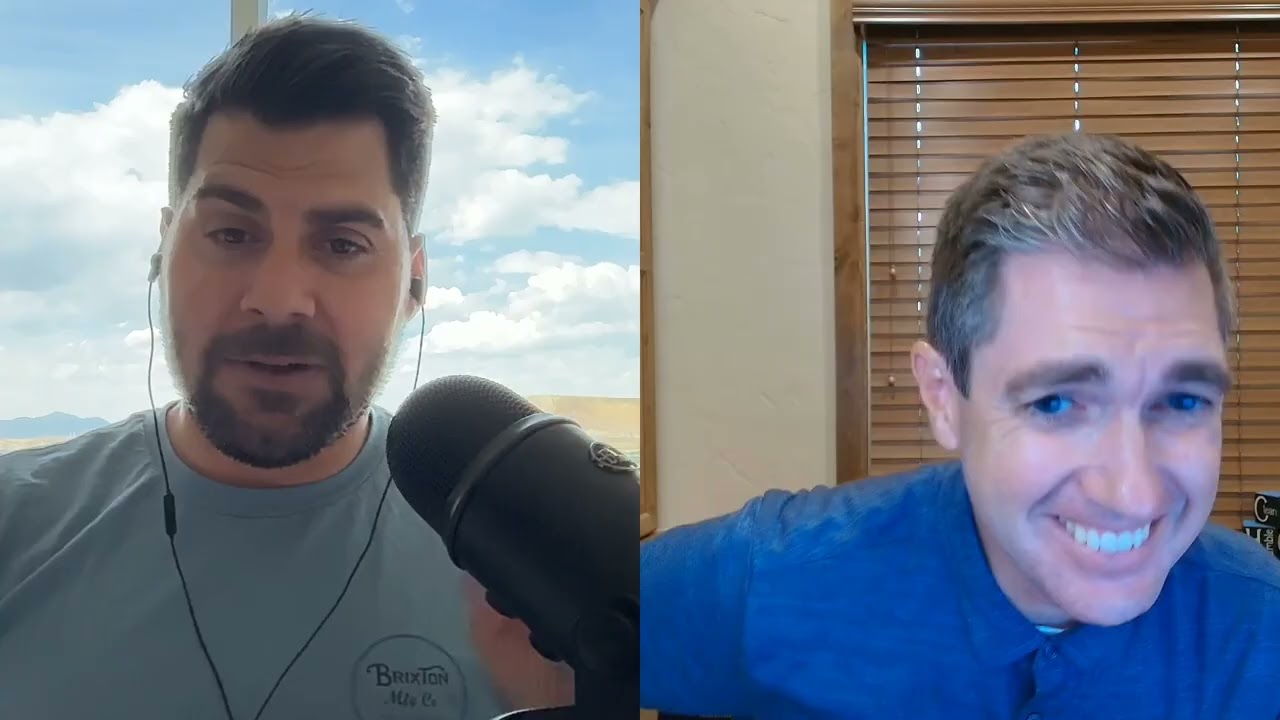
Welcome to the Navigating Dental Insurance Podcast where we [music] don't take from insurance companies. Here are your hosts, Mr. Jordan Comtock and Mr. Ben Tuy. This podcast is sponsored by BoomCloud Dental Membership Software, www.boomcloudapps.com [music] boomcloudapps.com and veraritoss dental resources www.veritassd [music] dententalresources.com. Enjoy the show. Welcome to another exciting episode of the Navigating Dental Insurance Podcast. Today I'm your host or at least co-host. My name is Ben Tuina. Got uh my trusty co-host Jordan Tomtock. >> What's up dog? >> What's up Jordan? Happy new year.
>> Happy new year man. And then you know we also have a man that doesn't need any introduction. Everybody knows uh our good friend and colleague Dr. Mark Kostas who is sporting a beautiful sleeve right now that we have the privilege of taking a look [laughter] at. You know one thing about Dr. Mark is he's he's just a good-looking guy and then he shows up he takes his sweater off and he has this nice sleeve on his arm and it's like >> with ripped arms. It's
not just an arm, they're ripped arms. [laughter] Yeah. Well, Dr. Mark, it's it's always a pleasure having you. I feel I we feel privileged and fortunate to to chat with you on these forums from time to time. Thanks for spending time with us. >> Oh, man. How many times have we done this, you guys? This is so fun. It's like it's like putting on an old pair of slippers. >> Yeah, [laughter] >> pretty much. Yeah. >> You know, I was thinking about you the other day.
You You know Joe Ko, right? Everybody knows Joe Koy. Famous. >> Of course. and we went to his uh of course we we've been wa we watched all his Netflix series and uh >> so funny [laughter] >> oh my gosh the guy is hilarious he's beyond hilarious and you know you you you grew up around Filipino people Ben so you know he is dead on like all the all the little things that [laughter] he says about about my culture growing up are I mean the reason
why it's so funny for us and my even my boys and they're one generation removed from me and I was one generation removed from uh from from you know um my parents and my sister having grown up in the Philippines. But it is so accurate. Everything that he says is so accurate and hilarious. >> It's hilarious. Well, we're having our uh 10y year anniversary in Manila >> uh June of 2024 with we're going to celebrate [clears throat] it with our team in the Philippines. This is
the Veraritoss brand that is. >> And uh >> yeah, we're we're looking forward to that. I always think about you when I interact with our Filipino operations. You know, it's like, you know, I kind of feel part adopted into the Filipino culture. And so this year, I actually bought that uh Rosetta Stone series to start learning Tagalog. >> To Yeah. Yeah. >> Really? That's my goal. >> You're more motivated than I am to get to get to get engulfed into my culture than I am. I
got to do that at some point. I think I would pick it up very very quickly because I mean uh if the person on Rosetta Stone is is screaming into it I I'll pick it all up because that's I mean I know all of my Tagalogic from my mom screaming at me. [laughter] >> All the cuss words, you know, all the cuss words. Yeah. >> So if they raise their volume and they just they shout it at me, I probably pick it all up like instantly.
[laughter] >> So >> I always know what she's saying to me. I just can't I can't respond back. I have to respond back in English. So, I don't know if you guys know this, but I grew up with uh a lot of the Filipino culture as well because my dad lived in the Philippines for uh for two years on his mission. >> So, he he always cussed at me too in Tagalague, you know, growing up. [laughter] >> Uh but also um at the dental lab for
some reason um the there's there's a Filipino community here in Utah. They all got to know my dad. So, they would show up at the lab all the time. and they would bring us their the food and that's how they a lot of the times that's how they my dad would just do trade be like yeah just make me some like good Filipino food and I'll fix your denture right >> that's the way to do it >> so so I randomly that's the Filipino culture you
know I grew up with with my dad you know being living there for a little bit and then obviously the his friends that are from the Philippines that live here in Utah it's kind of funny >> yeah our our currency there is uh food and then the peso is >> [laughter] >> That's right. >> We're agreeing back. American dollar is third. But food is the number one currency for sure. >> Yeah, that's what it felt like. Totally. >> Yeah. Live chickens. You trade life. They seriously
do, you know, like in Samuel, you're trading live chickens for things, you know, or pigs or whatever. >> It is the truth, man. It [laughter] is the truth. I love it. I love it. >> Well, today, you know, today we wanted to talk about some some very interesting things. Uh, you know, of course, the news has been out that Dr. Mark is retiring from clinical dentistry with regards to you know reaching that that pinnacle milestone of being able to sell his practices which we'll talk about.
But you look at you look at what you've done and of course you know Jordan you're well on your way there too. I'm kind of like the the little guy way behind kind of observing and trying to learn. But you know, you talk about this whole idea behind scaling, you know, business, scaling an idea. And there's this really interesting quote by quote by a guy named Ray Bradbury. And he said, he says, "Living at risk is jumping off the cliff and building your wings on the
way down." And that could mean something good, but it could also mean something very bad if you take it in in a literal sense, right? But from from sort of a business perspective, I've heard this a lot. I heard it from Mark Cooper, you know, of course, he he had a a great mastermind a while ago and a bunch of other very successful people in dentistry that said, you know, sometimes you just have to take the risk to jump off that cliff and and develop your
wings on the way down. It's it's on the job learning, right? But but that sort of mentality is a very aggressive form of risk-taking that you know it works for a lot of people and sometimes it could be dangerous for others. Just kind of want to kind of go down to the ground level. You know Dr. Mark when you started your mastermind and even your um your dental assisting school before that I believe and all in your practices at that same time. What was it for
you in terms of assessing risk as it pertained to business? what was your risk tolerance and how did that kind of help you get to where you're at today? >> Well, first of all, I love that quote. Um the whole idea of, you know, fire first then aim >> [clears throat] >> um is something that I've kind of um that that that's that's a big theme in my life. Here's the thing, you know, it took me, you guys know this, it took me three years and
21 tries to get into dental school. And all along the way, for those three years, I worked less than ideal jobs. I I plugged into the corporate ladder for a little bit and I was a salesperson for a wine distribution company and and lived that life for a little bit. Um went on to uh get into the executive MBA program at the University of San Diego because, you know, I thought that would help me with entrepreneurship really. In actuality, the the MBA the executive MBA program
that I was getting um while I was working a corporate job actually was training me to be a better cog in a wheel. It was training me to be >> um a better a better middle manager and maybe someday in the off chance that the right person died and I ended up at the right company I may get up into the sea suite level um even with an MBA. That [clears throat] was the aspiration of most of the people that were in classes with me. It
wasn't about entrepreneurship. It wasn't about taking risk. It was about plugging into a company and taking the safe path. And you uh even the way that I looked at it even back then was if I didn't get into dental school, which was a very real possibility, it barely happened. I knew that I wasn't going to be able to follow that corporate path. I was going to take that information that I was that that I learned in the executive MBA program and turn it into an entrepreneurial
pursuit. So even before I finished um the MBA program, I I quit my corporate job and I bought my first business. And this is way before dental school, still trying to get into dental school all along. It was a, you know, very modest roach coach franchise. It was a catering truck. We'd drive around and honk the horn and the construction workers would come out and my cook in the back would make them French fries and and double cheeseburgers and and carneasada burritos and I'd sell like
Marbor lights and black coffee and and Dr. Peppers and and bags of Doritos and uh that's that's how I made my living uh for a couple years. But it wasn't about how much how much change was left at at the end of the day. It was actually about, you know, owning my own little business and just saying goodbye to corporate and saying, "Hey, man, if I make half as much as I do in corporate, at least I'm the master of my own destiny." And I knew,
you know, I knew that if I didn't get into dental school, it wasn't going to be a fleet of catering trucks that was going to get me there. I just wanted to cut my teeth >> and to have some say in my own destiny, right? So, um, when I finally did get into dental school, I saw the profession totally different than everybody else that was in my class because I had kind of gone through the gauntlet of trying to make a living without a professional degree,
um, trying to scrap as an entrepreneur and those were really, really valuable three years. Um, so if you could put yourself in my shoes and imagine what that felt like to get into dental school finally and to know I knew all the stats and I knew, you know, kind of what I was facing and to know that worst case scenario, I mean, if everything else fell apart as far as my vision for multiple practice ownership, if it all fell apart, I'd still be able to make
a really good living working for somebody else cutting teeth as a dentist. I mean, when the default is dentistry and the default is a single practice, even even an associate in a good practice, I still had like a better living and a better safety net than anything else in my life. So, >> sure, >> and any anything up to that point in my life, like $100,000 at the time when I got into dental school was that was just a pipe dream. It was like, are you
kidding me? Somebody's going to pay me six figures to do anything in my life, you know? And you know, when I found out that like the average dentist, you know, by the time I graduated was making like 200,000, then I was like, "This is great." I mean, if nothing else, I have this. So, I felt as though that gave me the permission to just shoot for the stars, man. Like, I'm going to go for it. There was no such thing as risk at that point. It's
like, what was I risking? I My net worth was negative $350,000. [laughter] It's like if I could get if I could get debt for my first practice and then roll the equity in that into the second, third, fifth, sixth, all the way up to 16, I never saw it as risk ever because the worst case scenario was always better than I had ever envisioned for myself. So that's the way I saw risk and that's the way um I saw building dental practices. when I pivoted over
to starting to coach, um, I took some chips off the table in that I backed off from a five, six day work week, uh, cutting teeth because that's what I did for the first three years, Monday through Saturday, you know, six, I mean, I'm sorry, eight eight hours a day. So, those were big, heavy burnout type weeks. >> Oh, yeah. >> I cut that back down to four and then three. And I I really really focused on building the coaching group and and at the same
time didn't feel it didn't seem like it was risky to me. Even though I was uh shifting how some of the money came instead of active income, it was a little bit more passive income in that I was able to build a stable of coaches and we were able to build a really solid coaching organization. And um yeah, that's you know, now that we're transitioning out of the practice world and out of [snorts] chairside clinical dentistry after 21 years, now I am uh I'm able to
focus 100% of my time on what used to be my side gig. >> Yeah, that's awesome. You know, a couple things [clears throat] that come to mind. You know, first, you know, I'm thinking, you know, everybody knows Robert Kiyosaki, Rich Dad, Poor Dad, author. >> Yeah. that you know his his belief is uh just with the way he thinks is you know entrepreneurs are a different breed right do you want to be an employee or do you want to be independent you know an entrepreneur [clears
throat] um are do you think people are born that way very clearly Dr. market. It's very clear that as you're kind of going through your journey those three years and just hustling that you had a dream that you wanted to adhere to. You know, most people give up halfway through that, right? And they just end up settling and becoming the employee and they they work for, you know, others and they they convince themselves that that's the path that they need to live or or or need
to do. Do you think people is [clears throat] it an acquired trait to have that sort of ambition or that level of saying I'm never going to give up? I'm going to continue to do this. Is it something that you have to really acquire? And is that and if so, is that the reason why a lot of people give up halfway through the journey, halfway through the battle? >> It's funny that you guys are interviewing me today because I could turn the same question back around
on you because you guys are very [laughter] successful entrepreneurs. you've taken the road less traveled as I have. Um, you know, we were talking earlier about uh about, you know, my heritage. Um, Asian people typically are very entrepreneurial, man. They're scrappers. Immigrants in general are just very very um creative. >> Uh, and they see the world in a different way. you know, this whole capitalism, the capitalistic society, a lot of people take it for granted and and uh and don't think the way that us immigrants
do. Um, immigrants think in a different way. It's like, okay, let's just say all things being equal, I was dropped off on a street corner and I had 10 bucks in my pocket. That's how immigrants think because [laughter] in a in a huge way that's how most of our ancestors and our I mean not one generation removed started in the United States and most of them did quite well. Um so I will say in my personal circumstance entrepreneurship is in is in my DNA. It's in
my genes. We used to gather around the the kitchen table what we always talked about. We didn't talk about politics. We didn't talk about sports. We talked about business. It's like your uncle over here has a prawn farm. Your aunt over here has a water company and she's she just bought her third uh car that she's going to rent out. She's going to create her own larger rental car agency. Um my aunt over here had a nightclub. Um the nightclub actually the actual nightclub where they
where they discovered um uh the guy that now sings for Journey. >> Yes. That's awesome. [laughter] >> Yeah. She owned that nightclub and they used to have a karaoke night and they put those those videos up on YouTube. Um, >> what is it? Arlin, I forget his his name. Anyway, um, and those videos from the karaoke nights at her club actually were what Jouri found and they they flew over there and they decided he was going to be the the new lead singer for Journey. Anyway,
um, Arnell, Arnell Paneed is his name. Anyway, so yeah, it's for me it was very much in my DNA and uh and I felt as though my dad made a huge sacrifice to come to the United States. He was uh uh he had his MBA and he had a dual degree in electrical and mechanical engineering. Um he was a college professor. That's how he met my mom. He left that all to come to the United States to kind of find a better life. But he was
an entrepreneur entrepreneur at heart. And when I started all my businesses, I felt as though he was living vicariously through me because he took the safe route, stayed with IBM as an electrical engineer, worked his way up the corporate ladder and he felt it to be the most responsible thing for our family because, you know, just a brand new immigrant um not to rock the boat and to stick with the upper middle class life. But I always felt he passed away last year, but I always
felt as though he was there was just a twinkle in his eye whenever he talked about owning your own business and what I was doing and and I thought that was a big actually inspiration to me even though he wasn't an entrepreneur. He always wanted to be. >> Uh so yeah, I think it I think it's I think it definitely was in my DNA. How about you guys? Well, first, you know, I was very sad to hear when we learned about your father's passing last year
and, you know, >> can never can never stop sharing our condolences for that. And we know he's flying with the angels, you know, with my parents, too, up in heaven somewhere. Just having fun, having some heaven uh adobo and lubia, you know, and all the other fun stuff that's up there. >> For sure. 100%. [laughter] >> But, you know, it's interesting. I guess the follow-up question is for Jordan, too. You know, I think you know, Jordan, your your your dad, lab owner, you kind of um
you know, when you grow up, you're you're surrounded by your role models that are entrepreneurs and and naturally you catch the bug, right? >> Yeah. Yeah. Well, yeah. Well, I come from a line of entrepreneurs, right? My grandpa, starting with my grandpa, um I'm sure I had others before that, but in my lifetime, right, people that I knew. So, my grandpa was very entrepreneurial. He had um he bought the lab and and grew it um in Salt Lake City and but he also owned a bunch
of real estate lot few apartment buildings and then he um created a he licensed some of his ideas in to other dental labs years ago. I think this is like in the 1950s. So he he he he he was always thinking in fact whenever I went to his house much similar to you Mark we always talked about entrepreneurship and building companies right and building businesses and same thing with my dad my dad you know obviously he's running he he owns the dental lab and and my
brothers are very entrepreneurial as well and growing up like we we never were um you know the most wealthiest family but my dad put in me and my twin brother's heads that you got to go start your own company and even even when we were teenagers, he encouraged us to start like a landscaping company and then we created uh we had a band and we recorded an album and sold it to, you know, we sold it at all of our shows and that was one of
my first kind of tastes of uh entrepreneurship, you know, with with music. And it it for some reason got a taste in my mouth that I, you know, I'm like, I need to I need to figure out how to do this more and more. And then I managed a lab for a few years thinking that I was going to take it over. But then you know my story is I I wanted to uh create a tech company because I I love you know the business models
of just technology companies and yeah I think for me just growing up it was all like everything we did was talk about entrepreneur entrepreneurship and building businesses and now my even my friends today that's all we talk about when we meet up. I had some friends come over over the holidays and that's literally all we talked about is is entrepreneurship and business and it it's I don't know what it is but maybe yeah in your genes or in your blood or uh the way you know
your u my dad and my grandpa talked growing up I don't know it's I've always been driven and I knew at a really early age that I wanted to own my own company and I had a vision for myself right and I think that's kind of where it starts is a vision for herself and for now my family of all girls. It, you know, stresses me out too. [laughter] >> Whole different podcast, man. Whole different. >> Yeah, you guys have. >> So, going back to that
theme, Robert Kiyosaki, you know, the rich dad poor dad mentality. You two had the rich dad mentality, right? where you were and you know I I I I say that because I want to kind of give some variety to this topic is that I come from the opposite end end of the spectrum where my dad was a lawyer my mom was a PhD but they were they had the employee mentality right um where it was >> what does Robert call PhD poor hopeless and desperate >>
poor helpless and or hopeless yeah [laughter] poor hungry yeah >> I actually was just I actually just listened to a video of him this morning and that exact he was talking about PhD. That's funny. >> You guys had him on the podcast yet? I had him on mine. >> No, but I I watched when he came on yours. That was awesome. >> Yeah, that's right. >> He's fantastic. >> But anyway, he's actually he's actually a kind and gentle person, but he gets pretty aggressive on >>
Oh, he totally does. >> Yeah. His persona is like, "Holy cow, Robert's pushing the envelope in his 70s." Like, I don't care anymore. >> Yeah, he can get intense. Yeah. Well, that's why I like him. That's that's why I've always enjoyed him as a and and and speaking about you know at least my story that was the first book I read like a business book was Rich Dad Poor Dad and that that's what put I think the fire in me even more uh today is reading
that book years ago you know um it's such a fantastic book and a way way of thinking so anyways >> I wasn't trying to insult your mom Ben it's just that not at all >> because his dad his dad was a PhD he he ran for the governor of Hawaii >> and uh as you as you know and he lost and he got black ballalled and that was the spiral that that Robert lived through as far as the financial struggles in that family. But anyway, I'm
sorry. I didn't mean to. >> No, no, you're good because his his parents knew my grandparents. They they they lived in Hilo and my mom's from Hilo >> and so they knew each other. I I never met Robert or any of his family members, but but you're right. My mom um as a PhD, her max salary back in the 90s and the 80s, she probably never made any more than 30 or $40,000 a year during that era. >> And as a PhD, it was sort of
a slap in the face. You know, you spend and dedicate all that time to get, you know, what's known to be a very prestigious degree. And even as a lawyer, you know, my dad, he never in in in American Samo, he was an honest lawyer. They never voted him in to be in the Senate because high chiefs, the government in Samo is half Samoan culture government, half American government and senators are drawn from the high the highest ranking high chiefs and my dad was one of
them. But as a lawyer and sort of an enforcer of honesty, he was never voted into those positions. He was never voted in to be a judge because all the high chiefs were afraid he was going to clean house and root root out all corruption. So he never made more than $30,000. I remember seeing his tax returns in in in the 90s and as a lawyer he never made more than 30 grand, you know, in in in at that time. But I I grew up with
that mentality that you know working and and being in those having tenure right and being at a position long term kind of like what you mentioned Dr. Mark with that whole mentality getting an MBA and hopefully striking it lucky in a corporate position where somebody at the right time dies and you take over their position. >> Yeah >> that was that was my parents that was sort of their understanding of the world and how to play the game. I had a different view from a very
young age. I sort of had um a a desire to be a business owner and I never let up on it. You know, I failed multiple times. I didn't I didn't start a business until I was uh 30 years old, you know, and and I failed multiple times as a business owner and, you know, I've had uh I I I've created businesses that are, you know, worth 10 million plus now that are bought out by big dental companies, one of which was announced last Friday. >>
You know, one of you sold out to one of your businesses. So, I founded I founded that that business. I I won't mention on the on the podcast just to not draw any negative attention on it, okay? But [laughter] I I I helped found that business. I was a 33% owner in it, you know, and I won't go through the whole story of it, but in in its early stages, I exited not for the full value that I felt that I was that that should have
been shared, but that business based upon what I know uh was acquired by another company and it was valued at 10 million plus last Friday. Wow. >> You know, and and and I always had this idea that or at least this energy that kind of like you, Dr. Mark, that I'm never going to give up on this. I know that I'm going to make mistakes along the way, but I'm going to be I'm going to keep fighting and fighting and fighting just to make it work.
And it was a dream. So for me, I guess the idea, you know, being taught by the the the poor dad and poor mom mentality. Um, I I kind of uh h sort of had to develop and I think all three of us you have I think you still have to develop that, you know, where you have to acquire the traits of your rich dad or your poor dad mentalities and and embrace it as your own because there's a lot of rich dads that have children
that don't have the skill set of a business owner, right? >> Yeah. You know, there's this whole idea that, you know, [clears throat] poor people, you know, um, strong men are born out of struggling times, right? Um, strong men and women are born out of struggles. And when they make it in life, they create an easier path for their children, right? And if you're not creating warriors out of their children, two or three generations down the road, they're going to be that generation is going to
be struggling because they weren't warriors. They didn't fight for their dreams, right? you know, work hard. So, so the point I'm trying to come across here is that the listeners are seeing it from both ends of the spectrum, right? Where you both had the rich, you you you were sort of taught the rich dad mentality. I was taught the poor dad mentality, but some way somehow the spark and the dream comes within every individual, right? Would you guys agree with that? >> Oh, yeah. Absolutely. Like
I have um >> absolutely like it totally is. It's on the individual, right? some ownership um on the individual on that part. You know, I have I have Ben, you know, my daughters. I have I have three beautiful daughters and my oldest is eight and she's growing up too fast. Um you know, and one day she came to me and she's like, "Dad, I really want to start a company like BoomCloud." And I'm like, "Hell yeah, let's go." [laughter] Right? I'm like, "Let's go." Right? And
um you know I think it's I think it's really important um to obviously encourage whoever I'm around. I'm I'm always talking about I guess from from where this podcast is going the rich dad mentality right the entrepreneurship and and and things like that. I think it's really important. Um, you know, and and when my daughter asked me that, you know, and obviously I have never told her, hey, you should start a company, you should, you know, she's eight, [laughter] right? Um, but I think it is
it definitely is on on the individual. And now um you know because of her little spark of wanting to start a company now um we invested into some claw machines and we've we've uh placed them in in areas where she manages them like one's at a pediatric dental office other at a at a restaurant and um she's now learning how to manage that. But yeah I definitely think to your to your point Ben it definitely is on the individual. Obviously they can be inspired by people
around them but it's on the individual to um you know realize their own their own visions for themselves and to think bigger I think is is really important to think bigger than just oh I'm going to scale up the the ladder or something. I I don't know. I I grew up always thinking and my parents I think in you know taught me this is hey think big for yourself. Make make big goals and go and go out and achieve them. you know, it just takes time
and energy and you've got it go, you know. So, I think I think that's kind of my mindset on that point. >> Yeah. I think that uh I think that it it's it's a challenge. It it is an ongoing challenge, right? So, everything we didn't have, we want our kids to have. >> Uh we don't want them to want for anything. Um, my innate desire is for my kids to never have the struggles and and feel the insecurities and pain that I did on the come
up, especially like, you know, um, putting myself through undergrad and working full-time and trying to do the fraternity thing and this is after after I I moved on from football, but um, you know, working full-time uh, full clo a full class load then trying to be social in the fraternity. Um, trying to stay in shape. All that stuff led to some significantly difficult times. I mean, really, really hard times. >> I would love it if my kids never had to experience that. In fact, right now,
um, Bryce has a full full ride daddy scholarship to San Diego State University, you know, and he turned down two athletic scholarships in order to have the daddy scholarship. >> Oh, wow. you know, so it's like uh it's like we we want every the best for them, but at the same time, it it does it make weak people does it make people that don't have the same hunger that that we had? I'm hoping not. I hope that that we can coach them through that. >> But
um yeah, I wrote down uh to your point, Ben, I wrote I wrote this down because I've actually committed it to memory. And you can you can substitute men for woman, uh man for female, but it's strong men create good times. Good times create weak men, weak men create bad times, bad times create strong men. So you have this circle of am I creating a weaker generation right now or is that generation already weak and it's my responsibility to >> coach them up, >> strengthen them.
Yeah. Yeah. >> I think I think you could look at it both ways. >> Yeah, >> I think so. I agree. >> I think with your your Well, the difference with your son's situation is he already earned those scholarships, right? >> Yeah. >> Is he weak? Hell no. I think he did a great job. And I I think that that that makes uh at least as a parent, you know, I'm not there. I have a 12-year-old. I only have one kid. >> But I I I
struggle with that, too. I struggle with that, you know, being successful, the amount of success that you get. how how can you take that in a way where you're giving your family, especially your children, the better times, but setting them up for success in the future, right? Um, so I appreciate you mentioning that and thank you for memorizing that quote. That's actually a quote that I that I've been meaning to have printed and memorized because I I think about that quite a bit as I'm raising
a 12-year-old that doesn't love sports. He loves drums. He loves guitars. >> Oh, yeah. That's my That's a blessing, dude. That's what I'm talking about. We have we have three athletes in my family and I just want somebody that's interested in the arts, you know, I [laughter] but it's all good. I mean, >> yeah, they can do. >> I mean, you could you could create amazing things out of out of that. >> Absolutely. Absolutely. So, moving along this whole theme of risks. >> So, going back
to you, Dr. Mark. >> Yeah. >> You know, you you hired Ashley. I remember your story that you that you shared at at least a few of the conferences that I've been to. You hired her at $10 an hour, right? >> That's true. [clears throat] True story. Yeah. [laughter] >> Yeah. And then uh she ended up being the COO, you know, at one point and growing and flourishing >> and she's been through that whole journey with you from the very beginning, right, with uh >> still
with us 12 years later. >> Yeah, >> she's awesome. So talk to that because what what's fascinating about one of the things that you said in the beginning was that reinvesting taking the profits and reinvesting into scaling your business didn't feel like a risk whereas most people would feel you know taking two two $300,000 worth of profits and infusing that into bis back into growing a business or scaling it is scary right how how so going along that path of reinvesting and building your business. What
was it like in terms of like your personal wants and needs financially compared to the commitment to scale the business financially by by reinvesting? Can you walk us through that and how you felt and how you did that back in the early days days? >> Yeah. Yeah, for sure. For sure. In the beginning it was scrappy, right? In the beginning it was >> our third first three we got traditional financing for our first business, right? And the second two, the bank's like, "No, you got to
you got to show us 24 months of, you know, solid, you know, growth uh trajectory in order for us to to lend you another dollar." And then even at that point they're like when we did where we were able to show that for our group of practices they're like well no if we if we lend you money and you go build two more you're going to take your eyes off these primary three practices that you built and you're going to put yourself at risk for having
you know five medio mediocre practices and uh potentially not being able to to cover your note which is all they really care about for the long term. Um, so I in the beginning it was scrappy and it was it was like owner financing, you know, we we would we would look around for a practice, any kind of any kind of um, you know, exotic financing. I was all about that. I was like, "Oh, this guy's willing to hold a note." Well, it's not really a nice
practice. In fact, can you even call this a practice? It's got three [laughter] operatories and it's it's like doing like $97,000 a year. Well, you know what? He's financing. We're going in there. So, [laughter] in the beginning, it was super scrappy. So in in my opinion it wasn't that risky because the only thing I was putting at risk was my the hours in the day. So I didn't have the money but my currency was hours was time and that's what I could trade in the beginning.
Then when I was able to significantly build up equity and now I actually had some money in the bank and I I was able to leverage that as an asset instead of just my time. Then I felt very comfortable doing that because you know already at that point early in my career I I saw my time as more valuable than the money that was sitting there actually doing nothing for me in the bank. >> Yeah. Now, that doesn't mean that all of my ventures and all
of my bets and and every single time that I took a risk, I was successful. In fact, geez, in the beginning, I took some big big long big hits, hundreds of thousands of dollars at a time that that you know, u before I knew how to vet a deal and before I had knew how to do real due diligence, I was still flying by the seat of my pants for a long time. Luckily, amongst all the failures, the majority of those risks came out um in
a positive on the positive side. But knowing what I know now, I wouldn't have taken all the risks the way that I did back then, >> I would have educated myself further before just, you know, handing over [laughter] handing over [clears throat] a lot of cash, basically lighting it on fire, you know, [laughter] go There it goes. >> So, is there some merit to learning on the job kind of the way you did? Like, if you were to rewind the clock, would you do it any
differently? >> Yeah. Yeah, I think I would. I think I would surround myself with advisors that um knew a little bit more than me. Uh the problem is when you are starting out, you don't even know what you don't know. Yeah. >> And you get a little bit of success. My first three practices were really, really successful. What I didn't realize at the time was that what was successful about those practices is I had amazing office managers, dumb luck, amazing uh associates, dumb luck, great um
demographics, dumb lock. None of these were intentional, but I had three practices and I was like, first one killing it, second one killing it, third one killing it. I'm a genius. I'm going to buy five more. Right? Uh what I didn't realize, I didn't know what I didn't know. What I didn't realize was that it was like as soon as those people started leaving, it started revealing all of my deficiencies. Right. So, >> sure. Just like Warren Buffett always says, you know, you never know who's
naked until the the the >> the tide goes out. >> Tide goes out, right? >> Yeah. >> And uh and I was naked, man. I didn't know what I was doing. And so, learning on the job, great. But you have to have some advisors in your life. >> Yeah. um that can tell you what it is that you don't know and help you to build an infrastructure, systemization, executive team that could guide you along um and start to to plug the holes in your deficiencies. Um
that's why I think that whether it's my company or any company, coaching is so important. You have to get around people that have done this before. Um, and if you're trying to go it alone by gut instinct, you might get lucky the first few times like I did, but eventually that's going to come back and and get you. >> Yeah, I I I would agree. I've hired I've hired and had friends, you know, that have have built successful businesses in the past be advisor adviserss to
me over the years and I think that's been super helpful for me. um you know, one of my my first adviserss in my 20s, um or mentors, I guess you can say, he he uh who he's still a mentor today. He he started a company and I think he sold it for he started a tech company, sold it for 30 million um years ago. And I remember going to him, you know, in my 20s, all scared and nervous to just ask him to be my mentor
because I I thought he was gonna be like, I'm not going to help. You know what I mean? the the first mindset you have when you go to your first mentor. At least that's what mine was. But um I've always been able to find people that have done something better or or at a further stage than where I'm at. And I think that's always been helpful. Plus it I think I need that big time because often in entrepreneurship and just building, you know, a a company,
you you feel alone a lot at the top. And I always felt like I was selling on new waters, right? And I'm like, I don't know. I don't know where I'm going. I don't know what I'm doing. So, I've always hired and then had obviously people that I like to hang out with that that have built and sold, you know, tech companies. Um, I think that is so important. Um, I just finished uh it we had an adviser here helping me kind of rebuild our sales
team and um guide me on on what I need to do to like put a solid sales team in place and and get and find a solid sales leader. And that was the most valuable valuable time and money spent for me in my company because now like you know we're growing month over month and I don't have to worry about it anymore where before with with my last sales team I struggled. I was worrying about it daily. I was waking up every night [laughter] you know
stressed out. So I think adviserss and having coaches are it's critical. [laughter] Jordan, can I ask what was your due diligence to find this this right advisor? Because I think that that's the next natural question for a lot of people like I'm willing to invest. >> Yeah. >> But I'm scared to invest because I don't know if I'm a good steward of this money and I don't know if I know how to do the due diligence to find the right person because a lot of people
can talk you talk a great game and say I am the person but it's it actually is a bit of dumb luck, right? >> Yeah, you're 100% right. Uh, you said a phrase that my adviser would always say, good steward of money. I think I think when you find somebody that says that, that's a good sign. Um, because they really um my last adviser that helped me rebuild our sales team, he would always say that. And I think integrity uh really it's just like finding an
employee, right? And a team member and you you do have to do do your due diligence. So from with my experience with every consultant or coach that I've brought to help me is number one do I like do I trust this person right and do other people trust him um which was a case for for for Dustin I'll give him a shout out his name is Dustin Dustin Kenyon and um so his experience was he built he was part of a like fast growing software company
and he helped build their their sales and their customer success team. So he he had a ton of success there and I knew the co the co-founder of that company and he just said amazing things about him. Right. So for me it was it was I used somebody in my network which I think is super important. Right. Um, so experience, um, integrity and trust. Um, and I noticed signs of integrity, um, early on because I had a job roll open, a job a job ro open
in leadership for my sales team. Um, and he could have easily taken it, right? Being a consultant of mine and saying, "Hey, I can I can because he loved our company. He's like, I can come in and I, you know, I could take over this role." But um, and I I I did ask him, right? But what he told me is like, "Hey, instead of instead of you just like wanting to hire me because, you know, we've worked well together over over the past year. Um,
I don't want to [clears throat] do that. I want you to have options and choices. So, I'm going to help you interview a bunch of people and and create competition. And if you like somebody more than me and they have better experience, you hire them. You don't hire me, right?" So, little things like that over my relationship with him, I think, caused that integrity and trust, you know? So, I think that's kind of how I go about it. And then just using people in my network
of people that I trust. Um, you know, if they've worked with somebody before, um, I trust people in my network, right? Especially my the like the close tier in my network. So, that's that's kind of how I I do it. Maybe there's a better way, but it's worked so far. >> Can I ask you Thank you so much, Jordan. Can I ask you a selfish question, Ben? >> Sure, absolutely. I would love to hear I would love to hear more about you the structure of your
company and the whole the whole out outsource like overseas outsourcing strategy that you utilize. >> Um I've heard a lot of people that execute that well and then a lot of people that really really struggle to execute that well and and kind of um flounder in in that arena. So, I I understand your business and I can understand it's very human dependent >> and you're doing you're doing a little bit of um kind of payroll arbitrage, right? You're you're going overseas where you're paying a great
amount of money to support people overseas because they have a much lower um uh cost of living there. So, it's it's a win-win. But, how do you find the right people? How do you manage from afar? How do you make sure that there's quality control, all of that stuff? >> Absolutely. Um, I think it, this is going to sound kind of funny, but you you kind of said the the phrase there, Dr. Mark. It was initially dumb luck for me. Um, I hired your friend um
your prneur uh Chris Ducker, his company. >> Oh my goodness. That's Yeah, I know I've known Chris for years. >> I I don't know him, but I've I've read his content. Yeah, >> I went to uh when when he used to have uh his summits in the Philippines in Cebu. >> Um I went uh that's where I met you know uh John Lee Dumis. That's where me and all those guys started to be really good friends ever since then. Me and Lewis House have been great
friends. >> Oh wow. >> Uh anyway, uh I'm sorry. >> No, no, that's where I started. In fact, so so to rewind, um I uh had another business with two dentists here in Utah and one of them had a lab. Uh oh, you know him? Uh Ray Coleman. I saw him at one of your summits years ago. >> Yeah. Yeah. Wow. [laughter] >> Last from the past, man. >> I know. and he had uh his he had a lab in the Philippines and he as we
were scaling our PO negotiating business he made the recommendations hey why don't we have Dedra help with this and help with a lot of the the tasks and so we looked into that and it was so funny because we started to scale and build a team there we had 30 plus team members that came out of Ray's lab and out of the blue I uh paid them Christmas bonuses and the very next day Ray came back and he said, "You can't do that." I was like,
"Why? These people have been paid the same rate for the last 10 years. Don't don't you think they would deserve some type of increase?" But he said, "You can't do that because now I have to pay all of my other lab members the same bonus." And I I started to see an opportunity there where, you know, there was a lot of turn and burn in those positions. People would leave, they would come back, and even with us, they would leave, they would come back. Once they
start heard about the bonus structure, a lot of them came back fast. Um well when when when we dissolved that business and I kind of rebranded into Veraritoss I hired uh your primer to help me find my first person and that was back in 2014 May 2014. Well that person is now my the equivalent of my COO where her compensation and pay over that that period of time has uh we I I pay her closer to 10 times what where she started. kind of like your
story with Ashley, Dr. Mark. >> And I I struck luck because I I found somebody that had experience with the outsourcing model with the uh motivation model, the bonus models, the things the things that a lot of the businesses in the Philippines don't offer, especially the outsource companies that don't offer outsource virtual assistants there. We implemented a lot of the very similar bonus structures here in the US to motivate people to attract people that were qualified. So anytime we put out an advertisement to hire a
position, for every one position that we're advertising, we get two 300 applicants. >> Wow. >> And we we built a reputation in the Philippines that we really take care of our people there. We recognize that the cost of living there is cheap, but we don't, you know, we don't really take advantage of that to the extent of paying them the minimum wage there. It's funny, three weeks ago the they had their Christmas party there and we, you know, we we rewarded them big time and they
had all kinds of fun, took their families out to Manila and they recorded the whole thing. Um, of course, here we were here in the US. We didn't want to fly out, at least right now, we don't want to fly out internationally, but my wife was on that that call um after the party, everybody went home and we did Zoom and everybody had something to say and you could see their homes and and my wife's like, "Holy smoke, every one of your people in the Philippines
lives in houses that are nicer than ours. [laughter] They're mad, you know, they're beautiful." And it's like that's to me it was sort of um a revelation to me that we're doing something right. We're treating people in uh would you consider Philippines a third world country in terms third world? Most definitely third world. Sure. In the third world, we've been able to attract talent that quite honestly is better than a lot of things that we find here in in a first world country in terms of
dedication, commitment, willing willingness to sacrifice, being a team player, showing up, you know, and and being there and working hard and willing to learn. The people that we have in the Philippines are just as smart as anybody else anywhere in the world really. And I kind of feel like um rewarding them from a compensation perspective and a bonus motivational perspective, it it does work to the extent where that's going to be our home into the foreseeable future in terms of our expansion with with uh labor
is that our model there works where you know we don't we don't have a whole lot of problems finding really good qualified people. In fact, we just hired a guy named Jose used to live here in Texas and he's he really moved back to the Philippines and the number one comment we get from people there is, you know, they're grateful that we're providing opportunities that rarely exist in their communities. So, naturally, we attract a lot of good talent just with the way we treat our people
there. Sounds like sounds like your your strategy at least was to give your people a sense of uh career pathing and progression which I think everybody wants progression right so which makes sense especially when everyone else is looking at the you know the outsource workers as you know let's pay them the lowest and you know we can capitalize on that you know it sounds like you gave them uh career pathing opportunities and progression which is valuable. Yeah, we tried it here. We tried to build the
same model here, but since 2020, it just didn't it it doesn't work. People just don't show up for for job interviews. They don't show up. It's it's less of a commitment. Um, but I I think that model works anywhere, right? You talk to Naron, he has a team out of Sri Lanka. He does the same thing where he kind of >> focuses on his people. His people are his number one priority. And I I firmly believe that when you take care of your people, your people
will work hard to take care of your clients. >> Yeah. >> How big of a how big of a group do you have out there, Ben? >> Uh we're we're almost up to 50 by the end of this year with our um expansion of services. We're looking to have well over a 100 people in the Philippines before the end of the year. >> Wow. >> Full time. Awesome. >> Fulltime. Full-time people. >> Wow. That's just imagine that the trickle down effect, you know, that that you're
making there. Um, that's it's it's got to feel good to to be able to provide that. It's like I I used the term earlier, it's it's a win-win for sure. Win-win-win. Good for your clients here, uh, good for you as a business owner, and great for them uh, to be able to get work and do it virtually. I mean that. Hey man, when you're in the third world, it's nice to be out of the sun and not digging a ditch or on a ship, a cruise
ship, which is a huge industry for Filipinos. Um to be away from their family 10, 11 months out of the year on a cruise ship doing very very low-level things. Intelligent people um having to make those kinds of sacrifices. Um this is a very very high tier high level profession for people call call center work u virtual work um internet [clears throat] type work is is a very very highly regarded profession in the Philippines. >> Yeah. And you can offer pricing on here on the US
side very competitively, right? Where to me you don't you don't you know you you can your wages of course you're paying people higher there. Um but you can create an offering structure here in the US that is very attractive to people that need services like verification services right >> and things of that nature in the realm of insurance. But yeah I love it. I I you know me being from a third world country myself I my heart goes out to the global community where they don't
have all the advantages and the things that we have here in the US you know the amount of money that one person makes in a month here is a lifetime salary somewhere else in the world you know >> yeah it's true >> yeah so thank you thank you for sharing that it's very very intriguing and good on you man >> oh it's my pleasure we kind of went this whole rounds of interviewing each other and I recognize >> well we're all podcasters That's what do you
expect? >> Yeah. [laughter] I love it. >> Do this all day, guys. >> I know, right? Me, too. >> We recognize that we're actually at the top of the hour and we want to respect everybody's time, especially yours, Dr. Mark. We know that you're in super high demand. Just so lucky to to be able to chat with you today. So, we really appreciate it. So, for our listeners, of course, everybody knows Dr. Mark's podcast, but if you're not listening to that, of course, this will be
posted in our show notes. Um it is probably it is the number one podcast in dentistry today and that's been not for me. That's actually what the uh community has uh sort of tagged Dr. Mark Kasus' podcast as the number one dental show in dentistry. And so congrats on reaching that pinnacle. Dr. Mark, we really appreciate your time today. uh for our listeners uh check us out uh at ver excuse me say notapos.com if you haven't seen our website to check out more of our episodes
and then of course uh to nominate an office manager and insurance coordinator. We are going to be promoting a $100 per episode for somebody that has an insurance tip that they want to share with the dental insurance community and that of course will be promoted very heavily in 2023. So if you want to nominate somebody check out the show notes and uh contact us for further information. Jents, any final words before we close out? >> Oh, I thought I thought you did a great job, man.
[laughter] >> Both of you guys. It's great to hang out with you. I really really really appreciate your time. >> Likewise, man. >> Been a pleasure to our guests. Thanks for listening. Until the next time, I'm Ben Q&A. We got Jordan Contop and Mr. Excuse me, the famous and most regarded Dr. Mark Hostess. Thanks, everybody. Bye, guys.