Videos / Watch
Overcome AI Driven Denials with Innovation
August 19, 2026 · BoomCloud™
About this video
https://www.180dental.net
https://www.boomcloudapps.com
Veritasdentalresources.com
Fire the PPOs E-book (https://boomcloudapps.com/dental-business-books/)
Full transcript
Complete text of this video
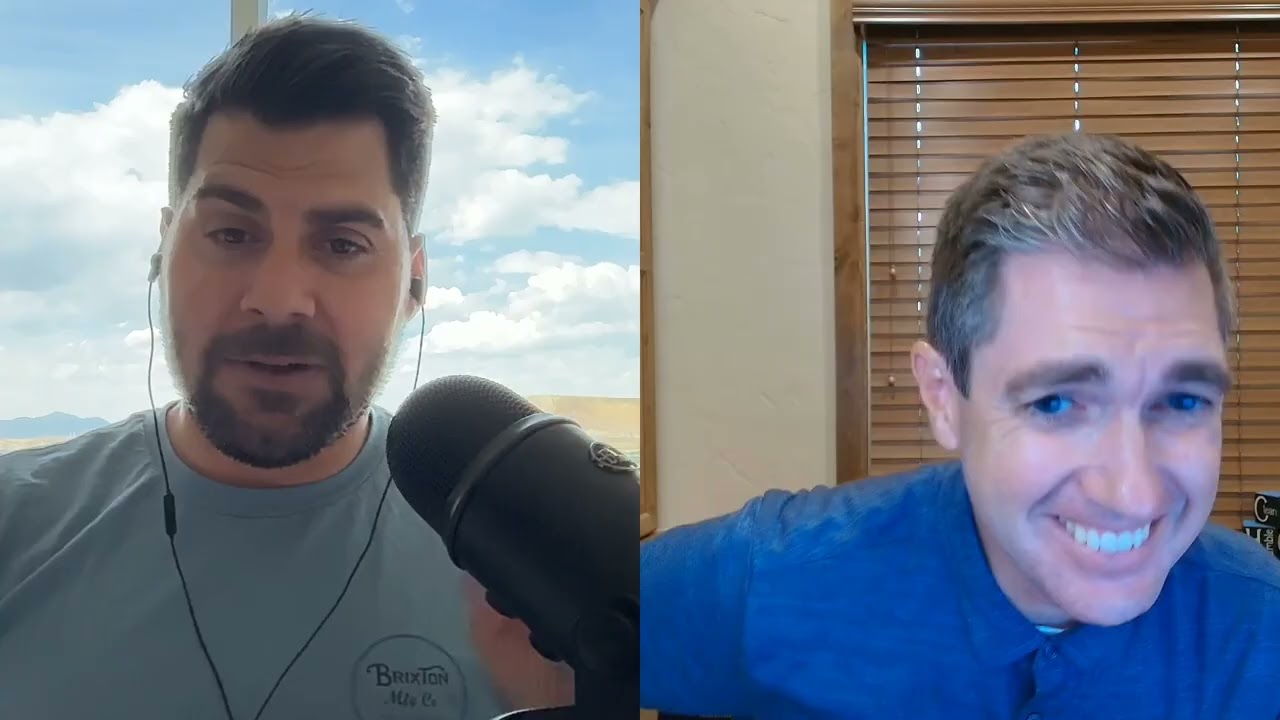
What's up everybody and welcome to another exciting episode of the Navigating Dental Insurance Podcast. I am your co-host today, Jordan Comtock. With me as usual, Mr. Ben Tune. What is up, Ben? How you doing, dog? >> What's up, Jordan? Uh the the photo behind on Susan's wall is sort of a description of what today looks like. You know, >> it's a dark day. >> It's a it's it's a dark beautiful day. That's actually a pretty cool cool photo. But uh but otherwise, doing very well. Jordan,
how you doing, my man? [laughter] >> Doing good. Uh Ben, we've got an exciting guest. Her name is Susan Lane. Susan, welcome to the show. How are you doing? >> Thank you. I am doing really well. I appreciate you having me. And about that picture, just since you mentioned it, it's Sedona. I don't know if you can really see it. >> And it's a lightning strike right over Bel Rock. >> Okay. >> Oh, got it. Yeah. The famous >> I call this my Sedona room. >>
Yeah. >> Great. >> That's awesome. >> You like nicknames for rooms? Yeah. So, why did you choose that? >> I'm from Arizona. >> Okay. Gotcha. >> And that's where I started 180 Dental >> years and years well decades ago. >> Yeah. >> Yeah. That's great. >> What uh so we're rewinding the clock to when you first started your dental career. Do you mind telling us about that? Like how how did you get to 180 Dentl? I started 180 Dentl after working in a couple of different
offices and working with Henry Shine as a beta tester for all of the updates. So back in California, >> I was part of the billing team for Lassen Indian Health and this was in the '9s. We were given the option of testing out G2. We were in Dentrix 11. We started implementing G2. It didn't go very well. So I contacted Henry Shine and I said, "Hey, does this program do this? Does this program do this?" And from there, our relationship began and I am part of
the first look team implementing all of the updates in Dentric's core. I install, update, and train just Dentric Core and my company. >> We clean up databases, especially in a transition or an acquisition or implementing a new associate. >> It's cool. Yeah, that's awesome. That's a lot of work. >> It is, you know, I have loved it. >> Yeah, that's great. So cool. So, um, you focus a lot on insurance, I would imagine, working with Dentric Systems. >> Yes, definitely. >> What are some of your
top tips? [laughter] So I would say right now one of the top tip would be send your claims cleanly and send them with everything that you could possibly want to send the first time electronically. Insurancees are implementing AI technology. >> Yes. >> To process claims. Mhm. >> In that process, it is looking for parameters like SRP. You need an FMX, a pano, and bitewings, one or the other. >> It's a checkbox for the AI system. So, it's going to look at how many frames that you're
sending. If you label it radiographs and it says FMX, it's going to look for 18 individual images as it scans it through the computer system. If you're only taking 14 images, it may kick that claim out saying it didn't meet the requirement because we're not dealing with humans. We're dealing with a machine that has been programmed specifically for certain data fields. >> Jeez, here we go. Yeah. >> So when you're sending perocaling charts, >> those probing depths, you need to mark which teeth are missing. You
need to mark which teeth have their restorations like a bridge or an implant. It's looking for all of that data. And if it has data already for the insured patient and it doesn't correlate >> with the insurance information that you're sending on that claim, it can kick that claim out of the system because it's looking for that implant on, you know, tooth number 12 or something. >> So Susan, are you are we seeing more claims being kicked out then? >> Yes. >> Because of this, >>
do you know any stats on that? Any any data on that? >> I do not. I have, you know, clients coast to coast. We have a lot of questions coming up recently in the last, you know, I would say 60 days why Perry maintenance is now getting rejected. >> Geez. >> And they're requiring prior SRP history. And if the history is not within 24 months, they can deny perio maintenance. >> Geez. And is I mean I did a podcast episode a couple weeks ago. I have
another podcast for for BoomCloud. It was with Dr. Dan Nelson. He talked about pererryio as one of the most undiagnosed treatments in in dentistry. And that's insane that now we're we're having to combat against AI insurance on helping patients. And so how is there a way we can combat AI with AI? Because doing all this manually sounds like a pain in the butt. [laughter] >> Yes. So there are different programs out there. Some are free, some are very minimal fees. And you can use chat GPT.
>> Sure. >> You can use um Gemini in Google. You can use some of the other platforms. There is a brand new one out that helps you in more than just your claims processing, your treatment coordinating. You know, Annie is very new in our field. >> Yeah. They come they were just in my office. >> Yes. Yeah. They're they're here in Utah and yet another Utah company. [laughter] >> So I envision that being the future of where we're going to go in this field. As a
dental billing specialist, I implement the chat GPT because if I'm listing a code like a surgical extraction >> to get that claim processed, the receiving AI computer is going to scan my narrative for two words. One of those words is going to be sectioned tooth. Okay? If you're doing a surgical extraction, you're sectioning that tooth. You're also going to be doing the elevation of the roots and you're going to be suturing. So, it's going to look for what kind of sutures that you're using, how [clears
throat] many sutures that you're using in the narrative. Those should be included in the clinical notes. >> That will get your claim paid very quickly without getting kicked out of the system. So yeah, we want to use AI to combat AI. You'll never win if you're doing it manually. >> Yeah. >> Yeah. It's just won't it >> it's a lot of figuring out how the insurance company wants to see a claim, right, Susan? Like sometimes there's some differences between what an insurance company would want over
what another would want for the same type of treatment. Right. >> That is true. >> And and do you think >> Oh, go ahead. Go ahead, [clears throat] Susan. I'm I'm curious to hear your thoughts about that. So that brings up an interesting thing with let's go back to SRP >> doing localized SRP one to three teeth most insuranceances but not all want the worst tooth. their field of data that they're receiving to process that claim is one tooth, not 45, five, six or, you know,
12, 13, 14. >> Mhm. >> It wants the worst tooth. The AI is also looking for all six probing depths and the criteria for processing that claim right now has changed. in correlation with what they're teaching in hygiene school, what they have taught in the past in hygiene school. So, insuranceances have figured out that if you don't have three of the six probing depths at five millimeters or deeper, >> they can deny that claim for not meeting the criteria because it's a clause in the plan
itself. >> That's interesting. Yeah, it kind of brings up the other component behind CDT in general. Um, does the ADA agree with that? Because they're the ones that own the CDTs and the insurance carriers cannot change the definitions that >> you know. And that would be a great question for [laughter] Rick Gop probably me. >> Yeah, let's bring him on the show, Ben. >> Oh, you should. [laughter] That would be an excellent podcast, let me tell you. >> Does Rick I know of his name. I'm
actually um I saw his on the speaking line for a conference that I'm speaking at as well in DC next year. I'm excited to meet him because I've I've read his stuff and never met him, never talked to him. Um does he work with the ADA or for the ADA or is he is he independent? >> I want to say that he is completely independent, but he has strong influence and ties with the ADA. >> Got it. Yeah. because those are questions that I want to
ask um 80 officials which I've tried over the years very carefully. >> But I I I appreciate you you kind of covering uh >> uh all this side stuff because we're what we want to talk about today is how to implement change, right? Change on new information that you get when you when you leave >> but this is actually pretty good. >> Well, implementing AI to combat uh AI insurance is change, right? So, >> it's big time change. It's a big change that I think most
the the dental industries I don't I don't I mean I'm sure some practices see it coming, >> but I talked to a lot of office managers that are clueless about AI. Um so I think this that that was an awesome tip. >> I'm really excited to publish just that tip. >> You know, >> it's there. [clears throat] It's free. It's usable and it's going to get you paid. >> I I use chat GBT and AI every day uh to run BoomCloud. And every um several months
ago, I tasked my my twin brother Justin who runs our operations here at BoomCloud to implement an AI in every department. But we need to be leveraging and embracing AI in every department of our our company. And I would encourage dental practice owners to do the same because it's changing and it's changing faster than I've ever seen technology change before. And technology has changed fast over the years. This is fast. I run a technology company and I'm sprinting to try and keep up with the all
the changes in AI. It is crazy. So wonderful tip. I love it. [laughter] >> Yeah, AI is going to replace all of us, all our jobs probably couple years. >> I I still I don't believe that yet. I think it's going to enhance our ability to do more. Um and and and let me let me just give you an example of that. Um I hired a bunch of marketing people for a period and um we've reduced I'm I'm a we're able to reduce to one person
to do like many other people's job right so yeah some people may be reduced out but it's leveraging the people that that actually use AI right so just in the past seven days my my team one person uh was able to write 62 SEO optimized articles for Google search using AI and and of course human uh human oversight. It's amazing what you can do. You can do so much more from marketing to fighting insurance claims. Um it's fascinating. So I would encourage all practice owners listening
to this to get on board and really start to figure out how to imp integrate this change within your practice. So with that said, Susan, let's talk about implementing the change. [laughter] Change is so hard. >> It is so hard but so fun. >> Hard. Yes. And you know adaptability keeps us alive. >> Yes. >> With change, it's really a psychological game. And it's all about how you approach it when you're forced to change. Right now, we're not forced to take in AI, but it's a
good adaptive practice for us. >> Yes. >> So, when you're looking at change, the best thing you can do is come at it instead of with fear, with curiosity. >> Yeah. Embrace it. >> Yes. So, you want to embrace it. You want to look at four doors. Okay. And I talk about this in my my webinar. It talks about embracing the change that you can actually make a difference with. It talks about getting rid of the changes that aren't serving you. And then it talks about
dealing with the change that you have no control over. >> Sure. So when you want to implement change, you want to understand first what your brain is doing because you're going to get that opposition. You're going to get that push back. >> Push back. Yeah. >> Push back. So if you go to your team and you're saying, "Oh, we want to incorporate chat GBT on all of our narratives. we're gonna, you know, invest in Annie and we want to do this in our clinical notes and
we want to really embrace this change and your front office person is like, you want me to learn AI? What? I don't think I can do this. I feel like I need to quit. Okay, so that reaction is fear. Fear and excitement inside your brain is the similar chemical compound. So if you feel that fear, then the person introducing that change needs to recognize that and flip the script. How you flip that script is you decide what you're going to keep, what you're going to chuck,
what you're going to change, and what you're going to accept. So those are your four doors. >> Change is good. >> Yes. >> I mean, look look at history. >> The only constant is change, right? >> The only constant is change. And thank God because could you imagine driving all day on our roads today? >> Yeah. >> You know, or >> totally, >> you know, dressed in western garb or pett coats and >> stiff clothes that are uncomfortable. >> Exactly. [laughter] You know, change is good.
Yeah. And it's hard to >> see it when it's in front of you because it's unfamiliar. >> Yes. >> It's unknown and it really has an an unknown impact on you. So when you're flipping the script and you want to implement change in your practice like AI in insurance, you really want to identify what you're going to keep because that gives your team stability. We're not going to change the phone system. We're not going to change our format. We're not going to change our protocol. We're
going to keep our patients happy. We're gonna do A, B, and C the same as we always have been. So you decide what you're gonna keep. And then you say, but here's what we're facing. A lot more denials. I'm not getting paid. We need to get paid so that I can pay you. So we are looking at implementing this change for our betterment. So we're going to chuck this old way. We're going to chuck these cookie canned narratives on our claim forms that are just plugins.
We're going to change our templates in our clinical notes so they're not so cut and paste. AI is looking at all of that data. And if you're using a clinical template and you're just dropping it in as a plug-in, AI is recognizing that and it is data mining that for an audit. >> [clears throat] >> Interesting. >> So the next thing is embracing what you can't change. Let's face it, insurance is they want to keep as much money as possible. >> Yeah. Deny every claim they
can for whatever reason. >> Last year they just spent like 160 uh what was the number been? 160 million on lobbying so that they can not pay claims. >> Oh, yeah. Yeah. And Sigma. So, so my part about the AI, I'm a bit of a um I'm as I'm a I'm the hugest critic for AI as it pertains to dentistry. >> And and in large part because I've seen how it works. And I get what you say. I get what you say in terms of it
finding tools and resources to help. And I love technology to help us with that. But last year, Sigma gets sued by started with the state of California for developing AI that auto adjudicates and well not auto adjudic auto denies claims >> denies. Yeah. >> The auto adjudication has been around for a long time but technology makes it so much more easier >> faster. >> Faster. And then there's a so I want I'm curious about your thoughts about this Susan is um I spoke with um a
tech group out of the UK and they go to every dental conference here in the United States and they they are right next to a dental school there and they've been developing a technology that addresses what you said in the beginning about how all these insurance carriers want these different a different criteria different checklist of things to in their minds to constitute a legitimate claim, right? A claim that fits the criteria for coverage. So group, this group is developing just that. And they're not the only
one, right? And and the system itself is is going to create adapt to the changes that the insurance industries want with their AI and then the dentistry AI that's used in the practices adapts to that, right? To and and so you have we're doing that manually right now, right, Susan? We're chasing the insurance companies around to figure out how to play the game, right? >> But technology is is replacing humans on that side. That's been apparent. You know, it's hard to call provider relations for any
insurance company these days. And now we're we're developing AI to to chase the insurance company's algorithms, right? How do you foresee that impacting the team members in the practice? Right? Is that going to minimize team members or is it going to allow team members that are already there to be I know it's going to allow people to be a lot more efficient, but is there a possibility that that could eliminate jobs on the dental side? I know this is kind of a controversial question, but I
I would love your thoughts on that because that's my >> I love your question. >> It's all changed question. >> It's changed and it's you know the >> think about AI. It will never totally replace humans because that would mean that humans would have to know exactly what they want. They would have to program the AI for 100% of what is inside their brain. >> Yeah. >> And we're not there yet. I don't know if we ever will be there. >> There's a creativity aspect that
humans have that AI doesn't have that it we influence AI. >> There's a next level. Oh gosh. what do they call it? It's like a quantum computer um that that >> can it it can it it has the ability to see the way the human mind sees in terms of multitasking where you can have one thought process and then another one kind of separately you know kind of work on its own but when they meet together that's where creativity happens right so so the scientific community
is is very close to develop I think it's called a quantum computer system or something like that that operates very similarly to that of the human brain. And it's like that's kind of amazing. Oh, but that's also a little scary too, you know. [laughter] >> Yep. You know, >> there have been many movies that have given us the uh [laughter] projected outcome of that scenario, >> right? But I love technology and I love how it could make us better. But, uh, I'm just I'm just wondering
how that's going to play out from a a claims processing perspective like you're talking about, Susan, on how how it's going to make I know it's going to make dental practices better, but do you have any caution for practices in terms of new information like this? uh from the perspective of what should we be skeptical about when we're going to these conferences and hearing about not just technology but new things and how does that how does that or or or can that skepticism help practices determine
the level of implement immediate implementation or you know more investigation. >> Oh, I like that question too. So I'm gonna >> Ben's really good at asking questions. >> Oh, >> I agree. Yes. [laughter] I just crack jokes and laugh. That's all I'm here for. I like I prefer [laughter] >> Yeah. Yeah. Yeah. >> So, it's not going to take everybody's job. >> Yeah. >> It is going to enhance the one person that you have on your team that embraces it and uses it as a good
tool. >> Yeah. >> So, I'm going to give you an example. So two and a half years ago, the code inside Henry Shine, the AI that they implemented in Smart Image to automatically attach images to your claims to make it >> better, faster, more efficient was a great line of code and I love it when it works to make that work. Your back staff has to clearly and correctly identify the tooth that they are taking a radioraph of and label it. So >> yeah, >> intraoral
images. If your office is labeling your intraoral image one, two, three, four, five, it's not going to correlate with tooth numbers. So the software in AI is not going to automatically attach your intraoral image of your core buildup and get that claim paid for a crown and core. >> It doesn't have the right information. So you you can use the AI. It puts the smart image right in your claim, but you have to verify it. You can't set it and forget it. And that is the
perfect example of what AI can do for us. >> You can't set it and forget it. It's not going to take the person away from double-checking to make sure that you have an intraoral, that you have the clinical notes for the right day for the right tooth. >> It's just not going to happen. >> There's oversight from humans that will always be necessary. >> Yeah. >> For now. >> For now. [laughter] >> Well, no, I like I like that. that I think that's a great response
because uh you know we buy tech we have new technology too like Jordan's the one that keeps telling me man there's all this great technology that exists out there makes business owners lives better >> and as I've started to implement a lot of that what I've noticed is that it takes a lot of human input >> you know it still does >> yeah it doesn't work on its own you got >> you can train it um you know and Ben I'm happy to go to your
so Ben's one is my neighbor Susan um I'm happy to ride my bike over to your house Ben and and walk you through my process I want to come play. >> I'll make I'll make sure we have some props and uh stuff. >> Thanks, bro. Yeah, I knew you were going to do that. [laughter] >> So, back when they introduced Gemini a couple years ago in Google, I got an email and it invited me to help train Gemini. >> Okay. >> So, it was called something
else before it was Gemini. >> And Gemin Gemini is Google's AI. Yes. It competes with chat GPT. >> Correct. Yes. So it was be it was at the cusp of chat GPT3 >> right before four was being introduced. So here I was just you know telling this AI software what to look for in words and it would try and come up with the image from my words. If I didn't use the right words, I would have to say, "No, that's not right. Here's a better sentence
that would describe what I'm looking for." Mhm. >> You know, so if you wanted a cat riding a planet with rainbows shooting out of its eyes and you wanted an image of that, it would give you a cat, just a cat, and then it would give you a planet over here and the cat would not be writing the planet, you know. So you have to use your words and say I want A and a full description, B full description, C full description in that order. You
can't have it out of order. And that's the key with AI is it cannot be out of order and it must be complete. >> Yeah. >> Well, and I think it's helping us be better communicators is what I've noticed for just for myself using it every day. It's helping me better communicate what I want, not only with AI, but with people, my employees, right? I'm I'm figuring out how to better communicate with them because I'm talking to AI all the all the time and teaching it,
you know, how to understand my communication style. And I'm like, "Oh, interesting. I'm not very clear on this, this, and this. I'm going to try to be more clear on this when I'm talking to humans and AI." [laughter] >> Yeah. So, >> that's what it's doing for me. It sounds like to me that uh this these AI comp uh uh well software technology that we're talking about it it sort of helps the um the nons superhuman people like me be a little bit more organized you
know. Is that a is that a good way to summarize it? [clears throat] >> That is a good summary. And it's going to help you organize not just the thoughts and your actions, but it's also going to help you organize and grow from that in little areas like um mapping out your distance in your car which is that was a big change for us. We used to have paper maps and now >> I cannot drive, you know, to a dental conference without using GPS, you know,
Google Maps. As sorry as it is, it gets me there. >> Yeah. It's uh >> So, >> well, and now you have if you ever I mean, you both lived in Arizona. If you go down to Arizona, they have the the autonomous cars vehicles that you can ride. >> Oh, yeah. >> Now you don't even Yeah. Yeah. Yeah. That's it. Now you don't even need uh Uber or Google Google Maps. You just hop in one of those things. [laughter] >> Change more change. >> So uh
Susan, how two questions here. How do you tell your team of major change and then how do you tell your patients of that major change? So because my company deals a lot with transitions and sometimes an acquisition of a of a new practice and that change happens. >> Big change. Yeah. >> It's a big change. It's a forceful change. >> Yes. >> And I have been in every season of that change where the doctor has decided I have a medical problem. I'm selling immediately. Doesn't inform
his team. Goes through um an intent to sell. Gets a buyer. And the first day that the team is introduced to their new owner is the day that the old doctor has exited the practice. And it is very difficult to get your team to accept that change when it feels like they have been accosted that they have not been trusted in the process. So when do you inform your team that a major change is going to happen? involve them at a stage where you know it
is a definite for sure transaction that it's not going to fall apart. So informing your team gives them some agency. It gives their mental processes time to not feel like they are hurt and abandoned. You know, the trauma bond of a relationship in the workplace can be much like a marriage. You know, you see these people >> for eight hours a day, sometimes more, and that's more than you see your own family. You develop these bonds with these people. >> You do. >> And when something
like that happens, it's very similar to a breakup. And to avoid that, you have to have communication. You want to give them time >> to process. [clears throat] >> So when do you tell your team when you know that it's a for sure thing? And you can say, I didn't want to tell you before now because it was still up in the air. It was still not definite. So when you do know for sure, that's when you tell your team and you embrace what you can
change, what you can't change, and you give it the spin of this is a good thing. >> And I think that's important, right, Susan? Because you want to have the transition where the change is being implemented whether team members like it or not. How do you how do you influence positivity or make the process positive for team members with the new change? >> You bring cookies. Every time you change something, you bring cookies. >> Food is a good motivator. >> Have Lav's law or whatever, you
know? >> Oh, yeah. Yeah. >> It's the same thing, right? You change and oh, here's some cookies or something nice, right? [laughter] >> Well, funny thing is sugar, especially chocolate, >> yes, >> is a dopamine hit. So dopamine is the chemical in your brain that you know plays with the serotonin and gives you that happy feeling. So cookies would be a good icebreaker. >> Literally we do something like this every morning with our with our sales team, right? To to hit the number. Maybe they're maybe
they're waking up a little bit slow and we need them to make a quick change to call people and book appointments and everything, right? And it can be hard work and um work that nobody looks forward to. So we do reward them with hey if you if you if you call this many you know practices and and book this many appointments before this time you get a free lunch with cookies. >> There [laughter] you go. >> You know and it work it works. It works really
well and it's so simple. [laughter] >> But that's just my thoughts. I want to hear more of your thoughts. >> Well so you were talking about when do you inform your patients? Okay. So, when you are bringing in an associate into your practice, at what time >> do you say, "Surprise, I'm not seeing you anymore. Here's my new doctor." >> Sure. >> So, most people, because we were all cavemen at one point in time, do not like surprise. >> No. >> It gives us the fight,
flight, or fawn response naturally. So our parasympathetic system shuts down. our logic brain goes out the window and we're like, [screaming] >> so when you tell your patients, you want to do it in a way and in a time frame that you can give them some cooling off period, some, you know, like you don't want to call the person saying, "We're looking forward to your hygiene appointment today." Oh, by the way, you're going to see Annie. And the patient's like, "Who's Annie?" I've never seen Annie
before. Oh, she's new. She's great. You're going to love her. >> Here's a cookie. [laughter] >> Sorry. Sorry. Sorry. >> We'll send you home some Worther's candies. >> Yeah. >> After your dental appointment here. >> Yep. [laughter] >> Come see us in three months. That's job security. >> Yep. [clears throat] [laughter] Right there. So, how would that conversation go if two weeks before that appointment, you send out a very nice weave message that is a template or you know whatever campaign program that you use. >>
Yeah. >> And you say, "We are so excited to see you. We have this little video or something to introduce you to the hygienist that is your patients for this day. >> And it's again AI incorporated. It's a quick little 30 second. >> And in this day and age, everybody loves a video more than a text. And >> yes, >> I don't know of any millennial that will read an email these days. >> It has to be in in the form of a Tik Tok. I
think. >> Yeah. Very similar. Very similar. >> Yep. >> So, if you were to introduce the change, oh, Annie has joined our team. She comes from Northwestern. She lived in this area. You know, just two or three sentences to say, "Hey, here's a new person. We're going to see you on this time and day." Mhm. >> That just gives them the mental break that they need to accept that change rather than something that is unplanned. Very surprising. Yes. >> Oh, that's great. >> Yeah. >> Yeah.
I love that. Um, I I love the video idea because often when I go to like medical or even a dental practice or whatever, right, and I'm dealing with with somebody like working in my mouth or whatever, I like to know who is person. >> Yes. >> Right. It it feels awkward if you don't know the the person and like a video text like that I think is is perfect. Like that's exactly I'm I'm an older millennial [clears throat] and um that's exactly what I would
like to see, right? I don't like being surprised by a new person that's going to be working on my teeth, right? Especially because it's it's so it's so personal, right? That you want somebody that you know, like, and trust. [laughter] >> So, think about new patients um after COVID when we were all dawning the full regale of PPE. you know, the hat, the glasses, the face mask. >> We can't see who you are in connect. Yeah. >> And you're seeing this doctor for the first time
>> and it feels more like a science experiment than getting your teeth cleaned. You know, that was very scary to come back to the office environment, >> but it was necessary and we were forced into that change. >> Sure. >> And we got used to it, didn't we? We all got used to wearing masks, but thankfully we don't have to anymore. >> Yeah, I just hid. That's all I [laughter] did. >> I just stayed home the whole time. >> Just stayed in my basement >> pretty
much. >> Yeah. [laughter] Yeah. No. Uh Susan, this has been an excellent episode so far. One of my favorites. Um what uh let's let's close the episode out. I think this is amazing. What if someone wants to reach out to you and learn more about how you can help them within their practice? What how do they find you? >> So, Dentric Practices can find me on Instagram at 180. And I will say with a caveat there, my Instagram is not business related. It is personal. It
is me. >> Yeah. They get to know who you are. They get to know my likes, my hobbies, and it gives them a little insight. On my page, I have pinned what you can expect. There's me on a video there, the third frame in. >> No surprises. You're doing a great job so far. >> I am just not a person that is gonna spam you with emails. >> Yeah, >> I love my company. I love what I do. And what we do is we clean up
dentrics. So if your numbers just are not making sense, I come in and I look at your data. We clean up your data. We FIFO all of the payments so that your associate gets paid when he does the exam. We look at how your insurance database is set up because payer IDs are how the office gets paid. Now because there are five clearing houses that process all medical data, three of those process all dental claims and you know the change healthc care issue earlier in you
know early March, late February really brought that to light where we had to change our clearing house or how we submit our claims electronically. Payer IDs is something else that we clean up >> and we identify those based on your software and your clearing house because each clearing house has their own unique list. >> The other thing that my company does for you is my accounting background helps you identify the differences between >> what your reports say and what you're looking at on your dashboard. Why
don't my numbers match? Well, they're never going to match identically. Never. Because just as soon as your front desk takes one payment, well, your dental intel has changed like in a second. >> Sure. >> So, your dashboard with whatever software that you're using like practice by numbers or, you know, some of the others that are out there, they're really good >> for measuring the metrics. And the metrics that get measured >> get improved. And you'll hear speakers talk about >> every time. You know, Sandy Purdue
says it, Dana Johnson says it. You know, it's something that is a true statement that we have all really grabbed a hold of. The metrics that get measured get improved. So, we want to look at all of that data. And that's what we do. I audit your dentrics. I look and see why it doesn't match because I like numbers. That's my my background before I was computers. Yeah, that's what I went to college for. >> But I did not ever take my CPA boards. >> I
decided to build computers and write code and learn dbase and Linux. And >> this is why you love technology. >> This is the Yeah. So fun to talk with. [laughter] Yeah. Oh, that's awesome. You have a great background and I'm I'm totally impressed with I mean your knowledge of uh uh what you were talking about in the beginning with insurance. It's like holy smokes. We need to chat with Susan more and >> sounds like we need to do a long time. >> Sounds like we need
to do a part two and three with Susan. >> Yeah. And I have some other things I want to talk to Susan about other webinars and conferences that people are looking for >> people that that have Susan's know uh knowledge set which is something I don't have. It's like I I just talk to people all the time that that that want to know this stuff behind the scenes right on claims processing, how insurance companies think and things like that. So no, thank you Susan. This has
been >> so good. >> Yeah, it's been a great episode. >> I followed you on Instagram. So >> Well, thank you. >> BoomCloud now follows you and I now follow you. So, I'm on Facebook >> and >> I'm also in the process of a new website. >> Great. >> And the old website is active, but it is under construction. So, you can contact me through my website at 180 dental.net directly. >> Google will bring me right up. So, if you type 180 dental.net, net. Google will
give you all my contacts right on that front page and give you some of the other videos that I've done. So you fantastic reach out anytime, especially if it's Dentric Core or computer related. [laughter] >> I love it so much, >> Susan. It was so fun having you on this episode today. This was valuable information for our audience. So we appreciate your you coming out and hanging out with us on the episode. So, Ben, any final thoughts, brother? >> No, that's it for today. Uh, amazing
episode. Thank you, Susan. >> Thank you, Ben. >> We we With that said, we hope everyone has a rocking day.