Dental Patient Photo Release Form for Dental Practices
Dental Patient Photo Release Form: The Essential Guide for Modern Practices In the age of Instagram, TikTok, and high-definition clinical portfolios, your dental practice’s visual presence acts as its digital storefront. Whether you are showcasing a stunning “before and after” smile makeover or posting a team photo on Facebook, one thing is certain: you cannot […]
 By Jordon ComstockMarch 7, 2026Updated March 19, 20268 min read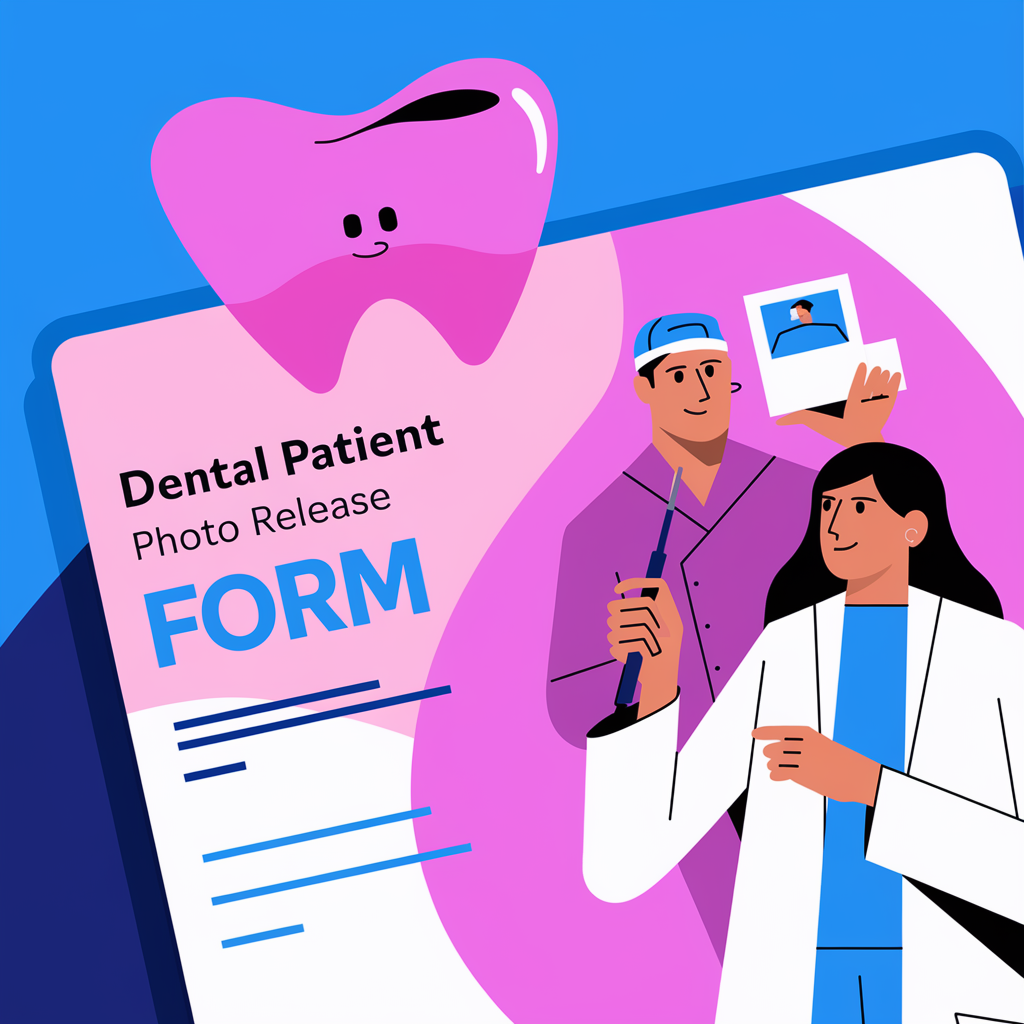
Dental Patient Photo Release Form: The Essential Guide for Modern Practices
In the age of Instagram, TikTok, and high-definition clinical portfolios, your dental practice’s visual presence acts as its digital storefront. Whether you are showcasing a stunning “before and after” smile makeover or posting a team photo on Facebook, one thing is certain: you cannot move forward without a legally sound dental patient photo release form. In a world of increasing privacy regulations and patient expectations, a handshake agreement is no longer enough to protect your business and reputation.
At BoomCloud, we work with thousands of practices to streamline their operations through automation. We’ve seen firsthand how a clunky, paper-based consent process can stall a marketing campaign or, worse, lead to a HIPAA compliance nightmare. That is why we’ve built the ultimate digital dental patient photo release form—designed to be editable, downloadable, and fully integrated into your digital workflow.
To help you navigate the complexities of dental marketing and patient privacy, we have expanded this guide to cover every detail you need to know about implementing these forms effectively. In the following sections, we will explore the legal necessities, the practical applications, and the strategic advantages of going digital with your patient documentation.
Stop wasting time with manual paperwork and disorganized files. With BoomCloud Forms, you can create, customize, and deploy professional dental forms in seconds. From your standard medical history form to specialized consent documents for implants or sleep apnea, our platform is built specifically for the unique needs of the dental industry.
Take the first step toward a paperless, high-efficiency practice today and start building your clinical portfolio with confidence.
When Dentists Use a Photo Release Form
The need for high-quality imagery in dentistry has exploded over the last decade. While clinicians have used clinical photography for years for case documentation and lab communication, the modern dental office uses photography for much broader purposes. Here are the most common scenarios where a professional document for image consent is required:
- Marketing and Social Media: Posting “before and after” photos of veneers, clear aligner therapy, or full-mouth reconstructions on Instagram, Facebook, or your practice website.
- Patient Education: Using actual case photos (not stock images) during consultations to show new patients the life-changing results they can expect from specific procedures.
- Professional Lectures and Publications: Sharing clinical results at dental conferences, in academic journals, or in continuing education webinars for your peers.
- Public Relations and Advertising: Featuring a patient’s testimonial or photo in a local newspaper, community magazine, or digital ad campaign.
- Internal Training: Showing your dental team specific outcomes to align on aesthetic standards and clinical goals during morning huddles or training sessions.
Without a signed agreement, even a seemingly harmless photo of a patient’s smile can become a significant liability if that patient later decides they don’t want their image online. Liability risks include not only financial penalties but also damage to your practice’s brand and patient trust.
Detailed Sections of the Dental Patient Photo Release Form
Not all consent forms are created equal. A “one-sentence” permission slip won’t protect your practice in the event of a legal dispute. To be legally robust and professional, your paperwork should include the following specific sections:
1. Identification of Parties
Clearly state who is granting permission (the patient or legal guardian) and who is receiving it (your dental practice’s legal name). This ensures there is no ambiguity about which entity has the right to use the images. It is also helpful to include the patient’s contact information for record-keeping purposes.
2. Specific Purpose of Use
You must specify where the photos will be used. Will they be on social media? Your website? Print brochures? Scholarly articles? A comprehensive form allows the patient to opt-in or out of specific channels. For example, a patient might be comfortable with clinical use for teaching but not for social media advertising. Transparency here builds incredible trust.
3. HIPAA Context and Identifying Information
While a photo of a single tooth might not seem like Protected Health Information (PHI), a full-face photo certainly is. The document must state that the patient understands they are waiving certain privacy rights under HIPAA for the purpose of the disclosure. It should also clarify whether their name or initials will be used alongside the photo.
4. Duration of Consent
How long does the permission last? Most forms state that the consent is valid indefinitely unless revoked in writing. This prevents a patient from claiming years later that their permission had a hidden expiration date. This provides long-term security for your marketing archives.
5. Right to Revoke
Under HIPAA and general privacy laws, patients generally have the right to revoke their consent at any time. Your record should outline the process for doing so, noting that revocation doesn’t apply to materials already printed or published before the request was received. This protects you from having to recall physical mailers or magazines already in circulation.
6. Compensation Disclosure
To avoid future financial disputes, the form should explicitly state that the patient is not receiving any financial compensation, royalties, or discounts in exchange for the use of their image. This clarifies the relationship as one of voluntary participation.
Best Practices for Implementing Your Photo Release
Having the form is only half the battle; how your team implements it matters for both compliance and patient experience. Follow these best practices to ensure your practice remains professional:
- The “Ask” Should Be Early: Don’t wait until the patient is walking out the door after a long, exhausting appointment. Introduce the idea of clinical photography during the treatment planning phase so they feel like a partner in the process.
- Explain the Why: Patients are often happy to help others. Tell them, “Your result is so incredible that it could help other patients who are nervous about this procedure feel more confident about their own transformation.”
- Keep it Separate: Don’t bury the photo release inside your general dental consent form or financial agreement. It should be a standalone document so the patient knows exactly what they are signing without feeling coerced.
- Update Your Records: Ensure that your medical history form and other onboarding documents are synced with your consent forms so the front desk always knows who has signed a release and who hasn’t.
- Go Digital: Paper forms get lost in filing cabinets or are scanned with poor quality. Using a digital platform ensures the release is instantly attached to the patient’s digital record and is easily searchable for years to come.
The HIPAA Connection: Protecting PHI in Marketing
A dental patient photo release form is inherently a HIPAA-related document. When you share a patient’s image for marketing, you are disclosing PHI for purposes other than treatment, payment, or healthcare operations. Therefore, the form must meet the specific standards of a “HIPAA Authorization.” This means it must be written in plain language and contain specific elements, such as an expiration event and a signature from the patient.
Your digital form system should be secure and encrypted, but the form itself is the legal bridge that allows you to move that image from a secure clinical environment to a public marketing environment. If you fail to get a signed authorization before posting to Instagram, you aren’t just being impolite—you are committing a HIPAA violation that could result in substantial federal fines and investigations.
How Digital Forms Improve Practice Efficiency and Growth
If your team has to hunt for a paper document, find a working pen, wait for the patient to sign it, and then manually scan it back into the practice management software, you are losing money through administrative friction. Modern practices are moving to digital solutions for several key reasons:
- Instant Accessibility: Patients can sign the form on a tablet in the operatory or on their own smartphone before they even arrive at the office. This saves minutes per patient, which adds up to hours per month.
- Consistency and Accuracy: Digital forms ensure that no mandatory fields or signature lines are skipped. The “Submit” button won’t work until the data is complete, eliminating the “missing signature” headache.
- Practice Professionalism: Handing a patient a clean, branded digital interface on an iPad looks significantly more modern and trustworthy than a photocopied piece of paper on a crooked clipboard.
- Secured Cloud Storage: Your HIPAA form, photo release, and treatment consent forms are all stored in a secure cloud environment, accessible instantly from any computer in the office or even remotely.
- Enhanced Marketing: When the consent process is easy, your team is more likely to take photos. The more photos you have, the better your marketing performace will be, leading to higher conversion rates for big cases.
Why Every Practice Needs a Standardized Protocol
Consistency is the hallmark of a successful dental business. Without a standardized protocol for the dental patient photo release form, things fall through the cracks. One assistant might remember to get the signature, while another forgets, leading to a library of photos you can’t actually use. By making the release form a standard part of the “Smile Makeover” or “New Patient” workflow, you ensure that your marketing team always has a fresh supply of legal content to share.
Furthermore, having a clear protocol protects your staff. They will feel more confident taking and sharing photos knowing that the legal groundwork has been properly laid. It removes the guesswork and hesitation that often prevents dental teams from capturing the great work they do every day.
Ready to Streamline Your Photo Consent Process?
Managing a modern dental practice requires modern tools. You shouldn’t be held back by cumbersome paperwork when you’re trying to grow your brand and showcase your clinical excellence to the world. A dental patient photo release form is a small but vital piece of the dental operations puzzle that bridges the gap between clinical care and business growth.
Stop wasting time with manual paperwork and disorganized files. With BoomCloud Forms, you can create, customize, and deploy professional dental forms in seconds. From your standard medical history form to specialized consent documents for implants or sleep apnea, our platform is built specifically for the unique needs of the dental industry.
Take the first step toward a paperless, high-efficiency practice today and start building your clinical portfolio with confidence.
Conclusion
Visual storytelling is arguably the most powerful tool in a dentist’s marketing arsenal. People buy into results, and nothing communicates results better than high-quality clinical photography. By implementing a standardized dental patient photo release form, you protect your practice, respect your patients’ privacy rights, and clear the path for creative marketing that drives new patient growth and increases your case acceptance. Don’t let compliance be a hurdle to your success—make it a seamless, automated part of your digital workflow with BoomCloud. Your patients will appreciate the professionalism, and your team will appreciate the simplicity.
Ready to replace PPO write-offs with recurring revenue? See how practices use BoomCloud membership software for dental practices to build in-house membership plans.
Related guide: Dental marketing consent form — our main guide on this topic, plus how a membership plan turns marketing into predictable recurring revenue.
Written by
Jordon Comstock writes for BoomCloud™ on patient membership plans, recurring revenue, and reducing PPO dependence.