How to Start a Chiropractic Membership Program
A chiropractic membership program works when patients pay a predictable amount every month for a defined set of visits or discounts, and the practice can actually collect that money on schedule. That's it. The value proposition and the pricing matter, but most programs die from operational neglect, not bad ideas.
 By Jordon ComstockSeptember 12, 20263 min read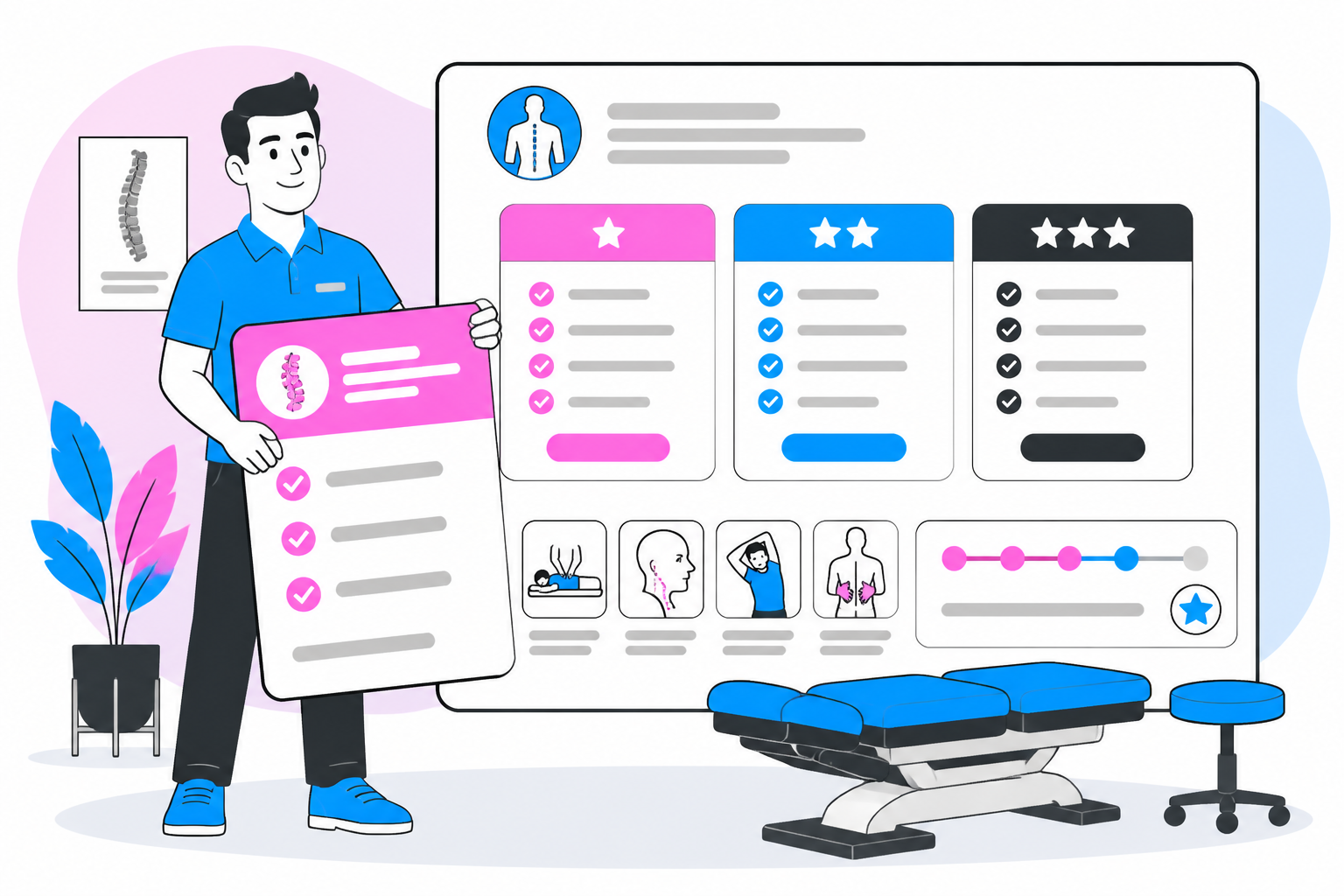
A chiropractic membership plan works when you stop thinking of it as a discount program and start treating it as a recurring revenue product. The plan replaces per-visit billing and insurance friction with a flat monthly fee for a defined set of visits or services. Patients get predictable costs, you get predictable cash flow, and your front desk stops fighting claims.
Step 1: Decide What You're Actually Selling
Before you touch pricing, define the plan structure. Most successful chiropractic memberships fall into one of three buckets: a fixed number of visits per month, unlimited visits within reasonable-use limits, or tiered access (adjustments only vs. adjustments plus soft tissue work). Pick one structure to start. Don't launch five tiers on day one — you'll confuse your staff before you confuse a single patient.
Step 2: Price It Like a Subscription, Not a Discount
A common mistake is pricing the membership as "20% off cash rate" and calling it a day. That's not a membership, that's a coupon. Price based on the visit frequency you want to encourage and the margin you need per visit after overhead. If your average cash visit is $65 and you want patients coming in twice a month, a $99-$120/month plan usually pencils out better than an arbitrary discount.
Step 3: Build the Billing Infrastructure First
Memberships live or die on your ability to charge a card automatically, every month, without a human remembering to do it. This means you need recurring billing software that can store payment methods, run charges on a schedule, and — critically — retry and recover failed payments automatically. Declined cards are not rare; they're routine. Expired cards, reissued cards after fraud, insufficient funds — all of it happens constantly across a member base. A practice running memberships on manual terminal swipes will bleed revenue to failed charges nobody follows up on.
Step 4: Set Rules for Freezes, Cancellations, and Rollover Visits
Decide upfront: can members freeze during vacation? Do unused visits roll over or expire? Can they cancel anytime or is there a minimum term? Write these rules down and put them in the sign-up agreement. Ambiguity here creates disputes later, and disputes create chargebacks.
Step 5: Train Front Desk on the Pitch, Not Just the Paperwork
The membership doesn't sell itself at the counter. Your front desk needs a simple, repeatable script: here's the plan, here's what it covers, here's what it costs, here's how to sign up right now. If enrollment depends on the doctor remembering to mention it mid-adjustment, you'll get inconsistent uptake.
Step 6: Track the Right Numbers
Watch three things monthly: new enrollments, involuntary cancellations from failed payments, and voluntary cancellations. If involuntary churn (failed cards that never get fixed) is high, that's a billing system problem, not a patient satisfaction problem — and it's fixable with better retry logic and automated dunning emails.
Getting the Billing Right
Most of the operational risk in a chiropractic membership plan isn't clinical — it's administrative. Manually tracking who's paid, who's overdue, and who needs a new card on file doesn't scale past a handful of members. This is exactly the gap purpose-built chiropractic membership software is designed to close, handling the recurring charges, retries, and reporting so your team can focus on patients instead of spreadsheets.
This article is for general informational purposes and is not legal, tax, or billing advice. Consult a qualified professional before finalizing your membership agreements or billing practices.
Common Mistakes When Launching
The most common launch mistake is rolling out the plan to every patient at once without a soft-launch period. Instead, pilot with a subset of established patients first, work out the kinks in your billing and rebooking flow, then open enrollment practice-wide. A second common mistake is failing to define what happens when a member's card fails twice in a row — decide that policy before you need it, not while you're on the phone with an upset patient.
Finally, resist the urge to negotiate custom terms for individual patients who ask for a better deal. Once one patient gets a side deal, word travels, and your pricing structure unravels. Keep the plan consistent and let the value of predictable pricing sell itself.
