Dental Medical History Form (Editable + Downloadable)
If you skip or rush your dental medical history form, you’re gambling. Not just with compliance.With patient safety. Every medication.Every allergy.Every condition. It matters. This page gives you: ✔ What a dental medical history form is✔ Why it’s legally important✔ When it’s used✔ HIPAA considerations✔ A template preview✔ An editable digital solution Let’s break it […]
 By Jordon ComstockFebruary 15, 2026Updated March 13, 20264 min read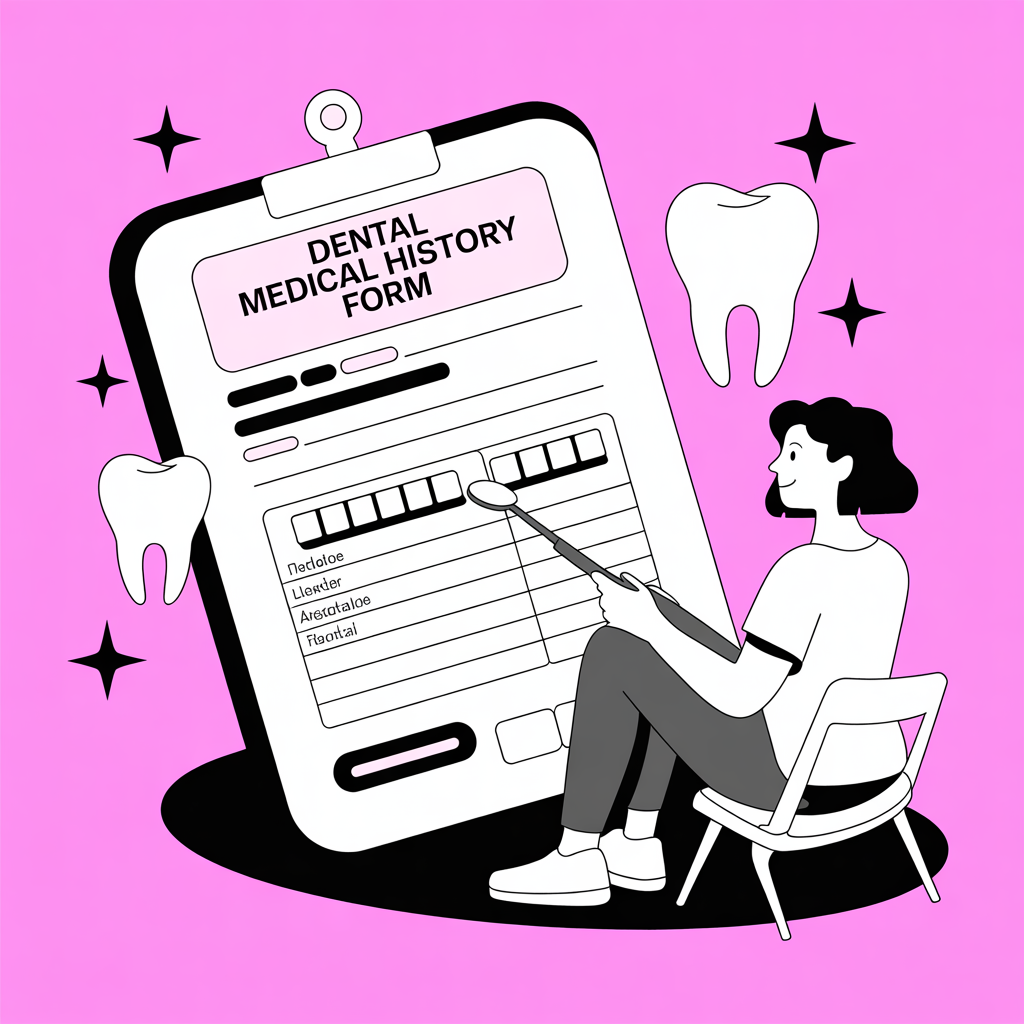
If you skip or rush your dental medical history form, you’re gambling.
Not just with compliance.
With patient safety.
Every medication.
Every allergy.
Every condition.
It matters.
This page gives you:
✔ What a dental medical history form is
✔ Why it’s legally important
✔ When it’s used
✔ HIPAA considerations
✔ A template preview
✔ An editable digital solution
Let’s break it down.
Build your secure, customizable dental forms here:
What Is a Dental Medical History Form?
A dental medical history form is a document patients complete to disclose their medical background before receiving dental treatment.
It collects critical health information such as:
• Current medications
• Allergies
• Past surgeries
• Chronic conditions
• Pregnancy status
• Cardiovascular issues
• Diabetes
• Autoimmune disorders
• Bleeding disorders
This form allows the provider to:
✔ Identify treatment risks
✔ Modify care appropriately
✔ Prevent medical emergencies
✔ Document informed care decisions
Without it, you’re operating blind.
Why Is a Dental Medical History Form Legally Important?
Patient safety is the first reason.
Legal protection is the second.
Under the Health Insurance Portability and Accountability Act (HIPAA), patient health information must be collected, stored, and protected securely.
Additionally, standard-of-care expectations supported by the American Dental Association require providers to assess medical history prior to treatment.
Failure to properly collect or document medical history can result in:
• Malpractice exposure
• Licensing complaints
• Insurance claim disputes
• Regulatory penalties
A properly completed dental medical history form shows due diligence.
Build your secure, customizable dental medical history form here:
When Is a Dental Medical History Form Used?
It should be completed:
• At the first appointment
• Annually (minimum)
• Whenever health changes occur
• Before major procedures
• Prior to sedation or anesthesia
Best practice?
Update it every year.
Even if the patient says, “Nothing’s changed.”
Things change.
Patients forget.
Documentation protects you.
HIPAA Context (Without Storing PHI)
A dental medical history form contains Protected Health Information (PHI).
That means:
• Secure storage is mandatory
• Access must be limited
• Transmission must be encrypted
• Audit logs should be maintained
HIPAA does not require paper.
It requires protection.
Modern digital form builders can:
✔ Encrypt data
✔ Securely store submissions
✔ Capture compliant e-signatures
✔ Provide access control
Avoid:
❌ Emailing unencrypted forms
❌ Storing scanned forms on unsecured desktops
❌ Leaving physical files accessible
Security is part of patient care.
Build your secure, customizable dental medical history form here:
What Should a Dental Medical History Form Include?
A complete form should contain:
• Patient full name
• Date of birth
• Emergency contact
• Physician name and contact
• Current medications
• Allergies
• Medical conditions checklist
• Surgical history
• Tobacco/alcohol use
• Pregnancy status
• Signature and date
It should also include:
• A statement confirming information is accurate
• Authorization for provider review
• Annual update section
Comprehensive documentation reduces risk.
Dental Medical History Form Template Preview
Here’s a simplified example structure:
Dental Medical History Form
Patient Name: _______________________
Date of Birth: _______________________
Do you currently have or have you had:
☐ Heart disease
☐ High blood pressure
☐ Diabetes
☐ Asthma
☐ Bleeding disorder
☐ Autoimmune condition
☐ Other: _______________________
List current medications: _______________________
Allergies (medications, latex, etc.): _______________________
Are you pregnant? ☐ Yes ☐ No
I confirm the above information is accurate to the best of my knowledge.
Patient Signature: _______________________
Date: _______________________
This template should be customized to your practice’s protocols.
Build your secure, customizable dental history form here:
Make It Editable + Downloadable
Paper slows intake.
Manual scanning increases compliance risk.
Digital forms streamline everything.
Build your secure, customizable medical history form here:
With a digital builder, you can:
✔ Add custom branding
✔ Capture secure e-signatures
✔ Automate patient onboarding
✔ Store encrypted records
✔ Export downloadable PDFs
Modern practices are going paperless for a reason.
Efficiency + compliance.
Related Forms You Should Also Have
Your intake system should also include:
• <a href=”/dental-consent-form”>Dental consent form</a>
• <a href=”/hipaa-form”>HIPAA form</a>
• <a href=”/medical-history-form”>Medical history form</a>
A standardized digital workflow reduces errors and increases compliance.
Common Mistakes to Avoid
❌ Not updating annually
❌ Failing to review before treatment
❌ Missing signature confirmation
❌ Incomplete medication lists
❌ Ignoring health changes between visits
Documentation is your shield.
Frequently Asked Questions
Is a dental medical history form required?
Yes. Collecting medical history is considered standard of care before providing dental treatment.
How often should patients update it?
Best practice is annually, or whenever a health change occurs.
Can a dental medical history form be digital?
Yes. Digital forms are acceptable if stored securely and compliant with HIPAA standards.
What happens if a patient refuses to complete it?
Providers may decline treatment without adequate medical disclosure due to safety concerns.
Build your secure, customizable dental history form here:
Ready to replace PPO write-offs with recurring revenue? See how practices use dental membership plan software to build in-house membership plans.
Written by
Jordon Comstock writes for BoomCloud™ on patient membership plans, recurring revenue, and reducing PPO dependence.