Videos / Watch
Insurance Coding Behind the Scenes with Dilaine Gloege
August 19, 2026 · BoomCloud™
About this video
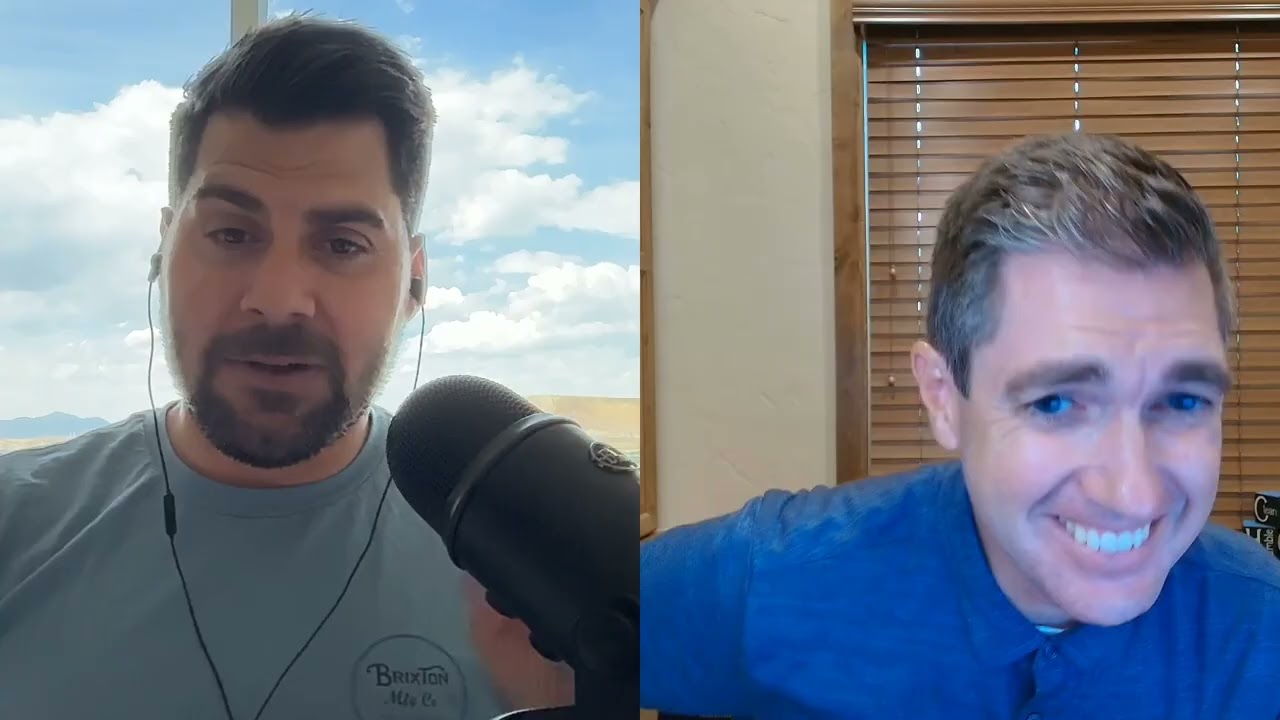
Dilaine Gloege is the Director of Education and Chief Claims Officer for Dental Claim Support (www.dentalclaimsupport.com (http://www.dentalclaimsupport.com/) ). She has 35 years of experience in dentistry and has served as a Certified Dental Assistant and is an AAPC Certified Professional Coder. Most recently, Dilaine worked alongside Dr. Charles Blair as a Call Center Support Supervisor for his Insurance Solutions Newsletter and PracticeBooster where she has helped thousands of practices with coding and insurance questions for both medical and dental claims. She is a true expert in her field.
During this episode Dilaine discusses some of the most common coding issues that occur in dentistry. We focus on build-ups and perio coding issues where Dilaine provides key insight on how to effectively report these codes and in a way that increases your chances of getting paid for the work you are performing. Dilaine gives key feedback on documentation and narratives that are essential for claims payments and gives a peak into the "auto-adjudication" (claim review by insurance companies) methods by insurance carriers that may negatively impact you if you are not using key words or submitting the proper documentation with your claim.
To contact Dilaine visit www.dentalclaimsacademy (http://www.dentalclaimsacademy.com/) and click on the "Contact" page. As the Director of Education she hosts webinars and other seminars to help further your knowledge and skills on coding and other related insurance management issues you deal with on a day to day basis.
Full transcript
Complete text of this video
[music] >> Welcome to the Navigating Dental Insurance podcast, where we don't take from insurance [music] companies. Here your hosts, Mr. Jordan Comstock and Mr. Ben Tuinei. >> Welcome to another exciting episode of the Navigating Dental Insurance podcast. My name is Ben Tuinei and today I'm going to be your solo host. Uh Jordan Comstock is on a hiring frenzy. [music] He's expanding his business and uh he has a number of interviews and his current interview is going a little bit long, so he does apologize for his
absence and so you're stuck with me today. But I don't think that's a bad thing simply because uh we have a guest that uh she and I have something in common. Normally Jordan likes to talk about membership plans and me as an insurance guy, you know, insurance negotiator, I tend to get boring with the repeated uh membership platforms and I know it's important, but I know a lot of our listeners want to know more about insurance stuff like coding as an example, which we are going
to talk about today. So today we have a very exciting guest. We have DeLaine Delegge. Did I get that right, DeLaine? >> You sure did, Ben. >> [laughter] >> Perfect. >> DeLaine is uh I would call her probably one of the foremost experts in the arena of dental coding throughout the United States. Um she's going to go through her background and you're going to know why real quick. Uh but DeLaine, we want to welcome you to the program today and thank you so much for taking
time out of your day to be with us. >> Thank you so much for having me today, Benjamin. >> Yeah, it's it's it's sure a pleasure and a treat and first I I'd like to just introduce you to our listeners and sort of go through your background in dentistry so they know who you are because um I would say all most of our listeners, if not all of them, have some experience with your work that you've done for a particular uh entity or organization over the
last 6 years. Do you mind Do you mind going through your background on how you got started in dentistry and your most recent work with Dr. Charles Blair and his group? >> Absolutely. So, I fell in love with dentistry um just by chance in the '80s. I took a temporary job in a dental practice in between uh college semesters and knew immediately that was my passion. So, I then went on to become a certified dental assistant and I was very fortunate to have worked for a
very progressive DP practice. Um we learned a lot and CE was never an option um as far as there was no end to it. Anything we wanted to learn about I had the opportunity to do. So, I am very grateful for those number of years I spent chairside and then I developed an interest in insurance. And it to me it's a puzzle and that became a little challenge for me and I wanted to conquer that. So, I then became a business administrator. I went into insurance
coordination of the benefits with the patients, treatment planner, um treatment presenter, and then I became a practice administrator. And about 6 and 1/2 years ago um I connected with Dr. Charles Blair and at that time he had just recently purchased Insurance Solutions Newsletter. And he wanted to have some synergy and have everything in his Charlotte, North Carolina office. I was fortunate enough to be hired to um become his call support center supervisor. Uh within just a few months he had me out there speaking. Um I
have a passion for again dental coding and insurance and solving the puzzle that goes along with it and helping team members um work through that, navigate all there is to know to be successful and take away their daily frustrations and challenges. So, I love working with dental teams and providing quality education. >> That's awesome. That's awesome. And if you were to assign a number, how many how many years have you been involved in this this whole dental industry? >> About 34 years, so >> So you're
you're you're good. >> Well, seasoned. >> [laughter] >> So you know what you're talking about. You know, you you can't be in dentistry for that long and not know a thing or two about coding or insurance-related issues that that you provide coaching for for your clients. >> That's right. And you know, with Dr. Blair, I was fortunate enough to be involved with a lot of research. Um anytime we were asked a question, and we didn't quite know the answer, maybe it was a new a nuance
that came up in the coding world or insurance world, I got to research that. So that was a lot of fun and always something new to learn every day, you know, what talking with thousands of clients throughout the year, and we loved getting a new question, so that's that's always fun. >> That's awesome. I would love to sort of segue into that if you don't mind. Uh thinking back on your experience when you were doing that type of research, and I'm sure you're fielding questions from
hundreds if not thousands of practices nationwide, what comes to mind in terms of the the number one question you've seen dental most dental practices ask with regard to insurance-related issues, coding, billing, you name it? >> Um it's mostly with PPOs. That's that's a huge question. How can I get around the write-off? Well, there are no workarounds, and it goes back to understanding what the doctor the in-network doctor has agreed to, as you know very well. Um there's a processing policy manual, and when a doctor signs
a contract, he or she agrees to abide by that processing policy manual. And unfortunately, most doctors and team members are not aware of that processing policy manual and have not read it. Um but as long as you understand what you've agreed to and understand how to navigate through that contract, then you can be very successful but that and profitable as well and being a PPO, but that's usually the number one question is is there a workaround? There are no workarounds. You've agreed to it and this
is what you have to abide by. >> Absolutely. So in your in in recent years, we've known that process and policy manual to be called different things among different insurance companies, right? >> That's correct. >> I think United Concordia calls it a dental resource guide. Um other insurance carriers call it a different thing and we when you call them as a contracted provider or an in-network provider and you say, "Hey, I want a copy of your dental resource guide." A lot of times they're they're puzzled
and like, "I don't know what that is." And then you have to ask them, "Well, it's it may be called a a process and policy manual or guideline." You know, and at that point you can get to it. Um and I I think that's a fantastic piece of advice because I agree that is that is one of the most ignored areas of a doctor's contract with insurance. I mean, you have the CDT codes but you also have the guidelines on how insurance companies pay. Um a
good example I would say is that I can think of is like Cigna, right? With Cigna and their crowns and buildups, um when the crown and buildup gets bundled, um oftentimes, I think it I can't remember exactly, you probably know better than I do in their in in their particular guide on this. Isn't it a function of reporting the seat date or something of that nature with Cigna in particular to get the buildup unbundled? >> Yes, so you should be reporting the buildup the day it's
completed, which is the prep date typically. You should hold the claim and report the actual crown the day it's completed, which is the seat date. Um what we find in Cigna and all the other PPO contracts is most of them require that you submit services based on the completion date. And a new office that's come about in the last few years is we used to be able to just write on the claim in the remarks section. It's just enter the prep date, seat date, and a
human being was reading those claims. Well, now no human being is reading and processing those claims. They're all processed by computer software. So, a lot of the payers want to see the actual date of service reflect the completion date of those services. Um and that becomes a challenge with your software and um you have to contact your software team. I'm I see you smiling, so I know you're fully aware of what I'm talking about. And that can be a big frustration, but with Cigna, a lot
of times if you get a good rep and you accidentally submitted um build-up and the prep date for the crown and it comes back it's inclusive to the fee, you can just call the rep and satellite the report a seat date and ask the representative from Cigna to please send that back through for processing and you can get paid for the build-up and the crown appropriately. >> That's awesome. Too many times I see across the country where doctors don't submit the build-ups because they don't want
to deal with the the write-off, you know, the adjustment in their system to show a loss or at least, you know, an uncollected um amount for that build-up. And so, they want to narrow the gap between production numbers and collection numbers. And I think it's a huge mistake to do that. I think you should look into these coding guidelines or at least these coding tips and techniques and it it kind of sounds mythical to a lot of dental practices because they're like, "Wow, I didn't know
that we can just report the crown on the seat date, you know, to get it unbundled with a lot of payers." Uh but this is the importance to the uh the process the the process and policy manuals or the dental resource guides cuz a lot of times these these um uh hidden contracts they do disclose a lot of these items. What about for practices, you know, on this crown and build-up issue? What about practices that have an in-house milling machine, an E4D, or a CEREC machine
where they where they do both the crown and the build the prep work and the seat on the same day? Is there any work around to that with a company like Cigna to get those two things paid for separately, the build-up and the crown? >> Absolutely. That's a wonderful question. Um, I would suggest that you enter a narrative indicating that this was a same-day crown and that the tooth was prepped and the crown was seated on the same day of service. Sometimes, due to auto-adjudication of
claims, when we just discussed about how human beings are not reading those remarks, um, that can be missed. So, it's I feel like it's important and the most effective way to give the insurance payer that narrative is through electronic claims and attachments. Because then you have a better chance and you have the ability to typically track if that attachment was opened and if it was read. Um, I would recommend that you, you know, be diligent with your follow-up on those claims just to make sure that
that payer is reading your narratives because sometimes they don't quite read them and things claims get sent through through auto-adjudication and um, I've mentioned that word several times, so I probably should define that. What is auto-adjudication? It is processing of the claim without human review. So, your computer software says, "Okay, you've got a crown and a build-up. Let's look at that data service." And it's programmed [snorts] to automatically bundle those. So, on those cigarette crowns, same-day crowns, it's important to include a narrative so that it's
reviewed. >> Absolutely. And I and I think that's such key advice because there's so many practices that do have in-house milling machines, um, that write off that that build-up entirely and don't spend the time to work these issues through with the provider relations or the the claims department for these insurance carriers. I often find that once you establish a historical, um, or some history with the insurance carrier where you're appealing these things and working on them aggressively, the insurance companies have sophisticated systems on their on
their end. I believe that they do, simply because every practice seems to be treated differently in this regard. You know, as an example, we have some clients that practice right next door to each other. I'm sure you've seen this before, Jolene, where one practice is getting paid You know, they have They both have uh E4D or excuse me, they both have CEREC machines. One of them's getting paid on a build-up every single time, but the other one is still getting the build-ups bundled, you know, as
an all-inclusive part of the crown. And you know, when you look at these differences among the practices, the differences is the level of administration, the level of appeal, the level of attention to detail to the narratives and so forth to get the insurance companies in the habit of paying those build-ups uh simply because, you know, rightfully so, you do have um a means uh to be able to do both of those procedures on the same day. What about situations where um the um the the build-ups
are consistently getting denied and the insurance plan is saying that um they don't Something along the lines that it doesn't fit their criteria for build-up. And And the reason why I bring this question up is because it seems like nationwide the the rate of denials on build-ups is increasing. In fact, I actually spoke to one state uh uh dental director for Delta Dental, and he told me off the record, so I won't mention his name or where he's from. He mentioned to me that um the
insurance the dental insurance industry is aggressively targeting build-ups and almost everything in the perio category, particularly scaling root planning for denials. What What What's your suggestion on how to effectively appeal a claim that's denied on the basis of a build-up not fitting the criteria for the for that particular dental plan's coverage policies in situations where the build-up is absolutely necessary for retention. >> That's the keyword. You just mentioned it. So, if we look at the code verbage for a build-up for D2950, it is a restorative
material placed in addition to the crown to retain that crown. And it's not always necessary. Sometimes we place material build-up material to um remove those undercuts and um just to make it an ideal prep. It may not be necessary to hold that crown on. So, retention is your keyword. So, when you're writing your narratives and you're submitting your um build-up claim, your chart notes should clearly reflect why it's necessary. And anything that's in the chart note can be included in your narrative. And again, retentive and
retention is that keyword. And the amount of tooth structure that's missing. Your best resource and supporting documentation and supporting piece is your intraoral camera. >> Mhm. >> You need to be snapping pictures of that. And every operatory should have one. And it's not about um proving you did what you did, but yet it is. It's also proving quality patient care and that you're not overutilizing and overbilling an insurance plan. Um but that's That's the best thing you can do in addition to the insurance is have
that intraoral picture. >> Absolutely. Documentation is so key. >> Yeah. >> It is. >> Yeah. >> And I'll say this, dentists are not typically known for their thoroughness in documentation. Um we often miss why a procedure's necessary. Same thing with the build-up. Why was it necessary? >> Right. >> What makes the tooth in the condition such that it won't retain a crown without that build-up? And your notes have to accurately reflect reflect that, not just the X-ray and the intraoral image, but also your documentation. >>
Absolutely. You know, it's surprising when uh people [clears throat] find out how long it takes for a police officer to process a single DUI case. You know, they pull you over, and I'm speaking not from personal experience. I don't drink. Um but um I do have uh a nephew that's in law enforcement. And he I I keep asking him say, "How how long does it take for you to process this this this, you know, a speeding ticket or you know, any type of moving violation where
you're not using your indicator?" And I asked him one day, "How long does it take take you to process a DUI from start to finish?" You know what his answer was? >> What's that? >> Do you want to take a guess on how long it takes for an officer to process a DUI? Any guess? >> 24 hours. >> No, for >> [laughter] >> You're too generous. No, you think You [laughter] you think that DUI, you either get arrested, you get thrown in the drunk tank, but
the you know, the officer pulls you over and then within an hour you're in jail, and that's it, you know, the officer moves on. It It takes about 3 hours to process a DUI. And I didn't know that. I thought, "Wow, that is a a huge chunk of time taken out of a a a 10-hour shift or a 12-hour shift for police officer." They They can't They can only pull over so many people that are driving erratically, you know, for DUI cases. Um but the reason
why it takes 3 hours is because most of the time they're documenting the DUI. Because when you're dealing in a court of law, and if you never know if that person is an attorney, and you know, well, you'll know if they're a judge cuz it'll it'll note in the in the system. Uh but you never know what type of legal defense this person might have, and you just have to cross your tees and dot your eyes, uh and make sure that there's no question about this
person having a blood alcohol level above above the legal limit. And when you look at that in dentistry, we're not necessarily dealing in a court of law, but when you're dealing with insurance benefits, it kind of almost feels like that, right, Elaine, where >> Exactly. >> too many claims, and if you don't have your documentation, you can't prove your case, or prove your appeal, you may have been performing the best dental work, but if that doesn't match up in the form of how a claim should
be submitted with the narratives and all the protections afforded by the CDT leasing agreement between the ADA and insurance companies, you don't have a case, you know? Your documentation is where it's all at. And And so, I have another question, if you don't mind. >> Sure. That's a great analogy. Before [laughter] we move to the next one, I never heard that before, but that is a perfect analogy. And it's not about getting paid whether the patient has insurance or not. Your documentation has to clearly support
what you did. >> Absolutely. You know, it's interesting. I was at And And I'm sure the many conferences that you've been to, um you know, representatives from the American Dental Association would would repeatedly remind me that almost every insurance company out there, especially you know, you can tell when an insurance company has leased the CDT definitions, because on their fee schedule, it says that CDT is property of the American Dental Association. And so, there's an agreement between the insurance companies and the American Dental Association that
the insurance industry or insurance companies that lease the CDT are not allowed to change the definitions of the codes. >> That's right. >> So, we see sometimes, and I'm sure you've seen this in the past, where the insurance company would redefine the build-up code, right? They s- >> Well, >> Sometimes. Not It doesn't happen often. But sometimes >> Yeah. It does? >> Sometimes [laughter] it does happen, but not very often. >> Right. >> They'll remap it more than anything. >> Right. Especially when sometimes a dental
consultant would get involved, or quote, know, there's a claim of a dental consultant being involved. At that point, it becomes um a his versus her, you know, in terms of the doctor-to-doctor discussion and debate behind what was considered legitimate or not. I have a question for you in this area because I get this question asked a lot and you hear you hear a number of different answers out there. Are insurance carriers permitted to change a diagnosis? For instance, if you submit a case of you know,
two quads of scaling root planing and then the insurance representative on their end says, "Well, there's just not enough build-up I'm sorry, not enough bone loss um or attachment loss, whatever it may be. So, this, you know, this case really doesn't really qualify for a case of scaling root planing for benefits." What's your assessment on an insurance company, you know, sort of making a good effort to try to get involved to to influence or change a diagnosis to deny a claim? Have you seen that happen
often? >> I have um many times actually. And SRP, a scaling and root planing, is a great example for that. Um so, each plan, not payer, has certain criteria that's established in the dental plan document that must be met before benefit will be considered. So, when you think about the dental consultant who is the dentist who's reviewing your claim, he or she is obligated to make their decision on whether benefit can be issued or not on the criteria established in the dental plan document based on
the documentation that was submitted by the treating doctor who's responsible for the diagnosis. So, we have to remember that they're not purposely denying these claims, but they have certain procedures and protocols that that dentist reviewing your claim has to follow. And most often when I review these SRP claims and I look at the documentation, it goes back to lack of supporting documentation because they didn't provide enough documentation that was able to be clearly read. Maybe the x-rays were printed on regular paper, folded with the claim
and placed in an envelope. Well, by the time it's scanned and it gets to that dental consultant, it's it's not readable. So, they can't see what the diagnosing doctor could see. So, it's not really changing the diagnosis, it's what did you submit support your diagnosis, which is the doctor's job. >> Got you. And and the legibility of that information that you're sending over to the insurance carrier, have you ever seen situations where let's say a practice is submitting electronic claims, you know, they're sending all the
attachments electronically, so the x-rays aren't, you know, they're they're there. You know, you can see them the way the doctors would see them in the office. And an insurance carrier would deny the claim on the basis that there's no bone loss or something else. And then several rounds of appeals by the office ensue where the office is just resubmitting everything that they've resubmitted before because there's nothing else to submit. And then on the fourth appeal, the insurance company finally pays the claim. Do you see those
happen often throughout the United States? >> I do. So, I always recommend that you exhaust all of your appeal attempts because just because one consultant denies it the next time the next level of appeal, you may get a different doctor reviewing the additional information you sent. So, it's not a it's not necessarily a game like it appears to be, but you get different opinions and you're further clarifying why this patient needs this service. What was the diagnosis? What was the condition you were treating? So, each
appeal level, you increase what you tell that reviewer. So, often times by the time it does get to that fourth reviewer, you've had submitted additional information, and you may have a different reviewer as well. So, I always recommend that you exhaust those appeal attempts. >> So, it's definitely a It seems like a very thorough peer review where uh most of you know I'm I'm not too sure what the policy is on the insurance side, but from my experience, it's usually actually a licensed dentist um that
reviews the the appeals and the information that you submit. Um so, that's really good insight. I I actually didn't know that that it was a a different probably a different person every time you resubmit a claim. >> be. Not always, but it can be. The chances are very great that it would be. >> Yeah. >> [laughter] >> That's awesome. We often see patterns in some practices, you know, after the third or fourth appeal for particular insurance companies, almost 100% of the times those claims get reversed.
Um you know, it it and then it begs the question, you know, why are these Why are some of these issues are so tough to get get resolved the first time around? Why is it so tough for um doctors to get claims paid the first time around when their documentation is solid, you know? Um and I was it was told to me by another dental consultant, a dentist who works for United Concordia, uh again, off the record, so I can't mention his name. Um he mentioned
to me that um often times the the auto adjudication system kicks in, you know, where the claim automatically gets denied because they're scanning for keywords, and often times they miss those things. But, here's another enlightening thing that he mentioned. He said that um a lot of times, he says, "Okay, this is the off-the-record part." Well, you know what? Since I mentioned the name of the insurance company, I probably shouldn't mention it cuz I don't want it to link back to him. Um but, essentially, you know,
this the suspicion of some insurance carriers um intentionally doing that, you know, that may or may not be the case, and I'm going to leave it at that [laughter] so that I don't I don't want to burn my sources that and I'm sure you have some too that can verify a lot of this information. Um but but moving along with some of the coding and this documentation thing is really fascinating and thank you for for sharing your insight there. What is your opinion on the code
4346? >> That is a great code and I got real excited when I I always attend the Code Maintenance Committee meeting every year at the ADA and I love hearing the conversations and how the codes changes are made and all the discussion that goes around it. Um that was a definitely a needed code. I've been in dentistry long enough to see that that has been a missing piece and a gap in the code set for a long long time and several attempts over the last years
have been made to correct that um unsuccessfully. They nailed it this time. It's diagnosis based. Everything we do is diagnosis based. Um but for this particular code, there's keywords in that code that you need to um understand. First of all, it's full mouth moderate or severe gingival inflammation. So, that's the diagnosis that must be documented. Um and it goes into further description of the code with the descriptor. In absence of periodontitis, there's no bone loss. So, you've got this gingivitis case that you have determined is
moderate or severe and it's all documented. You've got a perio chart that is proving that there's no signs of periodontitis. There's no active infection and there's no bone loss. You've also got intraoral images showing the full mouth um inflammation, the inflamed tissue. So, you've got all that documented, you've got your x-rays. So, you submit that and a lot of insurance companies are handling it as a prophy. Um and some of them aren't. We're seeing more and more every year handle it from their perio benefits, which
is subject to the deductible and the co-insurance. But I absolutely love this code and I know that um I hear a lot, "Well, it's not going to use that code because they're going to pay a prophy anyway. Did you do a prophy?" No, you didn't. You treated a patient who has a diagnosis of moderate or severe gingival inflammation and you're required to report it and document it as such. So, there's no question of whether you use it or not. Um so, you should always report what
you do and use the code set um and the appropriate codes to document what you do regardless of insurance benefits [clears throat] or lack thereof. >> Right. And I I agree with you. I think I think the lack of reporting this code hurts dentistry, [snorts] the clinical side. Because as utilization increases or decreases for certain codes, if it decreases, then there's less emphasis on the benefit discussion side between the brokers and the employer. And I've actually seen these discussions happen um where there's less emphasis for
a particular group, like a school district as as an example where there's historically not a lot [clears throat] of billing of periodontal disease for this particular group. And so, the the the brokers would then steer them towards a premium that's more preventative care in nature, you know, with some perio coverage. And [clears throat] and they look at the data. The The data is taken directly from what the dental offices are reporting to the insurance carrier. And I believe what you say. I think more practice every
practice should be reporting this code. I guess [clears throat] the fear is, and I hear this all the time, "Well, we reported 4346. They covered it as a an 1110. Um but the patient now has to pay 20% out of pocket. And and and is that Delanie, is that a a concern that is a fear to collect money? You know, what what what's what's behind that concern among practices that say that? >> I have seen that for years and I think you're just afraid to say
this is what we did and this is how much it cost and ask the patient to pay that. Um it goes back to education. Did you properly educate the patient on their condition and that they were not receiving just a regular prophy and you've got the the whole team has to be involved in that education, not just your clinical team. Your business team needs to be confident in understanding what procedures were done so that they can clearly feel comfortable asking for money and not look at
that procedure, oh it was a prophy because that's how the insurance is going to pay, but this insurance company didn't I don't want to ask her for that. Well, maybe that business team member needs a little more clinical education to understand the difference in the procedures. >> Yeah, I >> comfortable. >> Spot on. That's spot on and that's my belief too is the the level of education that you give the patient it it frees you from you know, about the that whole um fear of the
patient not wanting to pay. Those are assumptions that we make. And you know, often times when we make those assumptions, our presentation carries those concerns over and naturally your fear of the patient not going to pay is correct because you you told the patient, you know, your concern came out and you're apologizing for the work that that was done on the patient. I don't think anybody needs to apologize for the condition that the patient's oral health is in. That's not your fault. >> That's right. It's
the patient's responsibility. >> And from a financial perspective, at least for me, when there's accountability accountability, especially when there's financial accountability, you're sending a message, you know, that's that's reinforcing the fact that people need to take care of their teeth, you know? Giving them freebies every day and, you know, throwing out trophies when there should be some level of additional diagnosis, especially in cases where I see this all the time, it's one quad of 4342 that is only submitted as a trophy. You know? [laughter] >>
You don't give away what you do what you do and document it as such and educate the patient that hey, you've got an area that really needs some attention because you've got periodontal disease in that area and again, that education with the patient just goes so far. Um, I remember I worked with the same doctor chairside for a number of years and back in the early 90s, we as dental assistants started presenting treatment plans because we would have to tell them look, quit giving treatment to
this patient based on what you think they want and what they can't afford. You're cheating the patient out of having the benefit of making their own decision about their own health care and their dental care. And so we took that completely away from him and we presented it chairside so that we could present the clinical aspect as well, but yeah, he used to always do that and you just you just have to remember that you got to tell them the truth. >> Yeah. >> What the
condition is and what the treatment is and let them make an informed decision. >> Absolutely. And you know, the public in general, they trust dentists. You know, they trust dental assistants, they trust hygienists. In fact, out of all the health consistently reports dentists as the fifth most trusted professional. >> Absolutely. >> And sometimes we let the grievances that we we tend to hear, which which I think is probably the one of the more stressful parts in dentistry, is we hear grievances from the patients and oftentimes
these grievances can be avoided with a level a higher level of education and heads-up, you know? And and a very, very good understanding of how insurance works and not necessarily letting the patient control those those decisions behind you know, insurance. You know, being being on top of it, you know, and giving that education and the proper expectations up front. Um Delaine, there's so many things I would love to chat with you about, but I do respect the fact that you have you know, you're at your
work right now and we don't want to abuse the privilege of taking up too much of your time, but we would love to have you on the program again sometime in the near future, but I know that many of our listeners listeners are going to be interested and intrigued with a lot of the things that you shared today. Um it do you have any educational platforms or uh do you take questions directly or clients from um listeners that maybe maybe wanting to look at at hiring
a coding expert such as yourself? >> Absolutely, Blake. Thank you for asking. So, I work for Dental Claims Support and we are a third-party outsourced dental billing company, but we've also rolled out Dental Claims Academy. So, that is where you're going to find our live events for webinars. We just did a great webinar last week on coordination of benefits and had a wonderful turnout, had some great discussions, and answered a lot of questions. Uh we also have four more webinars coming up over the next [music]
few months that are should be listed on Dental Claims Academy and their live events. And if you're interested in some personal coaching, maybe you need some additional hand-holding with [music] you know, what your coding problems are, I'll be happy to um reach out. I am offering some coaching in that respect [music] and you can go to dentalclaimsacademy.com and contact us and inquire and let me know what your needs are and I'll be happy to try to meet those. >> Abs- That [music] is fantastic, Delaine. We
will post that uh website in the show notes for those of you that may be driving >> [music] >> or otherwise occupied in another area. So, it's dentalclaimsacademy.com uh with Delaine. Now, Delaine, thank you so much. Do you have any closing thoughts for our listeners for today's episode? >> Um just thank you so much for having me and I'm very passionate about coding and insurance and just love sharing that passion and thanks for listening [music] and um I hope to see you in a webinar sometime
soon. >> We will. We hope to have you and I will attend your webinars. Uh I haven't been diligent about uh >> [music] >> uh logging on to the Dental Claims Academy, but now that you mention it, I will and I'm going to subscribe. >> [laughter] >> Perfect. Thank you. >> Well, Darlene, thank you so much and to our listeners that are out there, uh we wish you a happy uh fall and winter season that's ahead of us and you know, as we increase these episodes,
we would love your feedback [music] on uh topics or uh specific guests that you would like to have on uh in the future. Uh but for day today, we're going to sign off. We're going to wish all of you very well, especially our our wonderful guest today, Darlene, thank you so much again for your time. We wish you the very best and look forward to having you on again sometime soon. >> Thanks, Benjamin. >> Thank you so much. Take care, everybody. >> [music] [music]