Videos / Watch
Combating the Bureaucratic Empire of Dental Insurance
August 19, 2026 · BoomCloud™
About this video
Join the Webinar!
https://us02web.zoom.us/webinar/register/8417114682617/WN_Q7sGAPbhQGODKJAfF7gv1g
Full transcript
Complete text of this video
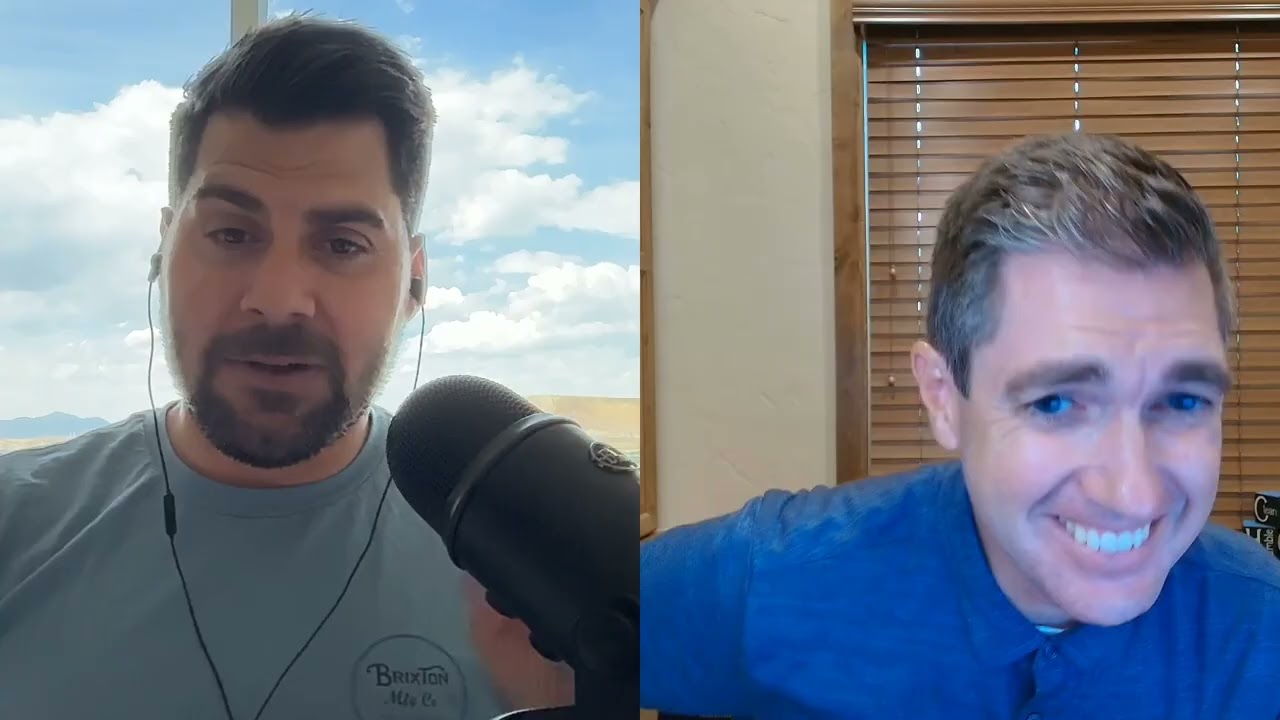
[music] >> Welcome to the Navigating [music] Dental Insurance Podcast, where we don't take from insurance companies. Here are your hosts, Mr. Jordan Comstock and Mr. Ben Tuinei. This podcast is sponsored [music] by BoomCloud Dental Membership Software, www.boomcloudapps.com, and Veritas [music] Dental Resources, www.veritasdentalresources.com. Enjoy the [music] show. >> What's up, everybody, and welcome to another episode of the Navigating Dental Insurance Podcast. I am your co-host today, Jordan Comstock. With me, as usual, Mr. Ben. What is up, dog? >> What's up, Jordan? What's up, everybody? It's great
to be back. We're relaunching the Say No to PPOs, and couldn't be any happier to to to kick this back off the ground. >> Yeah, baby. This is going to be fun. >> [laughter] >> Yes. New seasons, new episodes coming your way. We're excited to be doing this podcast once again. Ben, always fun hanging out with you, brother. >> Absolutely. Love love talking about all things insurance and all things membership plans. >> Yeah, absolutely. Today, the episode title is Combating the Bureaucratic Empire of Dental Insurance.
One of my favorite title titles, Ben. >> [laughter] >> I've been thinking we Me and Ben had a call with Dr. Mark Costes yesterday, and we were we were talking on how complicated it is to make a buck in dentistry. >> Oh, yeah. >> So, today, we want to dedicate this podcast on making that easier for practice owners and office managers, and then discuss our live event that we're going to be doing at the end. So, Ben, I got a question for you. What are ways,
from your perspective to help combat the bureaucratic empire of dental insurance? >> You know, it's dealing with insurance as everybody knows is is not the funnest thing. It's not the easiest thing and we put way too much trust in what the insurance company say. >> Yes. >> So that's that's rule number Yeah, rule number one is you always have to remember that the insurance companies are not on your side. You're not um within their scope of who they are responsible for. Um you're not one of
them. Um so it's funny when I when I get calls from clients and they say, "Call this insurance carrier and they told me this." And my immediate impression was, "And you believe that?" Or my my first question was, "And you believe them?" They said, "Well, yeah, that's what they told me." I was like, "Come on." Well, that's that's problem number one in dentistry when it comes to insurances we we put too much trust in the insurance industry that >> Yeah. >> they have no fiduciary responsibility
over dentists, you know? They're they're their primary fiduciary is the patient, right? And and So so >> probably. >> Yeah. When you look at the uh at shareholders, yeah. That's That's That's their number one are the shareholders. >> Legally, yeah, by law. >> But they can look like the the patients are their number one, but um at the end of the day they're the job of the insurance company is to deny, deny, deny. >> Yeah. >> Pay the least amount of claims. So So don't trust
anything that they say. And you might have Yeah. >> Ben, what do you What do you think they deny so much? >> Well, it's a it's a model that's designed to um earn dividends for investors and shareholders. It's not a It's not a model to provide care for the public, at least dental insurance. I may get I may get sued by that statement, but to the insurance industry, show me that I'm wrong. Show me that your focus is number one patient care, right? And that And
that includes compensation for the providers, the den- the the doctors that are performing >> part of patient care. >> And they're the ones that are ignored the most, you know, when it comes to the dynamics of insurance, patients, and providers, and dentists or doctors, right? The doctors are the ones that are ignored the most. You know, and so it's you know, so so it's a business model. It's not necessarily one that's honorable in the sense that yeah, we're going to create insurance to take care of
people, take care of the public, get people healthier. No, no, no, no, no. It's more so the numbers work for us to have a really good model for investors. So, let's make let's make the numbers look good on Wall Street, and all the while we're neglecting what the patients need and what the doctors need to get people healthy, you know. Yeah, it's a vicious cycle. >> Yeah, it is a vicious cycle. So, it's hard it's hard to make money because of insurance, complicated number one, we
shouldn't trust uh everything insurance companies say say. So, so think do diligence. What whatever they say or do, do some of your of your own due diligence. >> Oh, yeah. Yeah. Ask yourself, yeah. >> A good example is uh gosh, years ago we had uh you remember Melissa, Melissa Dunham? >> Yes. >> She came out to several of our meetings, sorry >> Yes. What is she doing these days? >> Not sure. I'm going to reach out to her. It's been a long time. But she um
so she interestingly she had a fight with United Concordia because United Concordia was making a determination on um EOBs, explanation of benefits statements that were against their own policies. And so Melissa pointed that out to United Concordia and said, "Hey, on these build-ups it it indicates that all you need is XXX in the crowds." And United Concordia said, "Well, no, our policies say X." And she's like, "No, this She sent them a copy of their policy saying, "This is what you sent me as your policy."
And you know what United Concordia did? >> What? >> The next day they they edited that policy on the bill. >> [laughter] >> Jeez. They changed >> Not anymore. We're different We're changing. >> Yeah. And so so that that that's what I mean by you don't trust them because they can have a policy all they want. But at the end of the day the American Dental Association owns the CDT guidelines. So >> Yeah. >> if one insurance carrier is writing policies that go against the CDT
guidelines then you know at that point there's a there should be a dispute with the ADA saying hey you know you're leasing this to you know the CDT to United Concordia and they're changing the definitions which they're not allowed to do, right? >> Yeah. Mhm. >> But in but insurance carrier companies know that most dentists don't know that that's the dynamic of the CDT that it's owned by the ADA and insurance carriers agreed to abide by it. But they change the CDT definitions for their own
benefit all the time. The insurance industry that is. >> Mhm. >> Um so that example with Melissa kind of opened the door for me to dive into it further and holy smokes have I found all kinds of um unnecessary uh >> write-offs >> denials. Yeah, write-offs for dental practices, you know, they're not getting paid. And you know what the average is? So we've been we've been mining this data among our own clients. Do you know how like for a single doctor single location this number might
might be too good to be true but the numbers are the numbers. You know what the average write-off is? Like unnecessary write-off or unnecessary loss of income when you're dealing with insurance annually is 300,000. >> Oh, every year? >> 300,000 a year. >> For a single practice. Yeah. Let's do some math on that cuz I've I've written some articles on this too cuz it really bothers me. >> [laughter] >> So if the average write-off is $300,000 a year the the average dentist I looked it up
practices for about 40 years. >> Mhm. >> So that is $12 million of write-offs over your career in dentistry. What could you do with that type of revenue that comes to you, right? Can you Can you You can retire really well with that or you can reinvest into a bigger, better practice, right? That generates more revenue and um sell the practice and retire that way, too, right? So, I look at this a lot like, "Holy smokes, there's so much revenue wasted and and written off in
the dental industry when it could be helping the practice owners and their team members and their patients." It just goes It just disappears. It's the invisible cost of dentistry. >> Oh, yeah. Yeah. Yeah, that big write-off. And and and a lot of the write-off is undetected. That's That's the sad thing about when you're dealing with insurance is you don't know when they're making a mistake. And so, and then there's so much other things that that can >> really bothers me. >> Yeah. That's why I'm a
big fan of like, you know, just doing a a cash fee or excuse me, membership plan, you know, for your cash >> Yeah, your cash, yeah. >> getting uninsured patients to switch over, you know? That's That's a That's a trend in the industry these days where people don't want to do business with insurance, right? Dentists don't want to participate with insurance. >> What's funny >> Yeah. >> It's funny, Ben. I've been I've been at this for a while, right? In in the dental space and so
have you. I recently went to New York and to to an optometry conference cuz we've organically at BoomCloud help help optometrists cuz it's the same problem over there. And it's so sad to see these these business owners, these entrepreneurs, right? That are in optometry and dental struggle so much with insurance. It's like, "Holy smokes, this is This has been a big struggle, a big pain point for a while. What are you going to do about it?" You're just going to take it and write off the
$12 million of your in your lifetime or career? It's kind of crazy. >> I know. I know. It's interesting diving into into other subsets of medicine. It's like, "Holy smokes, the problems there are the same, but they're all worse." >> Dentistry has it better put together than Yeah, dentistry does have it better compared to optometry. It's wild. >> Yeah, I know. And still, we're still we're still lagging behind in terms of what what we should know about capturing all the revenue that you're entitled to as
a participating provider of insurance, you know? It's a tough world, but >> Totally. >> I'd say if you if I mean, so so the part that I learned, Jordan, with with that 300,000 is most dentists don't even know. Like, you could have the best billers, but the dynamics of the dental practice where you have so many people wearing so many different hats, right? >> Sure. >> And sometimes it's hard to detect when you're being well, when you're writing off something that shouldn't be written off. It's
hard to know because we put too much trust in what the EOB says, right? >> Yeah. >> Thinking that, "Okay, that's the law. That's the final word." No, it's not. >> Mhm. >> You know, American Medical Association, they they discovered that 19.3% of claims have errors on them. Meaning the insurance carrier processed them incorrectly. >> Yeah. >> But when when I look on when I look at dental, so I'm I'm no I I mean, I I'm the process in which you can establish those findings as
a legitimate study, we're not there yet because that has to be done with multiple organizations, right? Competitors should all study it. But, I've invited the competitors to study the same numbers. So, in dentistry, the claims error that I've detected is almost pushing 40% for some practices, it's more than that. And you got to ask yourself, Jordan, are they really errors or they intentional? >> Are they like, "Yeah, we'll throw it in there. See if they See if they're paying attention." >> [laughter] >> It's like, "Oh,
it was an honest mistake." Bullcrap. Like, there's a pattern of you doing this like for since the history of time. >> Goodness. >> So, that's the big battle, You know, when when when you ask that question, how do what things to look aside from the number one is don't trust don't trust the insurance companies. You trust If you want to trust, you trust but verify. >> Trust but verify, do your due diligence. Yeah. What what other ways can practice combat these issues that that you're seeing
that over over writing off too too much revenue? >> Yeah, so to me, um, I I'm a big fan of the whole part of the sort of navigating out of insurance and plan, slowly replacing, um, yeah, strategically, which you know, we talked about that quite a bit on this podcast and with the other podcast that we do. You know, the the biggest part of that is that what we've been seeing so far is patients are staying with their dentists, you know, unless they don't have any
out-of-network benefits. That's where a membership plan would be perfect, right? Where we do see this a lot, like a lot of Medicare programs, senior citizens. And I know that you talked about this quite a bit, Jordan, where how many how many people are retiring uh, like every month or they're leaving their PPO plan? >> Uh, I believe it's like last I heard, um, it was I think it was like 10 million leaving leaving a yeah, leaving a PPO plan because they're uh, retiring fit like they're
they're they're uh, they're not getting their corporate benefits, right? So, a lot of like seniors or and senior sounds so weird to say when when you're like 55 and up. Let's just say people are at that age need more dental care. And I saw this at the when I worked at the dental lab. We that was just a lot of our clients. It was just patients that were 55 and up directly. Um, they came in from dental offices and often the they lose their insurance benefits
cuz they're retiring or they're self-employed and retiring as well. And aren't really paying for dental insurance, you know, at that that uh stage of their life, and they need more care. And the dental dental insurance really doesn't do much for them for the care they need. I think what if you need an implant, I don't think you can even get that covered through insurance. >> Yeah, maybe one or half of one. >> Half [laughter] of one, yeah. So, and and a lot of patients need more
restorative work at that that age. So, um that's kind of the stats that I've heard is about 10 million retiring. And then 20 in 2020, it accelerated like crazy. >> Oh, yeah. >> I think 20 I think 20 24 to 30 million people retired earlier than planned on top of what what was you know, the average. So, the bucket, the opportunity, you know, to help those patients just grew quite a bit because of not getting they're not getting insurance, right? Some of them do, obviously. >>
So, that makes perfect sense because what we've seen among the retirees is that the Medicare plans in dental have exploded. They've they've they've really skyrocketed since 2020. >> Interesting. >> And I haven't been able to really put my thumb on it other than the fact that, oh, more and more dental plans are creating their Medicare Advantage programs for senior citizens. >> Mhm. >> And consequently, we're seeing more senior citizens on Medicare Advantage plans, which to me is a big opportunity loss for dentists. >> And does
it does it cover much? >> No. I mean, you're paying like 35 to 55 a month for a $1,500 or $1,000 annual maximum. >> Yeah, so it's the same. It's kind of the same. >> When you do the math on that, that's a fully insured plan. So, so for those of you that see a lot of Medicare patients, this is one of the reasons I'm going to do a pitch on for membership plans in your in a sec. Mainly because >> Thanks, Ben. >> So, this
is what I've I've seeing. Is um Delta, Humana, United Healthcare, about like almost every one of them, Aetna, Cigna have created Medicare Advantage plans, a lot of which have started around 2020, 2021. >> Mhm. >> And what you're seeing is a lot of retirees leaving the PPO space >> Yeah. >> and going straight to the Medicare space, which is basically the PPO now. Um and the the loss ratios, so the percentage of what Medicare patients pay because it's pretty pretty much considered sort sort of a
fully insured plan, right? It's not a group plan. You're fully insuring that. So, out of that, the funds that they pay, for every dollar they pay for a Medicare dental plan >> Mhm. >> between 40 and 60 cents actually go towards the benefits. So, the question becomes >> Well, why don't you just fund it yourself, yeah. >> Yeah, is that an efficient way to manage your dental care is to pay a third party six 40 to 60 cents on the dollar to manage your benefits, rather
than you should have 100% go go to the dentist by doing a their membership plan, right? So >> Yeah. >> if you're a dentist and and and you do see a lot of senior citizens, I highly recommend the the development of a membership plan, because that 40 to 60% that you're not seeing and plus a lot of that the patient doesn't have to pay, you could recapture a lot of that and have the membership fee for the patient be less >> Oh, yeah. >> you're paying
on the Medicare side of things and they'll get more dentistry out of it, right? >> Yeah, it goes directly to the patient. There's no fluff, right? You know, unless the patient doesn't use it, which that's their choice. Um but we what when I think about this model especially with the the the baby boomer population, you know, retiring more and more, it's a massive a massive generation. Um and they still need dental care, need help. Um I think when I do the research I do a lot
of internet marketing research and I find that there's literally hundreds of thousands of people every month and I haven't even gone through all the keywords that people are searching for that are searching for a dentist that takes that works with patients without insurance. It's wild to me and we're we're we built on Boom Cloud we built the the dental marketplace to start to capture all those patients searching and funnel them through um to our practices at Boom Cloud that have membership plans, right? We're trying to
capture it for our practices cuz we can do nationwide marketing. We're really great at it online. And it's fascinating how many people are searching for you know dentists that don't that will do help them without dentists without insurance, right? And another thing I'm thinking Ben like the like you and I and Mark talked last night on this. It's really it's really bothering me. The amount of um it costs money to acquire new patients. We all know this. You have to do marketing and you have to
convince the patient to work with your practice, right? >> Oh yeah. >> Yeah. >> So marketing and sales in the traditional business model. Um so there's a cost to acquire patients and then what's really bothering me is the cost to maintain the patient and and to the cost to continue the cost to continue to acquire uh new revenue from when those patients meaning the admin costs to to work with insurance. It kind of bothers me because typically how uh great business models work is you you
you pay the cost to acquire through your marketing and sales teams and then you may have like a like an in Boom Cloud for example, we have a support team um but that doesn't cost me any any new money to um generate revenue, you know, our our subscription from our software. It doesn't cost me new money. It's just a it's a static cost. Where in dental it's it's a dynamic cost that every time a new patient comes in there's a cost to acquire that that revenue
from that patient. It really bothers me. Meaning your customer acquisition cost is never relieved over a period of time, right? And that really bothers me because of what insurance does to practice owners. And if you're a practice owner, if you think the way I'm thinking here, you would be really bothered, too, because that's not how it should work. You should be able to acquire patients and not have these new costs to, you know, generate that revenue and make sure you get paid and make sure you're
not getting uh tricked by the insurance companies, you know? Or it's kind of wild to me. So, yeah, I think one of my ways to combat is two things. You got to you've got to turn on a marketing engine that actually produces new new patients. I'm a mark I'm a marketing guy. I love marketing. It's all I do here with my marketing team at BoomCloud. So, you need good marketing, period. Um and all marketing is is education and and content to to um inspire the the
the patient to work with you. Yeah. That's all it is. It's pretty simple. >> Absolutely. No, I love that. I I I think that's huge there. Well, all those things that you mentioned. Yeah. The last thing that sort of comes to my mind, Jordan, on that question that you sort of theme for this episode is you know, the we've been sort of beat up on this whole concept of wage inflation, right? >> There's that, too. There's a lot of inflation in dentistry, yeah. >> Oh, yeah.
Every industry dentistry in particular has been hit very hard. >> Yeah. >> And the number one So, the number one struggle that I've been hearing across the country in terms of dental practices is the inability to find qualified people. >> Mhm. >> Um to me, it's more so the inability to offer a wage that is in the criteria of what people are looking for, right? Which is very high. And and very uncomfortable. A good example is hygiene. So, hygienists uh, the wages uh, a lot of
times when you stack that up against a typical hygiene visit, um, you're you're either breaking even or losing money, right? >> Sure. >> Um, and to me it's a mistake simply because when you look at hygiene, the the number one thing that's missing with hygiene is the coding side of things. I've been to so many hygiene lectures and, you know, that whole dynamic of of understanding patient interaction, you know, the clinical components, especially with periodontal protocols. >> Mhm. >> Um, but the one thing that's really
missing with hygiene is coding. It's the interaction and parent >> not doing coding? >> They're not doing it properly in in majority of practices. >> Fascinating. >> So so a good example is, um, you know, some hygienists, uh, on a daily basis would make anywhere between, um, $600 to $1,000 in revenue for the practice, right? >> Mhm. >> Um, and and that's that's under the limitations of a PPO plan, right? Where some hygienists make $300 to $500 because of the the the fee limitations when you're
in network with insurance. But when you look at it correct, like when you when you when you're actually billing correctly on hygiene side of things, it's not uncommon to see hygienists produce 2,500 to 5,000 5,000 is sort of on the anomaly higher end. Um, for some some somebody's might be listening and say, "No, that's our norm." Well, well, you're you're doing better than most. >> Yeah, you're above the average, yeah. [laughter] >> But, you know, the hygiene production on a daily basis doesn't It doesn't always
have to be limited by the the contractual limitations of insurance and fees. It's more so how you're coding and how you're communicating and conveying with patients >> Sure. >> that really allows you to produce at that 2,500 level or more on a daily basis. And you know what? You know, I'm not the authority on hygiene, but I am somewhat good with coding. >> Yeah, yeah. That's That's what I hear. >> [laughter] >> I understand >> Word on the street. >> Right? So what we're going to
do is we're going to bring on Jen. Jen is one hygiene the hygiene coach that we use and I've been and she's and the best thing about Jen in terms of this discussion is that she's a hygienist, but she's also a coder. She's a biller for both dental and medical. And and so when you have that understanding, you can easily see the vision as a practice owner on how to get the hygiene department on a per hygienist basis to be profitable with today's wages, but also
with the right billing and coding protocols, which to me is a missed opportunity in 99.9% of the dental practices out there. >> Ben, I would imagine that because I hear uh people talking or or practices talking about hygiene isn't isn't profitable, but it can like you said, it can be. >> Oh, yeah. >> And what I've seen at least with our practices that implement a membership plan and a way to combat not only insurance issues, but wage inflation um is to increase your predictable recurring revenue
cuz that that could pay for your costs rather quickly. We have practices that I've seen soar from a half a million dollars a year to in predictable recurring revenue from their membership plan to over a million, you know. And I never thought that would happen when I when I started Boom Cloud. I I had no no expectations. Which is always good, right? >> Yeah. >> You're always happy with low expectations, right? >> [laughter] >> Um but let me um to combat wage inflation and dental insurance,
you scale your membership plan and make your your hygiene department profitable, right? That's an aspect of it in addition to the proper coding and and just production. If your hygienists aren't producing like you got to look at those numbers and make sure they're producing more they're they're bringing in more revenue than what what it costs, right? Back to acquiring customers and you know, making sure that your you're your revenue per patient is is covered and not you know, break even. That's not a fun business to
run. Trust me, I've ran one of those before. You know. >> Stressful business model. You can't You can't even have fun on vacation because you're so stressed about your numbers. >> Yeah, it's that's not fun. So, Ben, let's let's talk about our event we're doing with Mark Costes. We'll be posting some links in our show notes for the live event and then of course the recording. But Ben, why don't you talk a little bit about that? We had a fun meeting yesterday with Mark. >> Yeah,
absolutely. So, we're going to the webinar is going to be on April 22nd, which is a Monday and it's going to be in the evening from Mountain Time perspective from 4:00 p.m. Mountain Time to 6:00 p.m. Mountain Time. That's 6:00 p.m. Eastern to 8:00 p.m. Eastern and then and then 3:00 p.m. Pacific to uh 5:00 p.m. Pacific. Uh I think I missed Central, but I think you guys can >> You can figure it out, yeah. Google it. >> [laughter] >> Yeah, and so so the topic
that we decided to cover Well, there's a few. So, the main theme is increasing income without increasing production. So, Dr. Costes, Mark Costes is going to be hitting on that well extensively in the sense of his professional then he used to own 10 practices. You know, and and he still So, he sold his 10 practices and now he runs a coaching business that still does uh you know, 10 million plus a year, probably a lot more than that, you know. It's a big business, you know,
as a non-clinical entity, it's quite impressive what he's been able to build. And then Jordan and I are are certainly going to hit on of course there's there's tie-ins to the the expert components of what Jordan is an expert at, which is membership plans. But the theme is combating the bureaucratic empire of dental insurance exactly how Jordan introduced our our episode for today. >> [laughter] >> And >> [clears throat] >> you know, and the idea is to to teach uh dental uh, practice owners how to
take home more money without increasing the treatments. You know, just looking at the existing patient base, the existing numbers that you have. >> And that's the smart way to grow, yeah. >> Exactly. So, even from like, um, and well, and hopefully we'll have Jen on our our our hygiene coder and hygienist, um, to sort of talk about to kind of wet wet your appetite on a lot of the things that we're going to talk about during this webinar in the sense of really capturing the low-hanging
fruit that already exists, um, helping you identify the low-hanging fruit that you cannot see from an insurance perspective and a membership plan and just a general business perspective as well. So, so yeah, so you'll see those uh, uh, uh, registration links. In fact, once we have that, we'll post it, uh, under the show notes for this episode. So, just stay tuned on that or you can email us, um, uh, at our well, we'll we'll post our email addresses in the show notes so that you can
get a hold of us if you want to follow up on the registration link for that. But, yeah, check out check out Jordan's website, boomcloud.com, my website, veritasdentalresources.com. And I think that I'm not sure uh, is the if Mark's going to post it on his website, but what website does he use these days? Is it the the True >> truedentalsuccess.com, yeah. >> truedentalsuccess.com to learn more about that for that coming up on April 22nd. >> April 22nd, baby. All right, with that said, thank you so
much for listening to the episode today. Ben Both Ben and I are super pumped to be back recording episodes on the navigating dental insurance podcast. With that said, we hope you guys have a rocking day. Take care, everybody. >> [music] [music]